

I'm enjoying reading all of the comments and learning a lot at the same time. Thanks for all of the analysis and helpful suggestions. So after all this testing, I have a few comments about the B54PRO-Z4E and its predecessor (B54IR-Z4E-S3). These are in no particular order--just some things I have discovered:
1. H.264.H vs. H.265
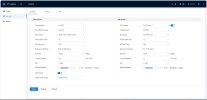
I have always set my cameras at H.264.H. I did this after testing H.264.H and H.265 head-to-head with a Color4K-T180 overlooking a heavily traveled street in front of my house. The H.264.H provided much better results without the large blocking of the H.265 compression. Now, after using this B54PRO-Z4E for an extended period of time, I have changed my opinion (for this camera). The camera appears to be optimized for H.265. I have gone back and forth between the two compression settings, but the H.265 has won me over. My other cams are set for H.264.H, but this one is going to remain at H.265.
2. Sharpness lower
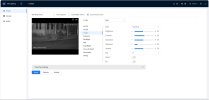
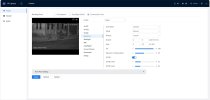
All of my other cameras I have set sharpness at 38-45, but with this B54PRO-Z4E, it works best at 18-20 (19 currently). When the sharpness is increased past 20, noise is amplified exponentially--like porcupines in a balloon factory. I've never seen this effect with my other cameras.
3. Moving objects behave differently
I assume this is the AI at work, but while static images are crisp and clean (though with not as much detail as the B54IR-Z4E-S3), moving objects have a strange noise pattern. This has gotten a lot better with the latest firmware release, so I think it is something that is being worked on behind the scenes.
4. IR is weaker
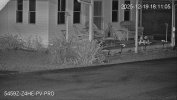
This is probably the thing that bothers me most. The B54IR-Z4E-S3's IR was a lot stronger. I assume this is because the engineers had to make compromises when adding the warm LEDs. This B54PRO-Z4E is never going to equal what the B54IR-Z4E can do at night in a completely dark setting.
5. NR acts differently
I still haven't figured out the NR on this new camera. It seems to change with every firmware update, but now I'll leave it at 39-3D 34-2D (night) and 30-3D 29-2D (day). Those seem to be the best settings for my application.
6. Auto wide dynamic range is cool
Finally I can see shadow detail in the daytime, during bright, highly contrast-laden scenes. Daytime detail is greatly enhanced by this. Thanks to whomever the Dahua engineer was who got this right. This is one area where the B54PRO-Z4E is superior to the B54IR-Z4E
7. Smart Illumination is improved
I know this camera is tailored for the set-it and forget-it crowd, and I understand why. Simpler is better, right? I am the kind of person who will change every setting a zillion times, so I am not the norm. Can't begin to tell you all the struggles I had with the 4K-X focused on the street, where one tiny change in noise level or red/blue would destroy the image and induce noise. This camera is soooo different. The smart illumination actually works. After last night's test at the default settings that Andy asked me to try, I am convinced that the engineers are getting closer and closer to something that will usable for the masses without a lot of headaches. Now I can understand people's frustrations to this camera being a work in progress, after they assumed it would be a finished product; but I can see it is moving forward with improvements at each stage.
8. No pain, no gain control?
Ok, I am totally confused by how the gain control works on this camera. On my other cameras I generally leave them at the default 0-50 setting. Yeah, occasionally I may lower the gain a bit for daytime viewing, but most of the time at night I never go above 50, as that invites ghosting. With this new camera, it is all over the place. I have seen on several occasions where raising the gain will lower the sharpness. Also, the gain affects the image differently than previous cameras. I don't really understand it, so I have been looking at other's settings to see if I could see a pattern.
9. A foggy day in California town
What the AI does to fog is really creepy. I live in an area that gets a lot of fog (10 miles inland from the Pacific Ocean). Unlike my other cameras, the AI makes a weird grid on the screen with how it decodes the fog. At the same time, it brightens up the entire image and makes it look like daylight. I am not a fan. Wish this wouldn't happen.
10. Brighter is better?
The new firmware adds a new dimension of brightness. I like to manipulate the settings on my cameras to get the best images, but this move toward static brightness is moving away from the control that I was afforded in previous generations. It's like taking away the bass/treble controls on the stereo and saying, "You must like a flat response."
1. H.264.H vs. H.265
I have always set my cameras at H.264.H. I did this after testing H.264.H and H.265 head-to-head with a Color4K-T180 overlooking a heavily traveled street in front of my house. The H.264.H provided much better results without the large blocking of the H.265 compression. Now, after using this B54PRO-Z4E for an extended period of time, I have changed my opinion (for this camera). The camera appears to be optimized for H.265. I have gone back and forth between the two compression settings, but the H.265 has won me over. My other cams are set for H.264.H, but this one is going to remain at H.265.
2. Sharpness lower
All of my other cameras I have set sharpness at 38-45, but with this B54PRO-Z4E, it works best at 18-20 (19 currently). When the sharpness is increased past 20, noise is amplified exponentially--like porcupines in a balloon factory. I've never seen this effect with my other cameras.
3. Moving objects behave differently
I assume this is the AI at work, but while static images are crisp and clean (though with not as much detail as the B54IR-Z4E-S3), moving objects have a strange noise pattern. This has gotten a lot better with the latest firmware release, so I think it is something that is being worked on behind the scenes.
4. IR is weaker
This is probably the thing that bothers me most. The B54IR-Z4E-S3's IR was a lot stronger. I assume this is because the engineers had to make compromises when adding the warm LEDs. This B54PRO-Z4E is never going to equal what the B54IR-Z4E can do at night in a completely dark setting.
5. NR acts differently
I still haven't figured out the NR on this new camera. It seems to change with every firmware update, but now I'll leave it at 39-3D 34-2D (night) and 30-3D 29-2D (day). Those seem to be the best settings for my application.
6. Auto wide dynamic range is cool
Finally I can see shadow detail in the daytime, during bright, highly contrast-laden scenes. Daytime detail is greatly enhanced by this. Thanks to whomever the Dahua engineer was who got this right. This is one area where the B54PRO-Z4E is superior to the B54IR-Z4E
7. Smart Illumination is improved
I know this camera is tailored for the set-it and forget-it crowd, and I understand why. Simpler is better, right? I am the kind of person who will change every setting a zillion times, so I am not the norm. Can't begin to tell you all the struggles I had with the 4K-X focused on the street, where one tiny change in noise level or red/blue would destroy the image and induce noise. This camera is soooo different. The smart illumination actually works. After last night's test at the default settings that Andy asked me to try, I am convinced that the engineers are getting closer and closer to something that will usable for the masses without a lot of headaches. Now I can understand people's frustrations to this camera being a work in progress, after they assumed it would be a finished product; but I can see it is moving forward with improvements at each stage.
8. No pain, no gain control?
Ok, I am totally confused by how the gain control works on this camera. On my other cameras I generally leave them at the default 0-50 setting. Yeah, occasionally I may lower the gain a bit for daytime viewing, but most of the time at night I never go above 50, as that invites ghosting. With this new camera, it is all over the place. I have seen on several occasions where raising the gain will lower the sharpness. Also, the gain affects the image differently than previous cameras. I don't really understand it, so I have been looking at other's settings to see if I could see a pattern.
9. A foggy day in California town
What the AI does to fog is really creepy. I live in an area that gets a lot of fog (10 miles inland from the Pacific Ocean). Unlike my other cameras, the AI makes a weird grid on the screen with how it decodes the fog. At the same time, it brightens up the entire image and makes it look like daylight. I am not a fan. Wish this wouldn't happen.
10. Brighter is better?
The new firmware adds a new dimension of brightness. I like to manipulate the settings on my cameras to get the best images, but this move toward static brightness is moving away from the control that I was afforded in previous generations. It's like taking away the bass/treble controls on the stereo and saying, "You must like a flat response."





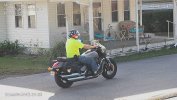
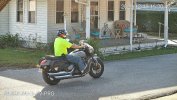







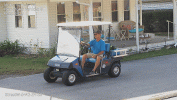


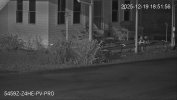
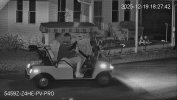

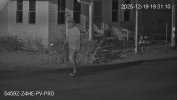
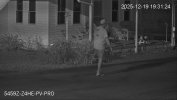
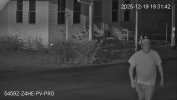
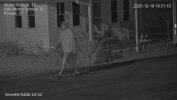
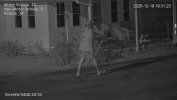
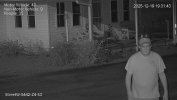
 . Also thinking about buying Ubiquiti G6 Pro Turret just to compare to S3. I'm almost sure it's not going to work for my use-case but who knows...