

For these tests I replaced the 4K-X 6mm camera on the garage with a T54PRO-ZE. The other camera is a B54PRO-Z4E. Andy asked if I could run some tests at the default setting for the cameras, so that is what I did for the first set of clips. Also, it was requested if I would try setting the cameras for 0-20ms shutter, 0-80 gain, 3D NR=50, 2D NR=40. The last clips I just experimented with some settings.
B54PRO-Z4E first impression
- Thread starter tmxv4128
- Start date
You are using an out of date browser. It may not display this or other websites correctly.
You should upgrade or use an alternative browser.
You should upgrade or use an alternative browser.

alekk
Getting comfortable
Good points @bigredfish in your post a few back ... because yes, capturing motion is the ultimate objective.
But if camera #2 can capture a "better" still image (at "similar" settings) than camera #1, it probably is going to do better in video. And even if it's not "acceptable" (we always want better), if camera #2 is "better", then that would be the logical choice to use. And one can decide if they just want to "accept" the sub-par image, add more light ... or see "progress" and hope that camera #3 (come on Dauha, give us a bigger/better sensor with a faster lens) further improves.
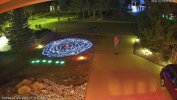
So here's the T54PRO-ZE versus the 5442-S3 in IR.
Neither have their on-board IR on ... instead, there is an external Tendelux DI20 IR illuminator that is mounted (basically) the same distance from them ... so they are "seeing" the same light.
Since I saw 6msec mentioned as a shutter speed, I went with that. I, of course, opened up the iris all the way. At gain ZERO, the picture is super-dark (DUH!) ... but that is the "last dial" I have to play with ... so I ended up bumping it to 60. Exposure is decent (especially for the T54PRO-ZE ... which is actually too "hot" at close-in) ... but with NR=ZERO, it's a hot, noisy mess ... so lets spin that up to 50/50 for 2D/3D NR.
Yes, gain is higher than I went and ditto the NR ... but my only other option is to add even more light ... and/or wait for that mythical camera #3.
On both camera, I used area-focus several times using the driveway light halfway down (about 60' away) on the right side - Focus values bounced around a bit, but I used the one that was in the most frequent range.
So after all those words, it really come down to images/video ... so lets see how those two cameras did in a challenging scene.
GIF image compares them as I walked across the sidewalk ... and then I've included the two videos.
Again, I'm not saying this is "acceptable" - it's not ... but given THIS SCENE, I'm not sure I can get it much better with what I have ... but to me, the T54PRO-ZE looks better - what 'ya think?
Also, is the 1217 Firmware an improvement? Unfortunately, I no longer have a 2nd T54PRO-ZE to directly compare against, but my off-the-cuff opinion is YES, the 1217 Firmware is "better" that the previous I've tested ... which I think is dang close to all of them!
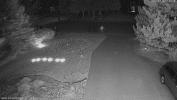
But if camera #2 can capture a "better" still image (at "similar" settings) than camera #1, it probably is going to do better in video. And even if it's not "acceptable" (we always want better), if camera #2 is "better", then that would be the logical choice to use. And one can decide if they just want to "accept" the sub-par image, add more light ... or see "progress" and hope that camera #3 (come on Dauha, give us a bigger/better sensor with a faster lens) further improves.
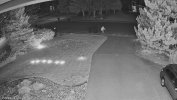
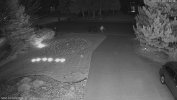
So here's the T54PRO-ZE versus the 5442-S3 in IR.
Neither have their on-board IR on ... instead, there is an external Tendelux DI20 IR illuminator that is mounted (basically) the same distance from them ... so they are "seeing" the same light.
Since I saw 6msec mentioned as a shutter speed, I went with that. I, of course, opened up the iris all the way. At gain ZERO, the picture is super-dark (DUH!) ... but that is the "last dial" I have to play with ... so I ended up bumping it to 60. Exposure is decent (especially for the T54PRO-ZE ... which is actually too "hot" at close-in) ... but with NR=ZERO, it's a hot, noisy mess ... so lets spin that up to 50/50 for 2D/3D NR.
Yes, gain is higher than I went and ditto the NR ... but my only other option is to add even more light ... and/or wait for that mythical camera #3.
On both camera, I used area-focus several times using the driveway light halfway down (about 60' away) on the right side - Focus values bounced around a bit, but I used the one that was in the most frequent range.
So after all those words, it really come down to images/video ... so lets see how those two cameras did in a challenging scene.
GIF image compares them as I walked across the sidewalk ... and then I've included the two videos.
Again, I'm not saying this is "acceptable" - it's not ... but given THIS SCENE, I'm not sure I can get it much better with what I have ... but to me, the T54PRO-ZE looks better - what 'ya think?
Also, is the 1217 Firmware an improvement? Unfortunately, I no longer have a 2nd T54PRO-ZE to directly compare against, but my off-the-cuff opinion is YES, the 1217 Firmware is "better" that the previous I've tested ... which I think is dang close to all of them!
Attachments
alekk
Getting comfortable
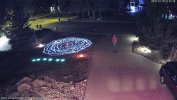
Here's the same scene comparing the T54PRO-ZE (FW1217) versus the 5442-S3 in COLOR
As discussed ad-nauseam above, there is a dark scene ... much more so since not in IR, so the IR illuminator doesn't help out.
Our settings here are (OMFG!) 20 msec shutter, 100 iris, 100(!) gain, and 50/50 2D/3DR.
So the video is even more unacceptable than the IR version (6msec shutter, 60 gain) but what I want to do know is how does the T54PRO-ZE (running the 1217 Firmware) compare to the 5442-S3 ... and I would say that is does much better. And again, without being able to directly compare to previous firmware, my off-the-cuff opinion is YES, the 1217 Firmware is "better" that the previous I've tested.
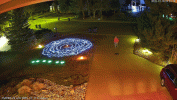
As discussed ad-nauseam above, there is a dark scene ... much more so since not in IR, so the IR illuminator doesn't help out.
Our settings here are (OMFG!) 20 msec shutter, 100 iris, 100(!) gain, and 50/50 2D/3DR.
So the video is even more unacceptable than the IR version (6msec shutter, 60 gain) but what I want to do know is how does the T54PRO-ZE (running the 1217 Firmware) compare to the 5442-S3 ... and I would say that is does much better. And again, without being able to directly compare to previous firmware, my off-the-cuff opinion is YES, the 1217 Firmware is "better" that the previous I've tested.
Attachments
Last edited:

But if camera #2 can capture a "better" still image (at "similar" settings) than camera #1, it probably is going to do better in video. And even if it's not "acceptable" (we always want better), if camera #2 is "better", then that would be the logical choice to use. And one can decide if they just want to "accept" the sub-par image, add more light ... or see "progress" and hope that camera #3 (come on Dauha, give us a bigger/better sensor with a faster lens) further improves
Come on now, you have been around here long enough to know that many cameras can produce a better static image than the Dahua, but motion looks like crap.
All of my neighbors consumer cams produce a great static image at night, but motion blur city.
alekk
Getting comfortable
Come on now, you have been around here long enough to know that many cameras can produce a better static image than the Dahua, but motion looks like crap.
All of my neighbors consumer cams produce a great static image at night, but motion blur city.
Your neighbor's consumer cams produce a great static image at night because they using a super-slow shutter speeds ... have them set the same as the Dahua and compare!
Your neighbor's consumer cams produce a great static image at night because they using a super-slow shutter speeds ... have them set the same as the Dahua and compare!
You can set reolink to similar settings, but the firmware will override any setting that darkens the image too much.
I could set my Sunba to similar settings and it would do the same thing. Same with other cheap cameras I had before I found this site.
A good test is to set a camera shutter in dark setting to 1/4000 and the image should be black. If it isn't, then you know the firmware is making adjustments to keep bright static images.
alekk
Getting comfortable
You can set reolink to similar settings, but the firmware will override any setting that darkens the image too much.
I could set my Sunba to similar settings and it would do the same thing. Same with other cheap cameras I had before I found this site.
A good test is to set a camera shutter in dark setting to 1/4000 and the image should be black. If it isn't, then you know the firmware is making adjustments to keep bright static images.

T54PRO-ZE at 1/4000s shutter speed in Color mode ... all you see are the driveway/neighbor lights.
Note that I have to set Backlight BLC=1 ... because if Backlight is OFF, there is a shadow boost applied that I've talked about ... but it just adds a smidgen of halo around those lights.
Speaking of which, at 1/4000s shutter, the lights "pulse" ... because they must be cycling (very old lights) at a frequency faster than I can see with my naked eye, but "caught" by the fast shutter speed.
Last edited:
View attachment 234605
T54PRO-ZE at 1/4000s shutter speed in Color mode ... all you see are the driveway/neighbor lights.
Note that I have to set Backlight BLC=1 ... because if Backlight is OFF, there is a shadow boost applied that I've talked about ... but it just adds a smidgen of halo around those lights.
Speaking of which, at 1/4000s shutter, the lights "pulse" ... because they must be cycling (very old lights) at a frequency faster than I can see with my naked eye, but "caught" by the fast shutter speed.
You missed the point - I had no doubt this camera would be all black at that speed.
I was referring to cheap cameras that favor a bright image that produce nicer ststic images than Dahua.
It appears the issue with this camera is the AI that makes the static image nice is wreaking havoc on motion.
alekk
Getting comfortable
You missed the point - I had no doubt this camera would be all black at that speed.
I was referring to cheap cameras that favor a bright image that produce nicer ststic images than Dahua.
OK - I was just confirming that yea verily, that isn't happening with my cameras.
It appears the issue with this camera is the AI that makes the static image nice is wreaking havoc on motion.
Roger that - I've talked about the "Pig-Pen Dust Cloud" ... but I think that might be improved/reduced in the 1217 Firmware - wish I still had the 2nd 54PRO-ZE to directly compare. However, I can compare to a 5442-S3 and the videos are above if you want to express an opinion.
I'm real curious what others, such as @tmxv4128, say as they start testing 1217FW as they are more knowledgeable/experienced in motion testing with more appropriate setups versus my "scene"

bigredfish
Known around here
Yes the 12/17 FW is an improvement
They have applied more NR and/or reduced sharpness to the output on targets in motion and improved the color with respect to WB particularly Reds…and of course it continues to be “brighter” ( the target metric and audience this camera is designed for)
It’s obvious by the 18-20 Sharpness setting practical max in low light that sharp/detail continues to suffer from an inferior sensor
Is it a better quality or equal quality to the 5442 S3?
No it’s not, at normal setting values on moving targets at zoom ranges that provide a practical ID level of detail.
Tonight I hope to have time to explore the AI-ISP and AI-SSA features, throw out everything I thought I knew, and see if any improvement can be had by utilizing the digital magic fairy dust
They have applied more NR and/or reduced sharpness to the output on targets in motion and improved the color with respect to WB particularly Reds…and of course it continues to be “brighter” ( the target metric and audience this camera is designed for)
It’s obvious by the 18-20 Sharpness setting practical max in low light that sharp/detail continues to suffer from an inferior sensor
Is it a better quality or equal quality to the 5442 S3?
No it’s not, at normal setting values on moving targets at zoom ranges that provide a practical ID level of detail.
Tonight I hope to have time to explore the AI-ISP and AI-SSA features, throw out everything I thought I knew, and see if any improvement can be had by utilizing the digital magic fairy dust
bigredfish
Known around here
For these tests I replaced the 4K-X 6mm camera on the garage with a T54PRO-ZE. The other camera is a B54PRO-Z4E. Andy asked if I could run some tests at the default setting for the cameras, so that is what I did for the first set of clips. Also, it was requested if I would try setting the cameras for 0-20ms shutter, 0-80 gain, 3D NR=50, 2D NR=40. The last clips I just experimented with some settings.
Thanks for your work sir..
Question: Was there a motion flood or any other off-camera light source involved in those test clips?
thx

Arjun
IPCT Contributor
bigredfish
Known around here
Good points @bigredfish in your post a few back ... because yes, capturing motion is the ultimate objective.
But if camera #2 can capture a "better" still image (at "similar" settings) than camera #1, it probably is going to do better in video. And even if it's not "acceptable" (we always want better), if camera #2 is "better", then that would be the logical choice to use. And one can decide if they just want to "accept" the sub-par image, add more light ... or see "progress" and hope that camera #3 (come on Dauha, give us a bigger/better sensor with a faster lens) further improves.
So here's the T54PRO-ZE versus the 5442-S3 in IR.
Neither have their on-board IR on ... instead, there is an external Tendelux DI20 IR illuminator that is mounted (basically) the same distance from them ... so they are "seeing" the same light.
Since I saw 6msec mentioned as a shutter speed, I went with that. I, of course, opened up the iris all the way. At gain ZERO, the picture is super-dark (DUH!) ... but that is the "last dial" I have to play with ... so I ended up bumping it to 60. Exposure is decent (especially for the T54PRO-ZE ... which is actually too "hot" at close-in) ... but with NR=ZERO, it's a hot, noisy mess ... so lets spin that up to 50/50 for 2D/3D NR.
Yes, gain is higher than I went and ditto the NR ... but my only other option is to add even more light ... and/or wait for that mythical camera #3.
On both camera, I used area-focus several times using the driveway light halfway down (about 60' away) on the right side - Focus values bounced around a bit, but I used the one that was in the most frequent range.
So after all those words, it really come down to images/video ... so lets see how those two cameras did in a challenging scene.
GIF image compares them as I walked across the sidewalk ... and then I've included the two videos.
Again, I'm not saying this is "acceptable" - it's not ... but given THIS SCENE, I'm not sure I can get it much better with what I have ... but to me, the T54PRO-ZE looks better - what 'ya think?
Also, is the 1217 Firmware an improvement? Unfortunately, I no longer have a 2nd T54PRO-ZE to directly compare against, but my off-the-cuff opinion is YES, the 1217 Firmware is "better" that the previous I've tested ... which I think is dang close to all of them!
View attachment 234595
The 'scene" is brighter with the 54PRO. This we have known from the beginning
The target in this case is so small relative to the scene that detail isnt adequate for either.
An argument can be made that they are at best equal on target
This is why I referenced distance to target and ID detail zoom levels.
What you have is an Overview scene. The goal appears to be to make it as bright as possible. For overview thats fine.
And once again using the same exact settings for these two very different sensors isn't really a fair evaluation of the capabilities.
alekk
Getting comfortable
@bigredfish : Look at the shadows in the poster image of the Youtube video - there are at least two light source - one on the left side casting the faint shadow behind and to his right, and a stronger light on right side casting the darker shadow behind and to his left.
bigredfish
Known around here
Here's the same scene comparing the T54PRO-ZE (FW1217) versus the 5442-S3 in COLOR
As discussed ad-nauseam above, there is a dark scene ... much more so since not in IR, so the IR illuminator doesn't help out.
Our settings here are (OMFG!) 20 msec shutter, 100 iris, 100(!) gain, and 50/50 2D/3DR.
So the video is even more unacceptable than the IR version (6msec shutter, 60 gain) but what I want to do know is how does the T54PRO-ZE (running the 1217 Firmware) compare to the 5442-S3 ... and I would say that is does much better. And again, without being able to directly compare to previous firmware, my off-the-cuff opinion is YES, the 1217 Firmware is "better" that the previous I've tested.
View attachment 234601
Again at those distances and relative size based on zoom, using exact same settings for two very different sensors, I don't think it tells us much
alekk
Getting comfortable
What you have is an Overview scene. The goal appears to be to make it as bright as possible. For overview thats fine.
And once again using the same exact settings for these two very different sensors isn't really a fair evaluation of the capabilities.
In IR, if I want to do a 6msec shutter speed (iris 100), I'm already at gain of 60, which is pushing it ... and that's my last "dial" to adjust. Sure, I can make the gain even higher on the 5442-S3 to match the brightness of the T54PRO-ZE, but I'll pay the price in terms of increased noise.
In Color, even at 20msec shutter (iris 100), I'm having to use maximum gain of 100 - there's nothing "left" in the cameras. I could change the shutter speed to 100msec, but motion blur at a 1/10s would be really bad.
What I found encouraging in BOTH Color & IR was not only was the T54PRO-ZE image brighter, more colorful, and overall looked "better", but the "Pig-Pen Dust Cloud" wasn't as pronounced (pretty sure compared to earlier Firmware) when I was walking around. And yes, I'm too far away for a decent ID, but am much more "identifiable" in the T54PRO-ZE.
Speaking of "Pig-Pen Dust Cloud", there are two Red "Bells" on the lawn that have incandescent bulbs that blink. This creates havoc for the 3DR ... so you basically see a constant "Pig Pen Dust Cloud" around them! ;-)
I was also encouraged by how well the highlights were handled. Christmas Lights in a dark scene is pretty tough as a wide dynamic range - the 54PRO-ZE did a much better job. BTW, for those that might (reasonably) ask about the possible soft-focus on the 5442-S3 (because that is what I thought originally), as mentioned, I did "Area Focus" multiple times using that right driveway light (high contrast target) - it jumped around a bit, but even going with a value representative of the typical range, I just couldn't get it as sharp as the T54PRO-ZE.
alekk
Getting comfortable
I'm real interested to see what others show/think of the 1217FW in non-overview scenes ... comparing it to earlier firmware (same camera) and also against the 5442-S3 which is the reference.
bigredfish
Known around here
You're entitled to your preference 
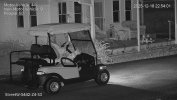
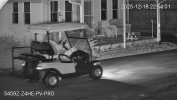
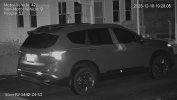
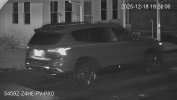
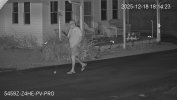
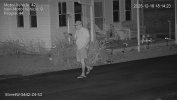
These are using 0 IR on the 5442. It is turned OFF
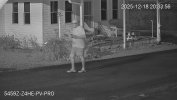
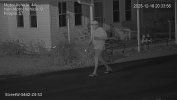
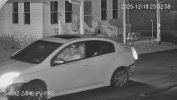
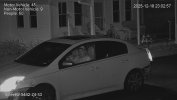
These are using 0 IR on the 5442. It is turned OFF
alekk
Getting comfortable
Assuming similar values (at least shutter speed), the 5442-S3 is clearly superior to the T54PRO-ZE in those pics!
bigredfish
Known around here
Exact same shutter. Other values are different.
The goal/effort was not to compare settings, it was to dial in the best possible quality image for each camera
The goal/effort was not to compare settings, it was to dial in the best possible quality image for each camera