
Need recommendations

Good thing he was moving slow/stopped

Bad Guys rarely stop and stare at the camera. Freezing motion and still getting a crisp clean image is the goal. That’s a function of exposure, NR settings, speed, and available light. (Other settings have some effect as well like iris, sharpness, gain etc but the big 4 mentioned make the biggest impact)
I consider human targets on a fast walk/slow jog my reference target. That means slower will be easier/better and vehicles going faster will be harder and less crisp and likely have some motion blur* (again based on the parameters above)

*All of this is for night video. In daytime we can crank exposure/shutter speed much faster and get clean crisp non-blur images even on fast targets.

Distance is a function of lens. 2.8mm won’t have near the detail of say a varifocal at 12mm at 30 feet
 
  • Like
Reactions: Rightone47
Up close on an object not moving much and with a lot of light almost any camera can do well.

Distances you will see in the reviews/ratings here depend on the camera.

For most fixed lens cameras, folks here concentrate on the ideal IDENTIFY range in the say 10-25 foot range.

The right camera for IDENTIFY at 25 feet will be much different camera than a camera at say 150 feet.

I posted earlier in this thread that we have a whole thread demonstrating the importance of focal length over MP and I took a lot of time to average out based on reviews and comments here the most recommended camera based on the distance to IDENTIFY. Obviously if goals are different, then the camera selections change as well.

One thing people think is with 8MP you can digital zoom to get cleaner images and read plates.

Digital zoom only works in movies. Sure you may get by with a little, but not a lot, and certainly not what we see on TV.

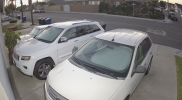
Here is an example from long time member Parley - this is a fixed lens 4mm 8MP camera on the ideal 1/1.2" sensor.

Can you read any plates in this image of parked cars? That black truck on the right is what maybe 100 feet away?

No chance at the jeep across the street at what maybe 175 feet.

With digital zoom you can kinda make out that street sign.

But this camera is set up to capture clean ID of a person snooping and door checking his vehicles in his driveway and people walking on the sidewalk on HIS SIDE of the street. He has another camera to capture ID quality for people on the sidewalk on the other side of the street.

1779923215335.png


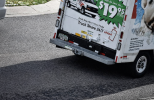
Meanwhile here is my 2MP camera OPTICALLY zoomed for 150 feet capturing a U-HAUL in motion. I think most will say that is a clearly readable plate and will beat any fixed lens 8MP camera that is digitally zoomed.

1779923238467.png


This is why we stress that the appropriate focal length for the distance to IDENTIFY is more important than MP.
 
  • Like
Reactions: Rightone47
Ok, in my perfect scenario, recording all night whatever happens and then being able to clearly zoom in is what I'm looking for. In Parley's example, I could get home and see the strange Jeep and zoom in to get the plate. In your Uhaul, I could be recording nothing and then pause the video and zoom in to get the plate.

I know part of that is the Camera, but is it also the Blue Iris functionality?

For my Reolink, I can zoom in live to be able to identify a White Blob bashing a mailbox, but no way to identify unless the car is known, since the plate will be a blob as well (25 ft)... On the recorded version, no zooming in at all, so it's worthless unless the perp is known.
 
Ok, in my perfect scenario, recording all night whatever happens and then being able to clearly zoom in is what I'm looking for. In Parley's example, I could get home and see the strange Jeep and zoom in to get the plate. In your Uhaul, I could be recording nothing and then pause the video and zoom in to get the plate.

I know part of that is the Camera, but is it also the Blue Iris functionality?

For my Reolink, I can zoom in live to be able to identify a White Blob bashing a mailbox, but no way to identify unless the car is known, since the plate will be a blob as well (25 ft)... On the recorded version, no zooming in at all, so it's worthless unless the perp is known.

No
You can’t “zoom in” after the fact and get a good image. That only works on TV

It takes multiple cameras. Some overview some zoomed into choke points to get greater detail.

#1 fallacy for new users is trying to do too much with one camera
 
  • Like
Reactions: Rightone47
You are still living in Hollywood LOL.

NO CHANCE you could take Parley's image and zoom in later and get the plate. Parley has another camera set up just to get plates later if he sees a car go by that is questionable.

As I said, DIGITAL zoom only works in the movies and TV. Sure you can do a little, but not much.

Sure you can digital zoom in Blue Iris, but it will be a digital mess.

Digital zooming in after the fact in any system will result in a pixelated mess.

You need OPTICAL zoom for the areas you want ID quality.

That image of the UHAUL is the field of view for that camera. It is all OPTICAL zoom to capture the plate at the time the vehicle passed. No fixed lens camera by any manufacturer will allow you to digital zoom at that distance and read a plate.

That means more cameras.


I will pull an example from the thread above.

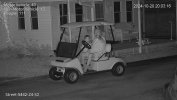
Here is a great example of two images taken at the same time (early AM while still dark out) of the same person 60 feet away from just slightly different angles - one from the 5442-ZE 4MP set to 3.6mm that I digitally zoomed from BI to make the person about the same size as the person in the 2MP varifocal optically zoomed.

This digitally zoomed image still could not be used by police to IDENTIFY.


trash 4MP digital zoom.jpg


trash 2MP optical zoomed.png


In case someone cannot figure it out, the 4MP that is digitally zoomed in is the B&W picture and the 2MP varifocal optically zoomed in is the color picture LOL.

I think most would agree that the optically zoomed 2MP picture beats the digitally zoomed 4MP picture - you can make out details and read some of the signage and make out bolts, etc. that are just a blur on the 4MP, which is being benefited by the same light the 2MP camera is getting plus the IR.


Someone asked in a later post here why the 4MP with the better sensor was in B/W while the 2MP was in color. The answer is simple. The 4MP didn't require IR illumination - That camera was not set up to IDENTIFY at that distance, but rather up close within 10-15 feet of the camera and I CHOOSE to run it in B/W for the faster shutter to get a cleaner capture. That 4MP runs fine in color and is actually brighter than the 2MP.

That Thread was an afterthought long after those images were taken or I would have done a color to color comparison (but wait I have something close).

However, I am always tweaking my cams and will bounce back and forth between B/W and color and I happen to have a similar shot of the 4MP fixed lens in color from a different day.


1684410591851.png


So in theory, the 4MP B/W was at its best opportunity to get a clean digital image due to the white light and Infrared light it was getting and that is also kinda evident comparing the 4MP color versus B/W images.

So as you can see, this shows that whether it was in color or B/W, at night with limited light, it will be a messy digital zoomed image whether it is in color or B/W, but the B/W would stand a better chance due to seeing infrared light, but an OPTICALLY zoomed camera will produce the best image for a set distance.
 
  • Like
Reactions: Rightone47
Two examples:
Each requires TWO cameras

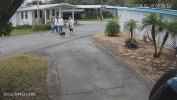
1- Ladies in street at 55ft. OK Camera #1 - I see 4 elderly ladies walking. See clothes color etc.
Camera #2 - How many are wearing earrings?

Home_Drive-5442H-ZHE_main_20240215083952_@5.jpg
Home_5442-Z4-S3_main_20240215083953_@5.jpg


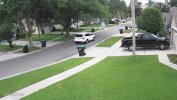
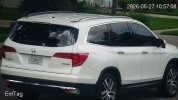
2- car traveling about 25-30mph at 120ft.
Camera #1 - I see color, maybe even make/model
Tag# comes from Camera #2

HOAEntrP2P_StreetView_main_20260527105708_@2.jpg
HOAEntrP2P_EntTag_main_20260527105708_@2.jpg
 
Last edited:
  • Like
Reactions: Rightone47
Ok, I may be new to cameras, like a Year old, but I'm MANY more years than that in Real life, and I know everything in Hollywood is 100% True... That's why they put up that Huge Sign! I'm like so sure.

Reolink says you can digitally zoom in 16MP. 4K.... "RLC-823S2 cameras support optical zoom, then your cameras support both optical zoom-in and digital zoom-in while previewing, but only support digital zoom-in while playback."

Of course you can figure out who I'm believing at this point.

So, what I'm getting is to trash basically all the macros of a camera UNTIL I get one in the Green section of post 31, and go from there fine tuning everything.
 
  • Haha
Reactions: bigredfish
I know what you're saying about using 2 cameras. That's where I will eventually be.

How did you know I wanted them to record The Golden Girls?

I'm on the way Blanche... Don't you go anywhere now, you hear?
 
  • Like
Reactions: bigredfish
Ok, I may be new to cameras, like a Year old, but I'm MANY more years than that in Real life, and I know everything in Hollywood is 100% True... That's why they put up that Huge Sign! I'm like so sure.

Reolink says you can digitally zoom in 16MP. 4K.... "RLC-823S2 cameras support optical zoom, then your cameras support both optical zoom-in and digital zoom-in while previewing, but only support digital zoom-in while playback."

Of course you can figure out who I'm believing at this point.

So, what I'm getting is to trash basically all the macros of a camera UNTIL I get one in the Green section of post 31, and go from there fine tuning everything.

What they are saying isn't false - "cameras support both optical zoom-in and digital zoom-in while previewing, but only support digital zoom-in while playback."

Only PTZs and varifocals support OPTICAL zoom in while previewing (or live viewing) and EVERY camera supports DIGITAL zoom in while in playback of previously recorded video.

The problem is the sensors are way too small to have digital zoom be effective, especially at night.
 
  • Like
Reactions: Rightone47