Is the regime in Iran soon to be toast?

Pre-dates and post-dates Trump. Iran was just a reminder.


I suspect NATO will be stronger, as after the Russian invasion of Ukraine NATO revived it's mission of defense.

USA really burned their NATO teammates with the Greenland threats

Tradeoffs, USA made some which hurt it's long term and hard won play to make alliances.

Remember Vietnam ? Part of that was to prove USA would be there for allies .. truth is, France knew the USA well enough that they built their own Nuclear forces up.
 
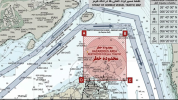
The Strait of Hormuz: Despite claims by Donald Trump that nobody anticipated Iran’s weaponization of the strait, experts have been war-gaming such scenarios for decades.

"hourly contradictions that come out of the White House .. make it very difficult to know what's actually u being considered and what's out there. And I think this is the fault of the administration by not being more um upfront. I mean they this is the reason that in the Constitution, you know, the United States cannot go to war without the Congress declaring war. There's a it it forces it forces these hard conversations about okay, what is the purpose? What is the endstate? What is the risk? What are the resources we're going to use? What are we trying to accomplish?"


Trump’s war in Iran is ‘far from over’ | Lt Gen. Ben Hodges

Apr 9, 2026 The Trump Report
Lt General Ben Hodges, former Commanding General of the US Army in Europe, joins Maddie Hale to discuss whether the ‘ceasefire’ is unravelling after Iran labelled Israel’s attack on Lebanon a “grave violation”, Donald Trump tells Iran attacks will be “bigger and better” if their agreement isn’t fully complied with and Democratic Senator Chuck Schumer pushes to remove Trump’s war powers, believing he is “unhinged”.


This episode of The Trump Report features Lieutenant General Ben Hodges, former commanding general of the US Army in Europe, discussing the volatile situation involving the United States, Iran, and the status of a supposed ceasefire.

Key Takeaways:

  • Ceasefire Uncertainty: There is significant confusion regarding the terms of the US-Iran "ceasefire," particularly whether it includes operations in Lebanon (2:58-4:17). The administration's declarations of victory are viewed as premature, given that underlying issues—such as the status of the Strait of Hormuz—remain unresolved or are worsening (1:20-2:24).
  • Strategic Miscalculations: The discussion highlights that the administration’s strategy, heavily influenced by Benjamin Netanyahu and a reliance on "gut instinct" rather than professional diplomatic or intelligence advice, has led to a "massive strategic defeat" (5:17-6:36, 14:48-15:05).
  • The Strait of Hormuz: Despite claims by Donald Trump that nobody anticipated Iran’s weaponization of the strait, experts have been war-gaming such scenarios for decades. The area remains effectively closed as insurance companies deem it unsafe (8:13-9:33, 7:05-8:11).
  • Constitutional Concerns: Lt. Gen. Hodges stresses the importance of the constitutional requirement for Congressional involvement in declaring war. He criticizes the lack of transparency and the tendency to surround the president with "sycophantic" officials, which hinders necessary oversight and strategic planning (16:28-17:27, 22:23-23:14).
  • Military Ethics & Leadership: Regarding the potential for escalation, the discussion touches on the duty of service members to refuse illegal orders (the "Nuremberg defense" principle). The firing of high-ranking generals is noted as a move that damages institutional trust and cohesion (19:14-21:49).
 
  • Like
Reactions: johnfitz
I should tag @Arjun on this one ..

 
Still wondering why Israel abandoned the SLA and the related buffer territory controlled in Southern Lebanon

"The South Lebanon Army (SLA), also known as the Lahad Army or De Facto Forces, was an Israeli-backed Lebanese militia that operated from October 1977 until its dissolution in May 2000. Founded by Major Saad Haddad after splitting from the Army of Free Lebanon, the group evolved into a quasi-military force controlling the Israeli-occupied "security zone" in southern Lebanon, primarily to defend Christian towns and serve as a buffer against the Palestine Liberation Organization (PLO) and later Hezbollah. "


This video features a conversation between host Pyotr Kurzin and guest David Daoud, a senior fellow at the Foundation for the Defense of Democracies (FDD), regarding the escalating conflict in Lebanon and the broader implications of the current standoff between the United States, Iran, and Israel.

Key takeaways include:

  • Israel's Strategy in Lebanon: David Daoud explains that Israel is currently focused on degrading Hezbollah's military assets through aerial operations and targeted strikes, with a potential long-term plan to establish a security buffer zone in southern Lebanon (1:36 - 1:44, 31:18 - 32:00).
  • The "Unification of Fronts": Iran is attempting to link the Lebanon front with the broader regional conflict to gain leverage, while Israel largely treats the fronts as symbiotic but separate (11:42 - 12:26).
  • The Challenge of Decapitation: The guest argues that the current strategy of targeted killings (decapitation) has not achieved optimal results in Iran or Hezbollah, as both organizations are designed to survive the loss of specific leadership (12:28 - 13:15).
  • The Role of the US: Daoud contends that while preventing Iran from achieving regional dominance is a primary US interest, the United States should not get directly involved militarily. Instead, he argues, the US should rely on its partnership with Israel to manage these security threats (41:15 - 41:32).
  • The Communication Gap: A recurring theme is the criticism of the Trump administration's communication strategy, as the guest notes that the administration has failed to adequately explain to the American public why this conflict is necessary or how Hezbollah and Iran pose a direct, long-term threat to the United States (48:31 - 49:05).

Apr 9, 2026 #iran #israel #war
Trump's fragile ceasefire with Iran may be holding, but it looks increasingly under threat as Netanyahu and Israel escalate operations against Hezbollah in Lebanon. The stakes are only getting higher as the whole Middle East remains at risk.

Guest: David Daoud is a senior fellow at FDD focused on Lebanon and Hezbollah. He previously worked as a nonresident fellow at the Atlantic Council, director of Israel, Lebanon, and Syria research at United Against Nuclear Iran (UANI), and a research analyst at FDD.