The REAL story there is that 256 bit encryption is ALSO THEREFORE a dead means of safeguarding your bank accounts and every other "private" aspect of people, businesses, and GOVERNMENT.
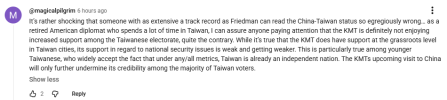
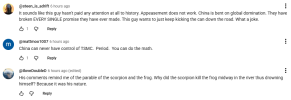
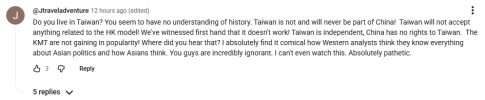
I enjoy listening to George Friedman in general, however I think he completely gets this wrong .. China should never be allowed to "Hong Kong" Taiwan
Negotiating the Red Line: Security and Autonomy in Taiwan
Geopolitical Futures
This video features George Friedman discussing the complex geopolitical relationship between the United States and China, focusing on how economic interdependence and military tensions—specifically regarding Taiwan—could be resolved through a formal accommodation.
Key Takeaways:
The Economic/Military Paradox: While the U.S. and China are highly integrated economically, they remain at odds over regional security. Friedman argues that both nations want to avoid war and prioritize economic stability, making a negotiated settlement mutually beneficial (0:00-0:58).
The Strategic Importance of Taiwan:Taiwan is critical to China because it sits within the first island chain, which influences China's access to the Pacific Ocean. China views this as a major security threat, while the U.S. seeks to prevent Taiwan from falling into Chinese control (2:17-3:37).
The 'Hong Kong on Steroids' Proposal: Friedman suggests a model where Taiwan is officially recognized as part of China but exists as a deeply autonomous zone. This would involve:
The U.S. limiting weapon sales to Taiwan solely for defensive purposes (4:00-4:54).
Increased diplomatic communication to prevent surprise military actions (6:35-7:00).
A structural recognition that maintains Taiwan's autonomy while satisfying China's symbolic requirement (10:42-11:25).
Internal Shifts in Taiwan: There is a growing political trend within Taiwan toward accommodation with China, driven by economic necessity, such as the market for microchips (8:24-9:03).
Conclusion: Because the U.S. and China have clear, shared economic interests, the military tensions over Taiwan are negotiable. Friedman concludes that there are currently more factors pulling the two nations toward cooperation than pushing them into conflict (11:27-12:01).
FED WILL INJECT $8,071,000,000.00 INTO THE MARKET IN 2 HOURS, RIGHT BEFORE THE US MARKET OPEN
THEY'RE OFFICIALLY CONTINUING QE AND TURNING THE MONEY PRINTER BACK ON.
This is liquidity and it happens frequently, but the very fact that the markets need it, at that level, 2-3X per week, doesnt give me the warm and fuzzy's