

I have gone round and round with the best way to control temps in an outdoor projector enclosure, and I think I have finally settled on trying to build a multi-channel ESP-32 controller.
The catch? I know nothing about ESP-32.
How did I get here? My current enclosure uses an Inkbird wifi temp controller. With the metal enclosure, the wifi for tracking temp is useless. I also only get one set of logic. It either turns on/off exhaust fans, or turns on/off the heater. There is no way to stage the fans as the temp increases. I also can't run only the exhaust, I have to also run the intake. With it being cold when I use this for my holiday decorations, this draws in cold air which causes a huge swing in the temp and cycles the fans on/off, instead of just trying to maintain the temp.
I use Hubitat for my home automations. I was going down this path with Zigbee Shelly relays, but the signal would still be blocked by the pseudo-Faraday cage unless I had another hub inside and used it as a mesh device. I am concerned this would mess things up when I take it all down for the season.
For any devices that need it, I planned to add a wifi AP in the enclosure. Having this would let me use the Shelly relays via wifi with their app, which you can program logic in, but then I am reliant on the app and cloud connectivity for controlling the temp. There may also be latency and lag with triggering the relays.
That all being said, Shelly with wifi is my current plan, but I would like to look into building an ESP-32 controller that I can program to run inlet/exhaust fans and a heater. The logic would be when temp is +5 from the set point, the exhaust fans come on. If the temp continues to rise, then an inlet fan comes on. Once the temp gets back down to the set point, the fans turn off. Again, if the temp gets to -5 from the set point, the heater turns on until the set point is reached.
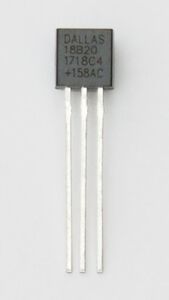
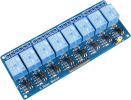
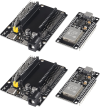
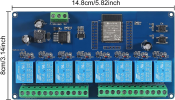
I am looking for guidance on what I would need for this, and how to get it all to work. I already have some DS18B20 temp probes that I planned to use with the Shelly Add On, but other than that I have been looking for 8 channel ESP-32s on Amazon.
The catch? I know nothing about ESP-32.
How did I get here? My current enclosure uses an Inkbird wifi temp controller. With the metal enclosure, the wifi for tracking temp is useless. I also only get one set of logic. It either turns on/off exhaust fans, or turns on/off the heater. There is no way to stage the fans as the temp increases. I also can't run only the exhaust, I have to also run the intake. With it being cold when I use this for my holiday decorations, this draws in cold air which causes a huge swing in the temp and cycles the fans on/off, instead of just trying to maintain the temp.
I use Hubitat for my home automations. I was going down this path with Zigbee Shelly relays, but the signal would still be blocked by the pseudo-Faraday cage unless I had another hub inside and used it as a mesh device. I am concerned this would mess things up when I take it all down for the season.
For any devices that need it, I planned to add a wifi AP in the enclosure. Having this would let me use the Shelly relays via wifi with their app, which you can program logic in, but then I am reliant on the app and cloud connectivity for controlling the temp. There may also be latency and lag with triggering the relays.
That all being said, Shelly with wifi is my current plan, but I would like to look into building an ESP-32 controller that I can program to run inlet/exhaust fans and a heater. The logic would be when temp is +5 from the set point, the exhaust fans come on. If the temp continues to rise, then an inlet fan comes on. Once the temp gets back down to the set point, the fans turn off. Again, if the temp gets to -5 from the set point, the heater turns on until the set point is reached.
I am looking for guidance on what I would need for this, and how to get it all to work. I already have some DS18B20 temp probes that I planned to use with the Shelly Add On, but other than that I have been looking for 8 channel ESP-32s on Amazon.