

Let's be honest if a person is doing that here in a Porsche Cayenne with that much power. He is surely going to get lead.
US Elections (& Politics) :)
- Thread starter sdkid
- Start date
You are using an out of date browser. It may not display this or other websites correctly.
You should upgrade or use an alternative browser.
You should upgrade or use an alternative browser.

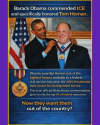
I had to verify--- this graphic is accurate...


I disagree with the X poster.......those 2 Russian cops spent way too much time dodging that vehicle and putting themselves in harm's way IMO, the white/bllue police car getting hit at least twice and the one cop hanging off the door of the fleeing car.
I know why I'm not a cop and never was a good prospect....I likely would have shot the driver right after the second hit on the police car. The more time is spent in a dangerous situation as was shown, the greater the likelihood someone's going to get hurt or die....I prefer it not be me, especially if I'm put in that position much more often than the average law-abiding person.....much like an ICE agent at the moment.
ctgoldwing
Getting comfortable
Does anyone think he is not unhinged?
WEST PALM BEACH, Florida (AP) — President Donald Trump said Saturday that he would charge a 10% import tax starting in February on goods from eight European nations because of their opposition to American control of Greenland, setting up a potentially dangerous test of U.S. partnerships in Europe.
Denmark, Norway, Sweden, France, Germany, the United Kingdom, the Netherlands and Finland would face the tariff, Trump said in a social media post while at his golf club in West Palm Beach, Florida. The rate would climb to 25% on June 1 if no deal was in place for “the Complete and Total purchase of Greenland” by the United States, he said.
The Republican president appeared to indicate that he was using the tariffs as leverage to force talks with Denmark and other European countries over the status of Greenland, a semiautonomous territory of NATO ally Denmark that he regards as critical to U.S. national security.
“The United States of America is immediately open to negotiation with Denmark and/or any of these Countries that have put so much at risk, despite all that we have done for them,” Trump said on Truth Social.
WEST PALM BEACH, Florida (AP) — President Donald Trump said Saturday that he would charge a 10% import tax starting in February on goods from eight European nations because of their opposition to American control of Greenland, setting up a potentially dangerous test of U.S. partnerships in Europe.
Denmark, Norway, Sweden, France, Germany, the United Kingdom, the Netherlands and Finland would face the tariff, Trump said in a social media post while at his golf club in West Palm Beach, Florida. The rate would climb to 25% on June 1 if no deal was in place for “the Complete and Total purchase of Greenland” by the United States, he said.
The Republican president appeared to indicate that he was using the tariffs as leverage to force talks with Denmark and other European countries over the status of Greenland, a semiautonomous territory of NATO ally Denmark that he regards as critical to U.S. national security.
“The United States of America is immediately open to negotiation with Denmark and/or any of these Countries that have put so much at risk, despite all that we have done for them,” Trump said on Truth Social.

Oceanslider
Known around here
take your meds. sit back and watch. you conveniently forget previous outcomes.Does anyone think he is not unhinged?
WEST PALM BEACH, Florida (AP) — President Donald Trump said Saturday that he would charge a 10% import tax starting in February on goods from eight European nations because of their opposition to American control of Greenland, setting up a potentially dangerous test of U.S. partnerships in Europe.
Denmark, Norway, Sweden, France, Germany, the United Kingdom, the Netherlands and Finland would face the tariff, Trump said in a social media post while at his golf club in West Palm Beach, Florida. The rate would climb to 25% on June 1 if no deal was in place for “the Complete and Total purchase of Greenland” by the United States, he said.
The Republican president appeared to indicate that he was using the tariffs as leverage to force talks with Denmark and other European countries over the status of Greenland, a semiautonomous territory of NATO ally Denmark that he regards as critical to U.S. national security.
“The United States of America is immediately open to negotiation with Denmark and/or any of these Countries that have put so much at risk, despite all that we have done for them,” Trump said on Truth Social.

jpc-s4
Getting comfortable

I'd much rather drive in a neighborhood with a Donald Trump Blvd than one with a Martin Luther King, Jr. Blvd.
jpc-s4
Getting comfortable
Ignore the details
The lies continue. They did NOT tear-gas an infant, and the one article mentions this. Collateral damage. No, it's not good, but when trying to keep people in control who are breaking laws, it sometimes happens.
jpc-s4
Getting comfortable
More stupidity on display here. This is the same bullshit that cops should, "shoot them in the leg." This is the crap that you only see on TV and in movies.
Law enforcement is taught to stop the threat, and the use of lethal force, when required, should be lethal.

Oceanslider
Known around here


The lies continue. They did NOT tear-gas an infant, and the one article mentions this. Collateral damage. No, it's not good, but when trying to keep people in control who are breaking laws, it sometimes happens.

Last edited:

Parley
Known around here
They have been doing that with small children. Jesse Waters reported on this the other night. Interesting that there apparently are no fathers present according to the Fox people on the scene, just the mothers.

Oceanslider
Known around here
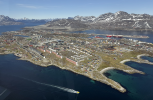
All protestors can gladly move forever to Greenland, which they never would. Would they pay to visit Greenland, nope. Typical leftist protest, they are always making up a reason to cry.
About 20 to 30 days a year might look like this
Last edited:

BREAKING: A federal grand jury has ALREADY begun issuing SUBPOENAS for Tim Walz and Minneapolis Mayor Jacob Frey regarding their conspiracy to obstruct ICE operations

Sybertiger
Known around here

Illegal immigrants rack up $1B-plus in Texas hospital costs in fiscal year 2025; total likely higher: report
Texas hospitals face over $1 billion in costs linked to illegal immigrants in the first year of tracking, with 313,742 visits recorded under Gov. Greg Abbott's order.
 www.foxnews.com

ctgoldwing
Getting comfortable
Yep, the Chinese are making out just fine with Trump's lack of economic policy:
WASHINGTON (AP) — America’s top trading partners are responding to President Donald Trump’s belligerent and unpredictable trade policies by trying to take their business elsewhere.
Canada broke with the United States Friday, slashing its 100% import tax on Chinese electric vehicles in return for lower tariffs on Canadian farm products, particularly canola seeds.
“It’s a huge declaration of realignment in Canada’s economic relations,” said Edward Alden, who studies trade issues as senior fellow at the Council on Foreign Relations. “The economic threat from the United States is now perceived by Canadians as far bigger than the economic threat from China. So this is a big deal.’’
Canada has repeatedly been the target of Trump’s impulsive wrath. In October, for instance, he said he was imposing a 10% tariff on Canadian imports as a reprisal for Ontario’s provincial government airing an advertisement that criticized the president’s go-to diplomatic tariff tool. He didn’t follow through on the increase, but tariffs on on some key Canadian sectors like steel and aluminum remain.
But Friday’s deal with China is potentially perilous one for Canada’s prime minister, Mark Carney, who risks retribution from Trump on the eve of negotiations over the renewal of a North American trade pact that is crucial to Canadian businesses.
The European Union formally signed a trade pact Saturday with the South American alliance known as Mercosur, which includes the region’s two biggest economies, Brazil and Argentina. The EU is also pursuing a trade deal with India.
China, pounded by U.S. tariffs since Trump’s first term, has diversified its exports away the world’s biggest economy to markets such as Europe and Southeast Asia. It seems to be working. China’s trade surplus with the rest of the world surged to a record $1.2 trillion in 2025, the Chinese government reported Wednesday, despite tumbling exports to the U.S.
Since returning to the White House in January, Trump has overturned seven decades of U.S. policy in favor of ever-freer trade. He’s imposed double-digit taxes on imports from almost every country on Earth as well as singling out specific industries, such as steel and autos, for levies of their own.
Trump says tariffs will raise money for the U.S. Treasury, protect American industries, bring investment into to the United States. On Thursday, in fact, Taiwan agreed to invest $250 billion in the United States in return for Trump reducing the tariff on its products to 15% from 20%.
The president’s use of tariffs has often been arbitrary and unpredictable.
He targeted Brazil, for instance, for prosecuting his friend, former Brazilian president Jair Bolsonaro. On Friday, he threatened to slap tariffs on countries that don’t support his efforts to wrest control of Greenland from Denmark.
In 2024, Canada had followed the U.S. by imposing 100% tariffs on EVs from China, reflecting fears that inexpensive Chinese cars would overwhelm domestic North American automakers.
But the deal with China delivers benefits to Canada.
First, its canola farmers need export markets, and this pact lowers China’s tariff on canola from 84% to 15%. Canola farmers are hailing Canada’s new trade deal with China as great news that could restore exports for the major crop.
Second, the Trump administration, favoring fossil fuels over green energy, “is actively hostile to EV production in North America,’’ said economist Mary Lovely, senior fellow at the Peterson Institute for International Economics. America’s opposition “threatens to make the North American (auto) industry obsolete in the future, as China moves ahead with rapid quality improvements in batteries and electronics for EVs.’’
“China’s strengths in electric vehicle sector are undeniable,” Carney said Friday. “China produces some of the most affordable and efficient energy efficient vehicles in the world. And in order for Canada to build our own competitive EV sector, we need to learn from innovative partners, access their supply chains, and increase local demand.’’
WASHINGTON (AP) — America’s top trading partners are responding to President Donald Trump’s belligerent and unpredictable trade policies by trying to take their business elsewhere.
Canada broke with the United States Friday, slashing its 100% import tax on Chinese electric vehicles in return for lower tariffs on Canadian farm products, particularly canola seeds.
“It’s a huge declaration of realignment in Canada’s economic relations,” said Edward Alden, who studies trade issues as senior fellow at the Council on Foreign Relations. “The economic threat from the United States is now perceived by Canadians as far bigger than the economic threat from China. So this is a big deal.’’
Canada has repeatedly been the target of Trump’s impulsive wrath. In October, for instance, he said he was imposing a 10% tariff on Canadian imports as a reprisal for Ontario’s provincial government airing an advertisement that criticized the president’s go-to diplomatic tariff tool. He didn’t follow through on the increase, but tariffs on on some key Canadian sectors like steel and aluminum remain.
But Friday’s deal with China is potentially perilous one for Canada’s prime minister, Mark Carney, who risks retribution from Trump on the eve of negotiations over the renewal of a North American trade pact that is crucial to Canadian businesses.
Trade partners seek alternatives to the U.S.
Canada is not alone in looking for alternatives to America’s massive market as Trump slaps massive tariffs on imports in an attempt to strong-arm other countries into moving production to the United States.The European Union formally signed a trade pact Saturday with the South American alliance known as Mercosur, which includes the region’s two biggest economies, Brazil and Argentina. The EU is also pursuing a trade deal with India.
China, pounded by U.S. tariffs since Trump’s first term, has diversified its exports away the world’s biggest economy to markets such as Europe and Southeast Asia. It seems to be working. China’s trade surplus with the rest of the world surged to a record $1.2 trillion in 2025, the Chinese government reported Wednesday, despite tumbling exports to the U.S.
Since returning to the White House in January, Trump has overturned seven decades of U.S. policy in favor of ever-freer trade. He’s imposed double-digit taxes on imports from almost every country on Earth as well as singling out specific industries, such as steel and autos, for levies of their own.
Trump says tariffs will raise money for the U.S. Treasury, protect American industries, bring investment into to the United States. On Thursday, in fact, Taiwan agreed to invest $250 billion in the United States in return for Trump reducing the tariff on its products to 15% from 20%.
The president’s use of tariffs has often been arbitrary and unpredictable.
He targeted Brazil, for instance, for prosecuting his friend, former Brazilian president Jair Bolsonaro. On Friday, he threatened to slap tariffs on countries that don’t support his efforts to wrest control of Greenland from Denmark.
Canada has its own complicated relationship with China
Friday’s deal in Beijing marks a turnabout in Canadian policy.In 2024, Canada had followed the U.S. by imposing 100% tariffs on EVs from China, reflecting fears that inexpensive Chinese cars would overwhelm domestic North American automakers.
But the deal with China delivers benefits to Canada.
First, its canola farmers need export markets, and this pact lowers China’s tariff on canola from 84% to 15%. Canola farmers are hailing Canada’s new trade deal with China as great news that could restore exports for the major crop.
Second, the Trump administration, favoring fossil fuels over green energy, “is actively hostile to EV production in North America,’’ said economist Mary Lovely, senior fellow at the Peterson Institute for International Economics. America’s opposition “threatens to make the North American (auto) industry obsolete in the future, as China moves ahead with rapid quality improvements in batteries and electronics for EVs.’’
“China’s strengths in electric vehicle sector are undeniable,” Carney said Friday. “China produces some of the most affordable and efficient energy efficient vehicles in the world. And in order for Canada to build our own competitive EV sector, we need to learn from innovative partners, access their supply chains, and increase local demand.’’
Oceanslider
Known around here


Federal officials investigating Renee Good's widow in shooting probe, sources say
Federal officials are investigating the widow of Renee Nicole Good to determine whether she may have impeded a federal officer moments before he shot and killed her wife in Minneapolis, sources say