and again...

What
- On December 8, 2025, Reuters reported that the U.S. will allow exports to China of certain “second-tier” AI chips — specifically Nvidia’s H200 chips (but not its top-end “Blackwell” or “Rubin” chips). Reuters+2Politico+2
- Also on December 8, 2025, DOJ announced that it disrupted a major smuggling ring (the enforcement operation is being called Operation Gatekeeper) which allegedly smuggled large numbers of Nvidia H100 and H200 GPUs to China in violation of U.S. export control laws. Department of Justice+2Axios+2
- According to prosecutors, the smuggled GPUs were re-labeled (fake company name, doctored paperwork) to disguise their destination. Bloomberg+2Fox 26 Houston+2
- The DOJ press release explicitly warns that such chips are “the building blocks of AI superiority … integral to modern military applications.” Department of Justice
So — yes —
both events occurred on the same date: a policy decision loosening export restrictions, and an arrest of a smuggling network.

But the claim that this proves hypocrisy or that the “same chips” are being legalized and smuggled at the same time is misleading
Here’s where the nuance and misleading framing come in:
- The export-approval is conditional: H200 chips will be allowed to go to approved customers in China, under a framework managed by the U.S. Commerce Department. Reuters+1
- The smuggling ring targeted by DOJ did not follow that approval framework — they allegedly used false paperwork, shell companies, and mis-labeling to illegally export controlled chips. Department of Justice+2Fox 26 Houston+2
- In other words: the government is simultaneously (1) changing the legal parameters to allow some controlled exports under oversight and (2) enforcing the law against illegal exports outside of that process.
Thus — while superficially it looks like “they approved chip exports, then arrested people exporting chips the same day” — what actually happened is more subtle: the crackdown was against
unauthorized, illicit exports; the approval is for
legal, regulated exports under a new policy.
What this means for truth of the tweet
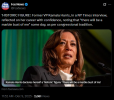
The tweet that says “the SAME DAY … admin approves sale of H200 chips to China, DOJ says this — about the
exact same chips” is mixing two related but distinct things:
- True: The approval for H200 exports and the DOJ smuggling arrests happened on the same day.
- Misleading / Incomplete: That does not automatically mean the DOJ was arresting people for exports that the government itself had just legalized. The arrested smuggling involved illegal export routes outside the regulated approval system.
So the scenario is
not as contradictory or hypocritical as it may be framed.
Why both things might be happening together
- The U.S. government apparently decided that allowing controlled exports of somewhat older (but still powerful) AI chips to China under a vetting process might preserve economic and trade interests, maybe avoid pushing China to fully domestic alternatives. Reuters+2Arise News+2
- At the same time, it wants to maintain a “hard line” on unauthorized exports — hence vigorous enforcement to prevent illicit smuggling. That’s consistent with its stated national-security concerns. Department of Justice+2Fox 26 Houston+2
Put simply: “some exports under control” + “no illegal exports” are both part of the same policy approach.
verdict: The tweet is
It’s accurate that both events (policy approval + DOJ arrests) occurred on the same day, and that the chips involved are roughly of the same series (H200 / H100). But framing it as “they just legalized these chips — and at the same time are arresting people for shipping them” insinuates a contradiction that doesn’t really exist: the law just changed for
authorized exports, and the arrests are for
unauthorized, illicit exports.



 www.zerohedge.com