


US Elections (& Politics) :)
- Thread starter sdkid
- Start date
You are using an out of date browser. It may not display this or other websites correctly.
You should upgrade or use an alternative browser.
You should upgrade or use an alternative browser.


Oceanslider
Known around here
The transition from the silent weightlessness of deep space to the heavy, vibrating reality of Earth is the most physically demanding part of the entire mission. For the crew, it’s a sensory transition that moves from "nothing" to "everything" in a matter of minutes.
1. The Sudden Return of Gravity
After days of floating, gravity doesn't return gradually; it hits like a physical weight.- The First "G": As Orion touches the upper atmosphere, the crew will feel a light "tug" into their seats. It’s the first time they’ve felt their own weight since leaving Earth.
- The Peak Load: Within minutes, that weight multiplies. At peak deceleration, they will feel about 7g's to 8g's. To put that in perspective, a 180lb astronaut will feel like they weigh over 1,300lbs. Breathing becomes difficult, and even lifting an arm to reach a control panel requires massive effort.
2. The Sound and Vibration
In space, there is no sound outside the ship. During reentry, the environment becomes incredibly loud.- The Roar: As the air thickens, the sound transitions from a high-pitched whistle to a deep, thunderous roar. It’s the sound of air being compressed and pushed aside at Mach 30.
- The Buffeting: The ride is far from smooth. The capsule will shake and vibrate violently (often called "the paint shaker" phase) as it passes through different layers of air pressure and performs steering maneuvers to stay on course.
3. The Visual Spectacle
Looking out the small windows, the view is both beautiful and terrifying.- The Plasma Fire: The crew won't see blue sky at first. They will see a wall of bright pink, orange, and magenta fire. This is the air outside ionizing into plasma.
- The Blackout: During this time, they are encased in a "fireball" that blocks all radio communication. For about 7 to 11 minutes, they are completely alone, unable to speak to Mission Control, watching the plasma lick the windows just inches from their faces.
4. The "Jolt" of the Chutes
Once the fireball fades and the ship slows, the final sensations are sudden mechanical shocks:- The Drogue Snap: When the two drogue parachutes fire at 25,000 feet, the crew feels a violent "jolt" as the chutes grab the air and stabilize the tumbling capsule.
- The Main Deployment: A few minutes later, at 9,000 feet, the three main chutes unfurl. The capsule will swing and oscillate significantly—enough to cause motion sickness—before settling into a slow, rhythmic drift.
5. The Splashdown
The final "feel" is the impact with the water. Even with the parachutes, the capsule hits the Pacific at about 20mph. It’s often described by past astronauts as a "car crash" sensation—a sudden, blunt thud followed by the disorienting feeling of bobbing on ocean waves, which can be quite nauseating after days in a stable, weightless environment.
Last edited:


Arjun
IPCT Contributor
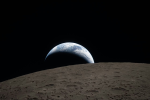
One last shot before the world goes BOOMView attachment 241482
The transition from the silent weightlessness of deep space to the heavy, vibrating reality of Earth is the most physically demanding part of the entire mission. For the crew, it’s a sensory transition that moves from "nothing" to "everything" in a matter of minutes.
1. The Sudden Return of Gravity
After days of floating, gravity doesn't return gradually; it hits like a physical weight.
- The First "G": As Orion touches the upper atmosphere, the crew will feel a light "tug" into their seats. It’s the first time they’ve felt their own weight since leaving Earth.
- The Peak Load: Within minutes, that weight multiplies. At peak deceleration, they will feel about $7g$ to $8g$. To put that in perspective, a $180$ lb astronaut will feel like they weigh over $1,300$ lbs. Breathing becomes difficult, and even lifting an arm to reach a control panel requires massive effort.
2. The Sound and Vibration
In space, there is no sound outside the ship. During reentry, the environment becomes incredibly loud.
- The Roar: As the air thickens, the sound transitions from a high-pitched whistle to a deep, thunderous roar. It’s the sound of air being compressed and pushed aside at Mach 30.
- The Buffeting: The ride is far from smooth. The capsule will shake and vibrate violently (often called "the paint shaker" phase) as it passes through different layers of air pressure and performs steering maneuvers to stay on course.
3. The Visual Spectacle
Looking out the small windows, the view is both beautiful and terrifying.
- The Plasma Fire: The crew won't see blue sky at first. They will see a wall of bright pink, orange, and magenta fire. This is the air outside ionizing into plasma.
- The Blackout: During this time, they are encased in a "fireball" that blocks all radio communication. For about 7 to 11 minutes, they are completely alone, unable to speak to Mission Control, watching the plasma lick the windows just inches from their faces.
4. The "Jolt" of the Chutes
Once the fireball fades and the ship slows, the final sensations are sudden mechanical shocks:
- The Drogue Snap: When the two drogue parachutes fire at 25,000 feet, the crew feels a violent "jolt" as the chutes grab the air and stabilize the tumbling capsule.
- The Main Deployment: A few minutes later, at 9,000 feet, the three main chutes unfurl. The capsule will swing and oscillate significantly—enough to cause motion sickness—before settling into a slow, rhythmic drift.
5. The Splashdown
The final "feel" is the impact with the water. Even with the parachutes, the capsule hits the Pacific at about $20$ mph. It’s often described by past astronauts as a "car crash" sensation—a sudden, blunt thud followed by the disorienting feeling of bobbing on ocean waves, which can be quite nauseating after days in a stable, weightless environment.
Arjun
IPCT Contributor



Oceanslider
Known around here

Oceanslider
Known around here

The "Good News" Context
It is important to note that while 33,000 is a high number, it represents a 55% decrease in veteran homelessness since 2010. Programs like HUD-VASH (which pairs housing vouchers with social work) have proven that when veterans are given stable housing first, they are far more successful at then addressing personal challenges like health or employment.
Oceanslider
Known around here
Oceanslider
Known around here


bigredfish
Known around here
See here's the problem with the cult.
They can't separate the United States and its Constitution, from a temporary office holder, even President.
I remember when the AG wasn't a lapdog to the President.
Trump has destroyed our system of government becasue you can be sure that due to his actions, future Presidents will take advantage of the holes he's put in it.
They can't separate the United States and its Constitution, from a temporary office holder, even President.
I remember when the AG wasn't a lapdog to the President.
Trump has destroyed our system of government becasue you can be sure that due to his actions, future Presidents will take advantage of the holes he's put in it.
bigredfish
Known around here
Things seem to be going well at the Department of Defense War
Arjun
IPCT Contributor
I remember when the AG wasn't a lapdog to the President.
Wow, I can't believe he actually said it...

bigredfish
Known around here
This is an example of the mentality we're up against.
Trump could literally kill babies on TV in the oval Office and they'd make excuses for it
Trump could literally kill babies on TV in the oval Office and they'd make excuses for it
bigredfish
Known around here
It actually got worse..


Oceanslider
Known around here

Based on conversations with Prime Minister Shehbaz Sharif and Field Marshal Asim Munir, of Pakistan, and wherein they requested that I hold off the destructive force being sent tonight to Iran, and subject to the Islamic Republic of Iran agreeing to the COMPLETE, IMMEDIATE, and SAFE OPENING of the Strait of Hormuz, I agree to suspend the bombing and attack of Iran for a period of two weeks. This will be a double sided CEASEFIRE! The reason for doing so is that we have already met and exceeded all Military objectives, and are very far along with a definitive Agreement concerning Longterm PEACE with Iran, and PEACE in the Middle East. We received a 10 point proposal from Iran, and believe it is a workable basis on which to negotiate. Almost all of the various points of past contention have been agreed to between the United States and Iran, but a two week period will allow the Agreement to be finalized and consummated. On behalf of the United States of America, as President, and also representing the Countries of the Middle East, it is an Honor to have this Longterm problem close to resolution. Thank you for your attention to this matter! President DONALD J. TRUMP
Donald J. Trump (@realDonaldTrump)

Last edited:
View attachment 241509
Based on conversations with Prime Minister Shehbaz Sharif and Field Marshal Asim Munir, of Pakistan, and wherein they requested that I hold off the destructive force being sent tonight to Iran, and subject to the Islamic Republic of Iran agreeing to the COMPLETE, IMMEDIATE, and SAFE OPENING of the Strait of Hormuz, I agree to suspend the bombing and attack of Iran for a period of two weeks. This will be a double sided CEASEFIRE! The reason for doing so is that we have already met and exceeded all Military objectives, and are very far along with a definitive Agreement concerning Longterm PEACE with Iran, and PEACE in the Middle East. We received a 10 point proposal from Iran, and believe it is a workable basis on which to negotiate. Almost all of the various points of past contention have been agreed to between the United States and Iran, but a two week period will allow the Agreement to be finalized and consummated. On behalf of the United States of America, as President, and also representing the Countries of the Middle East, it is an Honor to have this Longterm problem close to resolution. Thank you for your attention to this matter! President DONALD J. TRUMP
Donald J. Trump (@realDonaldTrump)
View attachment 241510
View attachment 241511
Trump will be pissed if this happens...

bigredfish
Known around here
Republicans lose another seat... its getting to be embarrassing