


Money & Economics
- Thread starter bigredfish
- Start date
You are using an out of date browser. It may not display this or other websites correctly.
You should upgrade or use an alternative browser.
You should upgrade or use an alternative browser.


Sybertiger
Known around here
Closed the Fifth Third account I had opened mid-September. Interest rate dropped from 4.75 APY to 2.65 at the beginning of this month.
Anyone ever deal with CIT Bank a division of First Citizens?
Anyone ever deal with CIT Bank a division of First Citizens?
Sybertiger
Known around here
These people who work in the banks are ignorant as fuck. Today had a branch manager at Fifth Third Bank tell me that FDIC insurance is allowed to take up to 99 years to payout if a bank falters. And an account specialist there told me that FDIC covers up to $250K for the account holder and another $250K for the same account if you have a beneficiary listed. These are people who have been certified by their bank with credentials. They were not young people...probably upper 40s or early 50s. How can you trust these dumb fucks with your money?!


mat200
IPCT Contributor
- Jan 17, 2017
- 19,697
- 32,849
This is actually really good on economics @bigredfish @Sybertiger @sdkid @johnfitz @TonyR
The $1.5+ Trillion Risk You Should Know About | The Spillover
Council on Foreign Relations
Mar 31, 2026 The Spillover
This episode dives into how the opaque growth and structural risks in private credit, combined with global supply shocks and market stress spurred by the Iran war, are creating a uniquely fragile and unpredictable economic landscape.
Hosts:
Sebastian Mallaby, Paul A. Volcker Senior Fellow for International Economics, Council on Foreign Relations (CFR) - ...
Rebecca Patterson, Senior Fellow, Council on Foreign Relations (CFR) - ...
We discuss:
1. The rapid rise of private credit, its lack of transparency, and why recent bankruptcies are raising red flags.
2. How $10 billion in redemption requests were submitted to major private credit funds in the first quarter of 2026—including major funds Apollo, Ares, and Blackstone.
3. Why this moment isn’t a repeat of 2008, but still presents real risks due to government debt levels and the lack of safety nets for private credit.
4. As Rebecca Patterson, CFR senior fellow, puts it: “No one has any idea what’s going to happen—and that’s exactly the challenge right now.”
5. Current structural risks in private credit, including liquidity mismatches, redemption limits (“gates”), and growing exposure to retail investors.
6. Why financial markets are behaving unusually, with rising bond yields and weakening traditional safe-haven assets.
7. How central banks are stuck between fighting inflation and supporting growth, creating a far more complex policy environment than past crises.
This episode of The Spillover features hosts Sebastian Mallaby and Rebecca Patterson discussing the current economic landscape shaped by the war in Iran, the risks in the private credit market, and broader geopolitical impacts.
The $1.5+ Trillion Risk You Should Know About | The Spillover
Council on Foreign Relations
Mar 31, 2026 The Spillover
This episode dives into how the opaque growth and structural risks in private credit, combined with global supply shocks and market stress spurred by the Iran war, are creating a uniquely fragile and unpredictable economic landscape.
Hosts:
Sebastian Mallaby, Paul A. Volcker Senior Fellow for International Economics, Council on Foreign Relations (CFR) - ...
Rebecca Patterson, Senior Fellow, Council on Foreign Relations (CFR) - ...
We discuss:
1. The rapid rise of private credit, its lack of transparency, and why recent bankruptcies are raising red flags.
2. How $10 billion in redemption requests were submitted to major private credit funds in the first quarter of 2026—including major funds Apollo, Ares, and Blackstone.
3. Why this moment isn’t a repeat of 2008, but still presents real risks due to government debt levels and the lack of safety nets for private credit.
4. As Rebecca Patterson, CFR senior fellow, puts it: “No one has any idea what’s going to happen—and that’s exactly the challenge right now.”
5. Current structural risks in private credit, including liquidity mismatches, redemption limits (“gates”), and growing exposure to retail investors.
6. Why financial markets are behaving unusually, with rising bond yields and weakening traditional safe-haven assets.
7. How central banks are stuck between fighting inflation and supporting growth, creating a far more complex policy environment than past crises.
This episode of The Spillover features hosts Sebastian Mallaby and Rebecca Patterson discussing the current economic landscape shaped by the war in Iran, the risks in the private credit market, and broader geopolitical impacts.
Key Economic and Geopolitical Impacts
- War in Iran (0:01:30 - 0:13:53): The hosts analyze the conflict through the lenses of duration, breadth, and policy response. They note that the war is causing global supply shortages (e.g., semiconductors, fertilizer, and oil) and contributing to rising government bond yields as nations increase defense spending and provide consumer subsidies.
- Financial Market Volatility (0:06:49 - 0:10:00): Traditional safe-haven assets are behaving unpredictably. The hosts highlight the struggles of the "fragile four" economies (Japan, Britain, France, and the US), which are grappling with high debt levels and the risk of needing to balance inflation-fighting rate hikes with growth-supporting measures.
The Private Credit Risk (0:14:02 - 0:34:45)
- Structural Fragility: Private credit, an asset class now valued at $1.5–$3 trillion, faces significant risks due to its lack of transparency and liquidity mismatches (0:14:02 - 0:16:33). Unlike banks, these funds lack government backstops or access to central bank discount windows.
- The "Run" Risk (0:16:33 - 0:18:31): With $10 billion in redemption requests in Q1 2026, many major funds have implemented "gates" (redemption limits), heightening investor anxiety.
- The "SaaS Apocalypse" (0:24:58 - 0:27:00): A significant portion of private credit portfolios consists of loans to SaaS (Software as a Service) companies. The rise of agentic AI (like Anthropic's Claude) has led to concerns about the viability of these companies, further pressuring the credit market.
Outlook and Comparisons
While the hosts compare current conditions to the 2008 subprime crisis, they highlight key differences: household leverage is lower today, and the primary debt burden has shifted to governments (0:30:31 - 0:33:08). They emphasize the need for greater transparency and education for retail investors entering this space to prevent future panic.
mat200
IPCT Contributor
- Jan 17, 2017
- 19,697
- 32,849
Massive Food crisis lined up due to 4 products from the Persian Gulf that are being disrupted
1) Oil
2) Natural Gas
3) Sulfur
4) Fertilizer
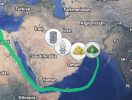
Price impacts ..

A massive food crisis is coming
Money & Macro
This video, narrated by economist Dr. Joeri Schasfoort, explains how the closure of the Strait of Hormuz following a conflict between the US, Israel, and Iran is expected to trigger a significant global food crisis.
The Significance of the Strait of Hormuz (1:10 - 4:42):The blockade disrupts the transit of vital agricultural and industrial supplies, specifically:
1) Oil
2) Natural Gas
3) Sulfur
4) Fertilizer
Price impacts ..
A massive food crisis is coming
Money & Macro
This video, narrated by economist Dr. Joeri Schasfoort, explains how the closure of the Strait of Hormuz following a conflict between the US, Israel, and Iran is expected to trigger a significant global food crisis.
The Significance of the Strait of Hormuz (1:10 - 4:42):The blockade disrupts the transit of vital agricultural and industrial supplies, specifically:
- Oil and Gas: Essential for fueling mechanized farms and transporting produce, while natural gas is a key input for nitrogen-based fertilizers (2:44).
- Sulfur: About 44% of global exports pass through the strait, which is critical for phosphate fertilizers (3:12).
- Direct Fertilizer Exports: The region accounts for roughly 1/3 of global nitrogen-based fertilizer trade; the blockade has removed nearly 20% of ready-to-use supply from the market (3:56).
- Weeks: Impacts on grain and bread prices.
- Months: Impacts on egg and dairy products.
- 5 Months: The "protein spike," as rising feed costs (corn) make pork and broiler chickens significantly more expensive.

mat200
IPCT Contributor
- Jan 17, 2017
- 19,697
- 32,849
Thanks @bigredfish for his post ..
here's the twitter thread reader on it for those not on X :

 twitter-thread.com
What do they know? I mean just a bunch of nobody’s..
here's the twitter thread reader on it for those not on X :
1/ Goldman Sachs analysts report that the biggest oil crisis in history is about to hit globally, with profound and highly destructive consequences. A new report asks ""Are We Running Out of Oil?", and concludes that the answer is yes. ⬇️ https://t.c
1/ Goldman Sachs analysts report that the biggest oil crisis in history is about to hit globally, with profound and highly destructive consequences. A new report asks ""Are We Running Out of Oil?", and concludes that the answer is yes. ⬇️ https://t.co/jtJux8V1lj
Attachments
Just a week ago Jamie said it wasn’t a big deal.
They’re prepping you
They’re prepping you
mat200
IPCT Contributor
- Jan 17, 2017
- 19,697
- 32,849
Math .. where is the money gonna come from ?
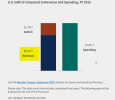
New Proposal Increases Military Budget by 50% to $1.5 TRILLION
Heresy Financial
This video by Heresy Financial critiques a new government budget proposal that would increase the military budget by 50%, reaching $1.5 trillion for 2027 (0:37-0:46). Joe Brown argues that this significant spending hike is being pursued despite a lack of clear objectives, suggesting it may signal a push toward further international conflict (1:08-1:55).
Key Takeaways:
New Proposal Increases Military Budget by 50% to $1.5 TRILLION
Heresy Financial
This video by Heresy Financial critiques a new government budget proposal that would increase the military budget by 50%, reaching $1.5 trillion for 2027 (0:37-0:46). Joe Brown argues that this significant spending hike is being pursued despite a lack of clear objectives, suggesting it may signal a push toward further international conflict (1:08-1:55).
Key Takeaways:
- Funding and Debt: The government does not have this money; spending is funded through taxes or inflation, which erodes the purchasing power of the dollar (1:57-3:13).
- Deficit Concerns: The U.S. federal deficit remains high, and even if defense spending is prioritized, the overall trend of rising expenditures continues to fuel concerns about long-term fiscal stability (3:13-5:05).
- Entitlement Spending: The video warns that mandatory programs like Social Security face depletion within 6 to 8 years, yet current budget proposals fail to account for these massive future liabilities (5:31-6:13).
- Bond Market Instability: A recent, weak 2-year Treasury auction (2.44 bid-to-cover ratio) indicates a growing lack of demand for U.S. debt (7:04-8:43). The Federal Reserve has resumed Quantitative Easing to provide liquidity, as the system struggles to absorb the government's borrowing needs (8:53-9:16).
- Potential Solutions: Brown suggests that future bank deregulation may be the government’s next move to force banks to absorb more Treasury debt, though he emphasizes that the underlying issue of unsustainable government spending remains unaddressed (9:17-10:28).

mat200
IPCT Contributor
- Jan 17, 2017
- 19,697
- 32,849
Why Australia Closed Almost All Its Refineries
The Hidden Crown
Apr 2, 2026
In 2002, Australia had eight oil refineries. Today, only two remain.
But here's what doesn't make sense: Australia is one of the largest energy exporters in the world. It ships gas to Japan, coal to India, uranium to Europe. It even exports 96% of its own crude oil. So why is the country running out of fuel?
The answer involves a refinery in India that processes more oil in a single day than Australia uses in a week. It involves shipping lanes that just closed. And it involves a decision made decades ago that almost nobody was paying attention to.
Right now, Australia holds 36 days of petrol in reserve. The international benchmark is 90. Regional towns are already seeing "out of diesel" signs at the pumps. And the two refineries keeping the country alive? Both could legally close next year.
The refineries didn't shut down because Australia ran out of oil. They shut down for a reason that will make you rethink everything you know about this country's future.
This video explores how Australia, despite being a major energy exporter, has transitioned from having eight domestic oil refineries in 2002 to just two today (0:00-0:20), creating a significant fuel security crisis.
Key takeaways include:
The Hidden Crown
Apr 2, 2026
In 2002, Australia had eight oil refineries. Today, only two remain.
But here's what doesn't make sense: Australia is one of the largest energy exporters in the world. It ships gas to Japan, coal to India, uranium to Europe. It even exports 96% of its own crude oil. So why is the country running out of fuel?
The answer involves a refinery in India that processes more oil in a single day than Australia uses in a week. It involves shipping lanes that just closed. And it involves a decision made decades ago that almost nobody was paying attention to.
Right now, Australia holds 36 days of petrol in reserve. The international benchmark is 90. Regional towns are already seeing "out of diesel" signs at the pumps. And the two refineries keeping the country alive? Both could legally close next year.
The refineries didn't shut down because Australia ran out of oil. They shut down for a reason that will make you rethink everything you know about this country's future.
This video explores how Australia, despite being a major energy exporter, has transitioned from having eight domestic oil refineries in 2002 to just two today (0:00-0:20), creating a significant fuel security crisis.
Key takeaways include:
- The Decline of Local Refining: Once established as strategic infrastructure following WWII (1:46), Australian refineries could not compete with the rise of massive, automated mega-refineries in Asia (e.g., India, Singapore, South Korea) that benefit from greater economies of scale and efficiency (2:45-3:45).
- The Export/Import Paradox: Australia currently exports 96% of its own high-quality crude oil—often because it is more cost-effective than transporting it to domestic refineries—only to purchase refined fuel back from the international market (3:52-4:45).
- National Security Implications: With only 36 days of petrol in reserve (the lowest in the developed world) (0:59) and a reliance on vulnerable, contested shipping lanes, Australia faces immediate risks. Supply disruptions are already causing diesel shortages in regional areas (8:43-8:50).
- The Future Outlook: The final two remaining refineries, Lytton and Geelong, are propped up by government subsidies that begin expiring in 2027 (9:42-9:49). Their potential closure would leave the country entirely dependent on foreign refined fuel imports, highlighting a long-term failure to prioritize energy self-sufficiency (10:06-11:30).
Conspiracy Theory now becoming fact as even Bloomberg admits the Petrodollar is toast. Got gold?
Most have no clue what this means,.
They're too busy playing Red Team/ Blue Team checkers and feeling all pumped from watching war planes and bombing runs like an adolescent boy.
They don;t realize that Donald Trump just put the exclamation mark on the US demise.
Most have no clue what this means,.
They're too busy playing Red Team/ Blue Team checkers and feeling all pumped from watching war planes and bombing runs like an adolescent boy.
They don;t realize that Donald Trump just put the exclamation mark on the US demise.
Think it can't happen again?
Think its only in the movies?
If you were in your 30's in 2008 you probably brushed it off.
If you were in your 50s-60's with most of your life net worth in your 401K and home, it took you almost 10 years to fully recover.
At 65+, you likely don't have 10 years to recover
Bear Stearns falls 2008
Think its only in the movies?
If you were in your 30's in 2008 you probably brushed it off.
If you were in your 50s-60's with most of your life net worth in your 401K and home, it took you almost 10 years to fully recover.
At 65+, you likely don't have 10 years to recover
Bear Stearns falls 2008
You should be too
PS- if you have retirement funds in an IRA, 401K, or brokerage account and haven’t looked lately…
Two things to consider, like today….
1- look at it! Do you have a fucking clue how it’s performing (or not)?
2- do you know you don’t have to, and probably should not, be in stocks right now?
Most every retirement account has a money market type option to move your money into. It stays in the IRA/401K and continues earning, typically now about 4%. But it doesn’t LOSE value.
* NOT FINANCIAL ADVICE - I eat crayons. Just my thoughts
PS- if you have retirement funds in an IRA, 401K, or brokerage account and haven’t looked lately…
Two things to consider, like today….
1- look at it! Do you have a fucking clue how it’s performing (or not)?
2- do you know you don’t have to, and probably should not, be in stocks right now?
Most every retirement account has a money market type option to move your money into. It stays in the IRA/401K and continues earning, typically now about 4%. But it doesn’t LOSE value.
* NOT FINANCIAL ADVICE - I eat crayons. Just my thoughts
What I'm watching today, well most every day...
Oil

 www.marketwatch.com
Gold
www.marketwatch.com
Gold
www.marketwatch.com
JPM
www.marketwatch.com
APO
www.marketwatch.com
VGT
www.marketwatch.com
And my little canary in the coal mine,
UCB
www.marketwatch.com
Oil
CL.1 | Crude Oil WTI (NYM $/bbl) Front Month Overview | MarketWatch
CL.1 | A complete Crude Oil WTI (NYM $/bbl) Front Month futures overview by MarketWatch. View the futures and commodity market news, futures pricing and futures trading.
www.marketwatch.com
GC00 | Gold Continuous Contract Overview | MarketWatch
GC00 | A complete Gold Continuous Contract futures overview by MarketWatch. View the futures and commodity market news, futures pricing and futures trading.
www.marketwatch.com
JPM Stock Price | JPMorgan Chase & Co. Stock Quote (U.S.: NYSE) | MarketWatch
JPM | Complete JPMorgan Chase & Co. stock news by MarketWatch. View real-time stock prices and stock quotes for a full financial overview.
www.marketwatch.com
APO Stock Price | Apollo Global Management Inc. Stock Quote (U.S.: NYSE) | MarketWatch
APO | Complete Apollo Global Management Inc. stock news by MarketWatch. View real-time stock prices and stock quotes for a full financial overview.
www.marketwatch.com
VGT | Vanguard Information Technology ETF Overview | MarketWatch
VGT | A complete Vanguard Information Technology ETF exchange traded fund overview by MarketWatch. View the latest ETF prices and news for better ETF investing.
www.marketwatch.com
And my little canary in the coal mine,
UCB
UCB Stock Price | United Community Banks Inc. Stock Quote (U.S.: NYSE) | MarketWatch
UCB | Complete United Community Banks Inc. stock news by MarketWatch. View real-time stock prices and stock quotes for a full financial overview.
www.marketwatch.com