


Money & Economics
- Thread starter bigredfish
- Start date
You are using an out of date browser. It may not display this or other websites correctly.
You should upgrade or use an alternative browser.
You should upgrade or use an alternative browser.
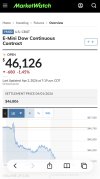
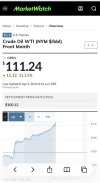

Oil was at $97 yesterday
It’s now $112 and going vertical
May want to fill your tank today.
It’s now $112 and going vertical
May want to fill your tank today.


Arjun
IPCT Contributor
Where's Elon when we need him? In case no one knew already, he's part of the hybrid raceOil was at $97 yesterday
It’s now $112 and going vertical
May want to fill your tank today.

Arjun
IPCT Contributor

EMPIRETECANDY
IPCT Vendor


mat200
IPCT Contributor
- Jan 17, 2017
- 19,697
- 32,849
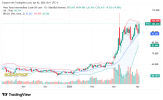

Many think Private Credit could become the Lehman of 2026...
Like 2008, at some point it no longer matters what the outlook 5 years down the road is. The snowball gains it own momentum and can no longer be stopped...
 www.zerohedge.com
www.zerohedge.com
Like 2008, at some point it no longer matters what the outlook 5 years down the road is. The snowball gains it own momentum and can no longer be stopped...
Private Credit Bank Run Begins: Blue Owl Gates After Shocking 41% Of OTIC Investors Ask For Their Money
Private Credit Bank Run Begins: Blue Owl Gates After Shocking 41% Of OTIC Investors Ask For Their Money<!-- --> | ZeroHedge
ZeroHedge - On a long enough timeline, the survival rate for everyone drops to zero
www.zerohedge.com
"Unprecedented" Withdrawal Requests Just Hit Private Credit
"Unprecedented" Withdrawal Requests Just Hit Private Credit<!-- --> | ZeroHedge
ZeroHedge - On a long enough timeline, the survival rate for everyone drops to zero
www.zerohedge.com
$BAC Bank of America says it will cancel plans for a $14 billion construction loan linked to $ORCL data center being built and back a bond offering instead as fear of private credit contagion spreads into banks.
In other words Bank of America leant to much money to private credit lenders that funneled money to data centers and now can’t risk having more on its balance sheet. Needs something it can sell.
In other words Bank of America leant to much money to private credit lenders that funneled money to data centers and now can’t risk having more on its balance sheet. Needs something it can sell.
When the US Treasury starts calling in regulators, it means something has gone wrong enough to worry Washington.
Yesterday, the Treasury convened meetings with domestic AND international insurance regulators to discuss private credit risks.
The specific concern: billions in retirement savings managed by life insurers have been quietly moved into illiquid private credit products.
Apollo and KKR bought insurance companies to get direct access to that capital.
State-level regulation alone can't handle what's now a multitrillion-dollar, cross-border, offshore-reinsurance-linked web.The Treasury calling this meeting is not routine. It's a signal.
Yesterday, the Treasury convened meetings with domestic AND international insurance regulators to discuss private credit risks.
The specific concern: billions in retirement savings managed by life insurers have been quietly moved into illiquid private credit products.
Apollo and KKR bought insurance companies to get direct access to that capital.
State-level regulation alone can't handle what's now a multitrillion-dollar, cross-border, offshore-reinsurance-linked web.The Treasury calling this meeting is not routine. It's a signal.
mat200
IPCT Contributor
- Jan 17, 2017
- 19,697
- 32,849
What's going on with shipping has Posted some really good charts on the economic impact of the Strait of Hormuz blockages
West Coast and California gonna get hit hard on gas prices ...
Are Ships Breaking Out of the Strait of Hormuz | Report from A Ship in the Persian Gulf
What's Going on With Shipping?
Apr 2, 2026 What's Going on With Shipping - Maritime Industry Today
On the April 2, 2026, update of the Strait of Hormuz, we discuss three ships running the southern Strait in Omani waters. Does this signify a change in shipping? What is the US policy toward the Strait of Hormuz. We talked with a merchant mariner who just returned from the Persian Gulf and what is it like onboard, what is the...
Are Ships Breaking Out of the Strait of Hormuz | Report from A Ship in the Persian Gulf
What's Going on With Shipping?
Apr 2, 2026 What's Going on With Shipping - Maritime Industry Today
On the April 2, 2026, update of the Strait of Hormuz, we discuss three ships running the southern Strait in Omani waters. Does this signify a change in shipping? What is the US policy toward the Strait of Hormuz. We talked with a merchant mariner who just returned from the Persian Gulf and what is it like onboard, what is the...
mat200
IPCT Contributor
- Jan 17, 2017
- 19,697
- 32,849
In this video, Ken McElroy and property management expert Shannon analyze current economic signals through the lens of their 10,000-unit apartment portfolio. They discuss how shifting tenant behavior serves as an early indicator of economic stress.
Key Market Insights:
You Won’t Believe What My 10,000 Tenants Are Telling Us About This Economy
Ken McElroy
Key Market Insights:
- A Tenant's Market: Due to a 50-year high in new apartment construction (over 500,000 units), tenants now have more choices, leading to stagnant rent growth and the necessity of move-in concessions, sometimes reaching 3-4 months free (0:36-1:38, 17:20-17:36).
- Affordability and Lifestyle Shifts: Renters are increasingly seeking roommates to split costs, causing a glut of one-bedroom units as demand shifts toward two-bedroom apartments (3:08-3:53, 14:41-15:10). Additionally, tenants are prioritizing proximity to work to save on commuting costs (12:02-12:49).
- Financial Strain & Fraud: There is a significant rise in applicants requiring additional deposits or guarantors (61% of applicants), reflecting broader financial struggles. The industry is also seeing an increase in fraudulent documentation, requiring sophisticated AI-based verification tools (4:03-4:28, 7:36-8:21).
- Controlling Expenses: Everything is considered controllable, including insurance, property taxes, and utility costs. Success requires rigorous vendor accountability and keeping a close eye on day-to-day spending (22:00-24:40).
- Retention over Acquisition: Ken and Shannon emphasize that retaining existing tenants is more cost-effective than marketing to new ones. Providing high-level customer service and maintaining a high standard of living can keep turnover low and maximize bottom-line performance (25:46-28:58).
You Won’t Believe What My 10,000 Tenants Are Telling Us About This Economy
Ken McElroy
mat200
IPCT Contributor
- Jan 17, 2017
- 19,697
- 32,849
US Defense industries may take a hit due to Trump's threats to leave NATO
Currently European NATO members buy a lot of USA produced weapons
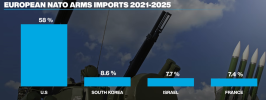
'Any weapon Europe buys from the US is a liability', rearmament expert says • FRANCE 24 English
FRANCE 24 English
Currently European NATO members buy a lot of USA produced weapons
'Any weapon Europe buys from the US is a liability', rearmament expert says • FRANCE 24 English
FRANCE 24 English
And if you believe this, I have a waterfront parcel of land I can sell you out back of my house, cheap!
View attachment 192.168.1.110_ch11_20260402083950_20260402084015.mp4
View attachment 192.168.1.110_ch11_20260402083950_20260402084015.mp4
Last edited:
As I was saying...
If you beleive .gov's employment numbers for March, you're a fucking idiot
JUST IN:
February job growth revised down from -92,000 jobs to -133,000 jobs, the biggest monthly U.S. job loss since December 2020.
If you beleive .gov's employment numbers for March, you're a fucking idiot
JUST IN:
February job growth revised down from -92,000 jobs to -133,000 jobs, the biggest monthly U.S. job loss since December 2020.
Last edited: