


Is the regime in Iran soon to be toast?
- Thread starter Sybertiger
- Start date
You are using an out of date browser. It may not display this or other websites correctly.
You should upgrade or use an alternative browser.
You should upgrade or use an alternative browser.

bigredfish
Known around here

bigredfish
Known around here
This is actually a big deal.
Goes to show, along with all of the other facilities in the region damaged, and US/Israel set to damage more, that even if the Straight is opened, we’re going to see production issues for years
Goes to show, along with all of the other facilities in the region damaged, and US/Israel set to damage more, that even if the Straight is opened, we’re going to see production issues for years

bigredfish
Known around here
bigredfish
Known around here


bigredfish
Known around here
bigredfish
Known around here
Note:
None of the above images, videos, or interviews are valid until confirmed by Faux News
None of the above images, videos, or interviews are valid until confirmed by Faux News

bigredfish
Known around here
bigredfish
Known around here
bigredfish
Known around here
I gotta get cleaned up for service. But this may be interesting, not sure if today or Monday?
…. Neither is he
…. Neither is he
Last edited:
bigredfish
Known around here




mat200
IPCT Contributor
- Jan 17, 2017
- 19,697
- 32,849
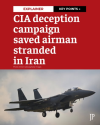
Rescuing an F-15 WSO 200 Miles Behind Enemy Lines
Preston Stewart
Apr 5, 2026
This was a crazy operation 200 miles inside of Iranian territory to rescue a downed American crewmember. Most of this story is and will remain classified for some time, but here's what we know so far.
Preston Stewart
Apr 5, 2026
This was a crazy operation 200 miles inside of Iranian territory to rescue a downed American crewmember. Most of this story is and will remain classified for some time, but here's what we know so far.
Last edited:
mat200
IPCT Contributor
- Jan 17, 2017
- 19,697
- 32,849
It is not easy to do Sea Control in the Strait of Hormuz
European Countries fell betrayed by USA ..
Will need a large Naval force, diplomacy ..
Why is it so difficult to open the Strait of Hormuz?
Anders Puck Nielsen
Apr 5, 2026
It will be dangerous to reopen the Strait of Hormuz, and Trump is visibly frustrated about the situation. He can't end the war before the strait is opened, and he can't open it without a major escalation.
In this video, I discuss what it would take and why America's European allies are so reluctant to get involved.
This video by Anders Puck Nielsen analyzes the strategic and economic complexities surrounding the closure of the Strait of Hormuz amidst the ongoing conflict between the United States, Israel, and Iran.
Key Takeaways:

European Countries fell betrayed by USA ..
Will need a large Naval force, diplomacy ..
Why is it so difficult to open the Strait of Hormuz?
Anders Puck Nielsen
Apr 5, 2026
It will be dangerous to reopen the Strait of Hormuz, and Trump is visibly frustrated about the situation. He can't end the war before the strait is opened, and he can't open it without a major escalation.
In this video, I discuss what it would take and why America's European allies are so reluctant to get involved.
This video by Anders Puck Nielsen analyzes the strategic and economic complexities surrounding the closure of the Strait of Hormuz amidst the ongoing conflict between the United States, Israel, and Iran.
Key Takeaways:
- The Global Impact: The Strait of Hormuz is a critical maritime choke point. Its closure, currently enforced by Iran in retaliation for Western attacks, threatens a global economic crisis and potential recession (0:31-0:54).
- Iran's Strategy: Iran has threatened to impose a $2 million passage fee on merchant ships, a move that violates international maritime law and challenges the global principle of freedom of navigation (1:01-1:40).
- Trump's Strategic Dilemma: President Trump is caught in a double bind: he wants to conclude the conflict to avoid a costly land war, but cannot leave while the strait remains closed, as this would severely damage the U.S. economy and make him appear weak (2:44-3:26).
- The Difficulty of Reopening: Military efforts to reopen the strait are described as extremely dangerous. Operating close to the Iranian coastline exposes warships to asymmetric threats like drones, missiles, and mines. Achieving "sea control" in such a hostile environment is difficult with current technology (3:58-6:53).
- Reluctance of Allies: Trump's hope that European or other nations will take responsibility for the strait is unlikely to succeed in the short term. European nations are reluctant to intervene, viewing the crisis as a consequence of Trump’s unilateral policies and feeling disillusioned by recent diplomatic shifts (7:02-8:01).
mat200
IPCT Contributor
- Jan 17, 2017
- 19,697
- 32,849
This guy is sharp .. possible next leader of Canada
The REAL Reason The World Is Turning On America
The Diary Of A CEO Clips
This video features a conversation with Canadian opposition leader Pierre Poilievre, who discusses his political philosophy, the challenges facing Canada, and his personal approach to leadership and adversity.
Key themes from the discussion include:
The REAL Reason The World Is Turning On America
The Diary Of A CEO Clips
This video features a conversation with Canadian opposition leader Pierre Poilievre, who discusses his political philosophy, the challenges facing Canada, and his personal approach to leadership and adversity.
Key themes from the discussion include:
- Geopolitical Outlook: Poilievre discusses the potential for conflict in a world with competing superpowers, citing the Thucydides Trap (0:59). He emphasizes that Canada is increasing its military spending to protect its sovereignty—particularly in the Arctic—to ensure it doesn't rely solely on the United States for security (3:30-5:17).
- The U.S.-Canada Relationship: Addressing tensions involving Donald Trump, Poilievre clarifies that while the U.S. is a crucial ally, Canada remains a sovereign nation that must prioritize its own national interests (5:17-6:35).
- Political Challenges: Poilievre reflects on the recent Canadian election, explaining how external issues like tariffs and foreign rhetoric overshadowed his campaign's focus on domestic issues such as inflation, housing costs, and crime (7:46-8:37).
- Stoicism and Personal Resilience: When asked how he coped with the election loss, Poilievre explains his commitment to Stoicism (11:18). He emphasizes focusing only on what is within his control and references the poem Invictus as a source of inspiration for maintaining personal agency (14:04).
- Core Ideological Evolution: Poilievre reflects on his principles, referencing an essay he wrote at age 20 that championed individual freedom and limited government (15:34-16:57). He notes that while his values have remained consistent, his temperament has matured through the responsibilities of fatherhood and family life (17:09-17:49).
- Critique of Wokeism: Poilievre outlines his opposition to modern DEI (Diversity, Equity, and Inclusion) and 'woke' ideologies, arguing that they are illiberal and divisive compared to traditional, color-blind liberalism (18:07-19:38).

‘It’s shocking how poorly prepared the administration is’: DOGE gutted major energy personnel who warn the U.S. has lost key insights amid Iran war
Last year, the Trump administration eliminated the Bureau of Energy Resources, which maintained close relationships with private sector oil companies and foreign energy ministries.
bigredfish
Known around here
Months or years later we get revised casualty reports just like months later we get revised jobs reports
Still couldn't believe my eyes reading that Intercept article
They classified more than 10,000 people as contractors so they wouldn't have to report them as casualties
Still couldn't believe my eyes reading that Intercept article
They classified more than 10,000 people as contractors so they wouldn't have to report them as casualties