


Is the regime in Iran soon to be toast?
- Thread starter Sybertiger
- Start date
You are using an out of date browser. It may not display this or other websites correctly.
You should upgrade or use an alternative browser.
You should upgrade or use an alternative browser.
bigredfish
Known around here
Lots of posts about this, trying to confirm from a Western source…not 100% convinced yet
Seems to be a real attack, but discrepancy about casualties
Seems to be a real attack, but discrepancy about casualties
Last edited:
bigredfish
Known around here
bigredfish
Known around here
bigredfish
Known around here

bigredfish
Known around here

Arjun
IPCT Contributor
bigredfish
Known around here
Must be hundreds of video reports from the region tonight.
I’d estimate 80% are bogus propaganda and have only shown the ones reasonably verified.
The Saudi base is for sure real, as is the one about the island. Details on casualties is of course impossible to sort out
This sums it up. Big night for both sides
I’d estimate 80% are bogus propaganda and have only shown the ones reasonably verified.
The Saudi base is for sure real, as is the one about the island. Details on casualties is of course impossible to sort out
This sums it up. Big night for both sides

Arjun
IPCT Contributor
Arjun
IPCT Contributor
bigredfish
Known around here
I think it’s fair to say US/Israeli forces are bombing whatever target they can find. Lots of civilian infrastructure and non military targets like the University
This less than 24 hours after Trump called a 10 day hold on doing so
The country of 90 million will have to be rebuilt. There will be a lot of civilian casualties from lack of water, electricity and basic needs.
We’ve adopted Israel’s approach to complete destruction
This less than 24 hours after Trump called a 10 day hold on doing so
The country of 90 million will have to be rebuilt. There will be a lot of civilian casualties from lack of water, electricity and basic needs.
We’ve adopted Israel’s approach to complete destruction

mat200
IPCT Contributor
- Jan 17, 2017
- 19,697
- 32,849
IRGC .. "our strategy is to collapse the global economy"
“The conflict ravaging the Middle East may best be understood as two parallel wars. One is the campaign of American and Israeli air strikes against the Iranian regime; the other is Iran’s war on the global economy.”
"For Tehran, regime survival would be sufficient triumph. It will tell its people, its proxies, its partners China and Russia, and the wider world that it absorbed the blows of the world’s greatest military power and exposed its vulnerabilities. That narrative will travel far beyond Iran, serving as a playbook that other US adversaries will employ."
How the US emerges victorious
For the United States, winning the two-front war doesn’t mean an open-ended military campaign with maximalist goals. What it would require is something that has been difficult to discern so far: a concerted strategy by the Trump administration that recognizes the larger stakes of this moment for the United States and its still-hedging allies.
What would such a strategy look like in practice? It would start with US forces stepping up their targeting of the missile, drone, and maritime capabilities that underpin Tehran’s asymmetric strategy, weakening them to the point that they are an occasional nuisance but not an ongoing threat. The United States also must decisively break Iran’s ability to hold the global economy hostage, beginning with opening the Strait of Hormuz. This step can be taken together with Gulf allies that now have no remaining doubt that their adversary is Iran, not Israel. These countries will proceed to structure their militaries and defense plans accordingly.
..
Israeli forces, for their part, should continue targeting the Iranian regime, particularly leaders of the Islamic Revolutionary Guard Corps (IRGC). Undermining the IRGC would have the additional benefit of weakening Iran’s regional proxy networks, which have done so much harm over the past half century. If the IRGC remains strong after this conflict is over, it would allow the Iranian regime to regenerate its coercive power—both within Iran and across the region.
Even if the US and Israeli campaign does not result in regime change in Tehran, it should aim to produce a changed regime that lacks capacity to seriously threaten its neighbors, the United States, and the global economy. It may have been wishful thinking for Trump to call on Iranians to rise up against their despotic leadership, particularly after the regime killed as many as 30,000 demonstrators earlier this year. However, the more that the United States, Israel, and its partners defang Iran’s regime and its enforcers, the greater the chance of the regime’s eventual collapse.
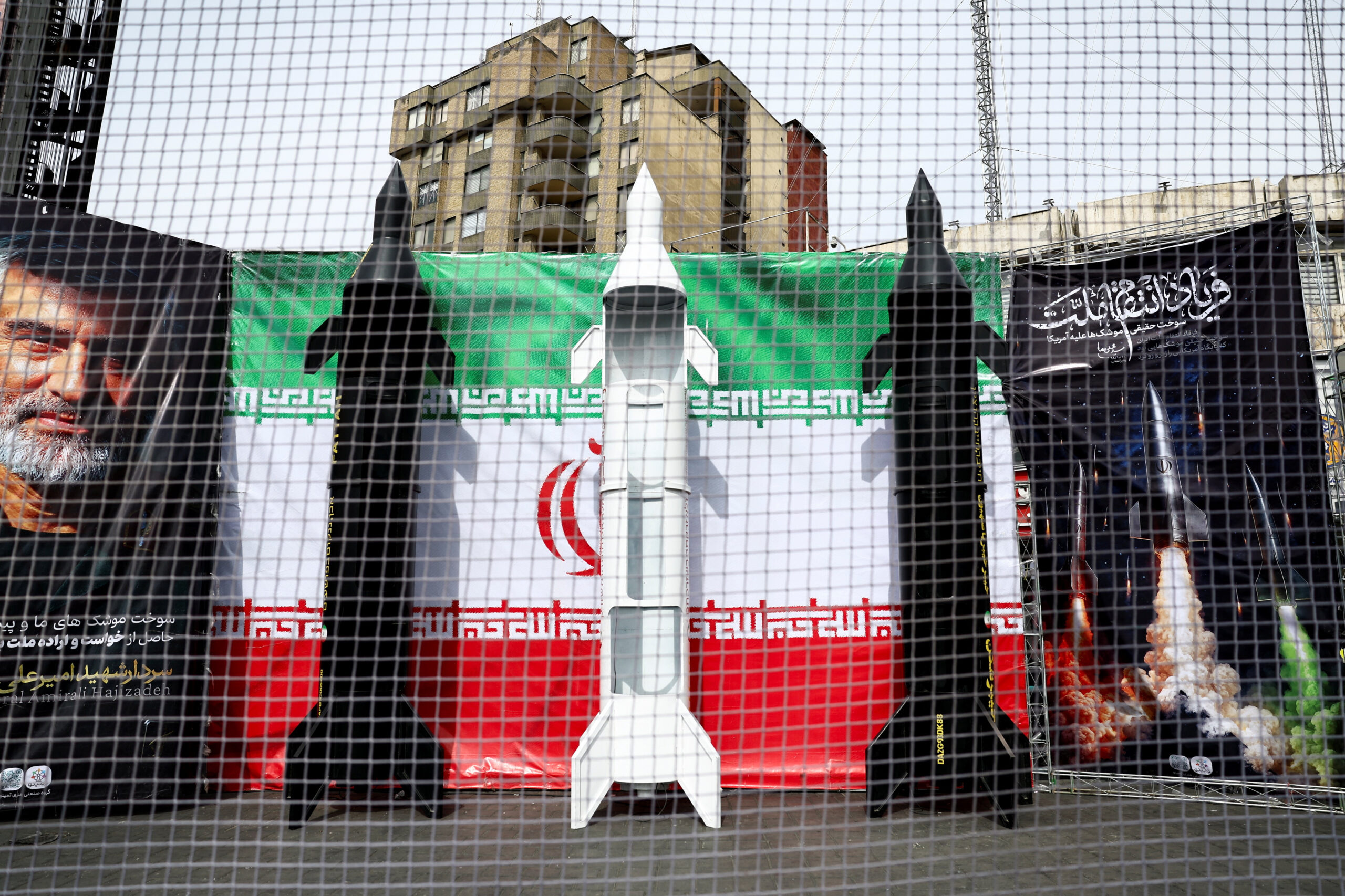
 www.atlanticcouncil.org
“The conflict ravaging the Middle East may best be understood as two parallel wars. One is the campaign of American and Israeli air strikes against the Iranian regime; the other is Iran’s war on the global economy.”
"For Tehran, regime survival would be sufficient triumph. It will tell its people, its proxies, its partners China and Russia, and the wider world that it absorbed the blows of the world’s greatest military power and exposed its vulnerabilities. That narrative will travel far beyond Iran, serving as a playbook that other US adversaries will employ."
How the US emerges victorious
For the United States, winning the two-front war doesn’t mean an open-ended military campaign with maximalist goals. What it would require is something that has been difficult to discern so far: a concerted strategy by the Trump administration that recognizes the larger stakes of this moment for the United States and its still-hedging allies.
What would such a strategy look like in practice? It would start with US forces stepping up their targeting of the missile, drone, and maritime capabilities that underpin Tehran’s asymmetric strategy, weakening them to the point that they are an occasional nuisance but not an ongoing threat. The United States also must decisively break Iran’s ability to hold the global economy hostage, beginning with opening the Strait of Hormuz. This step can be taken together with Gulf allies that now have no remaining doubt that their adversary is Iran, not Israel. These countries will proceed to structure their militaries and defense plans accordingly.
..
Israeli forces, for their part, should continue targeting the Iranian regime, particularly leaders of the Islamic Revolutionary Guard Corps (IRGC). Undermining the IRGC would have the additional benefit of weakening Iran’s regional proxy networks, which have done so much harm over the past half century. If the IRGC remains strong after this conflict is over, it would allow the Iranian regime to regenerate its coercive power—both within Iran and across the region.
Even if the US and Israeli campaign does not result in regime change in Tehran, it should aim to produce a changed regime that lacks capacity to seriously threaten its neighbors, the United States, and the global economy. It may have been wishful thinking for Trump to call on Iranians to rise up against their despotic leadership, particularly after the regime killed as many as 30,000 demonstrators earlier this year. However, the more that the United States, Israel, and its partners defang Iran’s regime and its enforcers, the greater the chance of the regime’s eventual collapse.
Trump is fighting two wars with Iran. He needs to win both.
Nothing could be more short-sighted than leaving a vengeful and still formidable Iranian regime in place.
www.atlanticcouncil.org
Arjun
IPCT Contributor
I think it’s fair to say US/Israeli forces are bombing whatever target they can find. Lots of civilian infrastructure and non military targets like the University
This less than 24 hours after Trump called a 10 day hold on doing so
The country of 90 million will have to be rebuilt. There will be a lot of civilian casualties from lack of water, electricity and basic needs.
We’ve adopted Israel’s approach to complete destruction
Iraq 3.0

Oceanslider
Known around here
Arjun
IPCT Contributor
bigredfish
Known around here
I’ll save most of the posts and video from Trumps abortion of a speech today for the political thread tomorrow. Here’s a taste

mat200
IPCT Contributor
- Jan 17, 2017
- 19,697
- 32,849
Iran’s Real War Is Against the Global Economy
Commentary by Navin Girishankar
Published March 11, 2026
Iran may be losing the military contest with the United States. But it is fighting a different war—one aimed at the global economy.
Over the past 12 days, the United States has demonstrated clear military superiority. Iran’s navy has been severely degraded, with more than 50 ships sunk or damaged; its retaliatory missile launches are down more than 90 percent; and its air force has been grounded. On the battlefield, the scorecard favors Washington, despite risks of escalation.
Strategically, the picture is far less certain. Even as the Trump administration struggles to define its objectives—be it decapitating Iranian leadership, destroying Iran’s nuclear capability, or pursuing regime change—it must confront a new reality.
The United States and Israel are fighting the Islamic Republic. Iran is fighting the global economy.
Iran’s Economic War
Since the start of the war, Iran has virtually frozen commercial shipping through the Strait of Hormuz. It is now reportedly mining this vital chokepoint through which roughly a quarter of the world’s oil, a quarter of globally traded nitrogen-based fertilizer, and a fifth of global liquefied natural gas (LNG) pass each day. Iran retains the vast majority of its small naval vessels and mine-laying craft—meaning the economic war can intensify even as the military war winds down.
Nearly 3 million barrels a day of Iraqi output remain stranded. Oil has swung between $77 and $119 a barrel in a single week—the kind of volatility that paralyzes investment decisions and cascades through every connected economy. American consumers are already seeing it at the pump; U.S. financial markets have shed thousands of points since the war began.
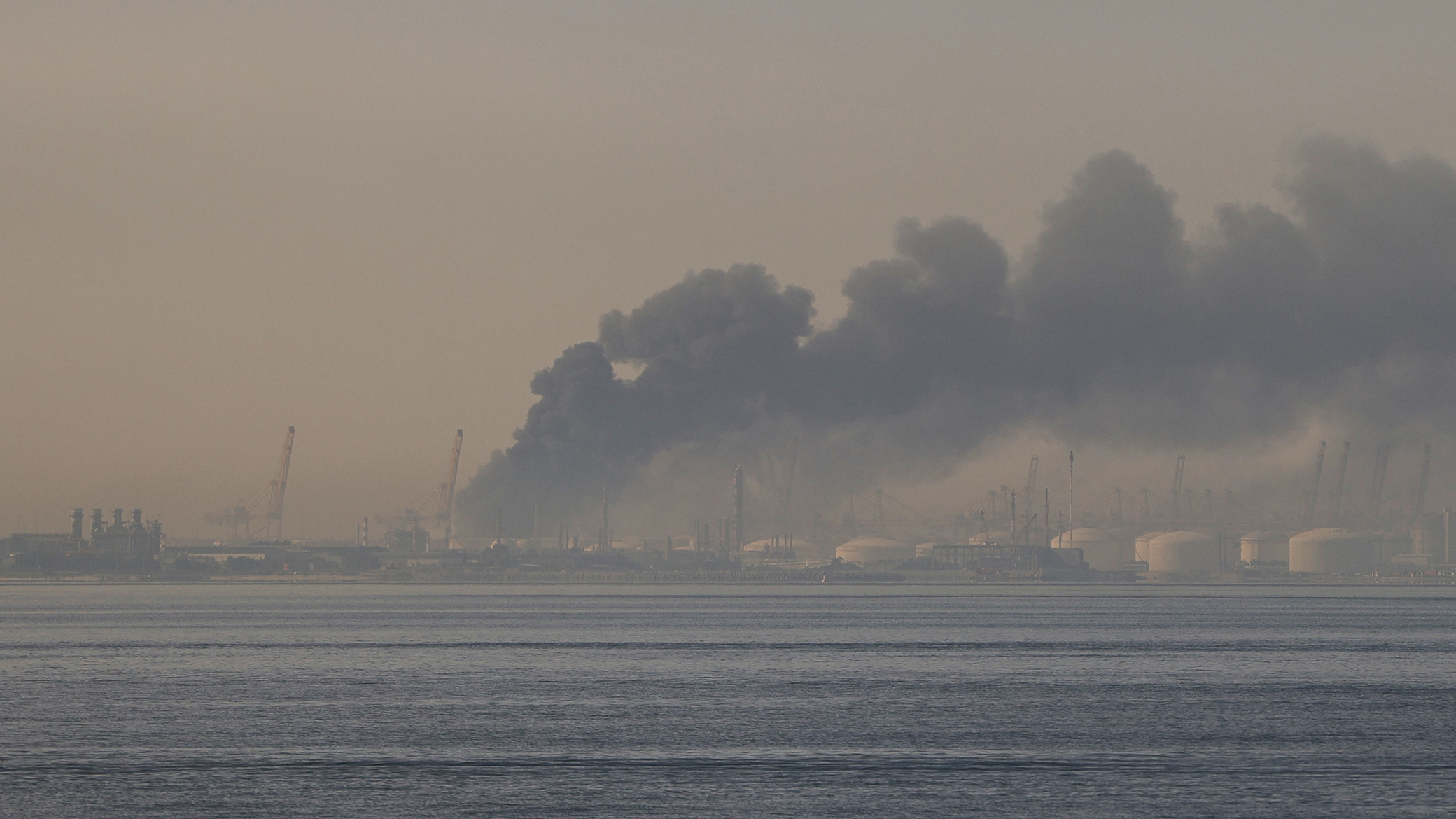
Beyond the strait, Iranian missiles and drones have struck across the Gulf’s economic infrastructure. This is not scattershot retaliation. It is a deliberate strategy to make the war economically unsustainable for the United States, its partners in the Gulf, and the global economy as a whole.
Tehran is now systematically targeting not only its neighbors’ hydrocarbon assets but the sectors central to their 2030 economic diversification plans: logistics, energy generation, data centers, water, tourism, and finance. For decades, Gulf states have tried to convert oil wealth into diversified economies—global logistics hubs, financial centers, and technology platforms. Iran aims to put that entire transformation at risk, despite Iranian President Masoud Pezeshkian’s empty apologies to the very neighbors whose infrastructure Tehran is destroying.
As the war expands, Iran’s military campaign will produce diminishing returns—each day, it has less capacity to strike back. The economic war, however, compounds: Insurance premiums spike, rerouting shipping becomes more challenging, contracts unravel, and investor confidence evaporates. The longer the kinetic campaign lasts, the more permanent the economic damage becomes.
What follows are three far-reaching implications for U.S. economic power.
First, the credibility of the U.S. defense umbrella is being called into question. Since the advent of the petrodollar system, the United States has guaranteed Gulf security, and that guarantee has been the foundation on which trillions in sovereign wealth were denominated in U.S. dollars and invested in the techno-industrial base on both sides of the Atlantic. As Gulf states watch U.S. interceptor inventories draw down and defenses strain under sustained attack, that confidence could erode—and quickly. Gulf states that pledged large-scale investments in American industry and supply chains may now divert sovereign capital toward rebuilding and rearmament. The capital pipeline meant to fund America’s industrial future is at risk of being redirected.
Second, the disruptions cascade to America’s most critical allies. Japan and South Korea, anchors of the world’s most advanced semiconductor supply chains, depend on the Gulf for 80 percent of their oil and other critical resources, with South Korean chipmakers already reporting helium shortages as Qatar halts deliveries. The anticipated diversion of U.S. interceptors from the Korean Peninsula only deepens these risks and gives Seoul incentives to hedge toward Beijing. Across the Global South, the combination of food and fuel shocks, trade uncertainty, and unsustainable debt gives countries every reason to seek alternatives—and China is ready to provide them. CSIS’s recent Tech Edge report argued America must defend its allied networks. This war risks undermining them.
Third, an open-ended war with shifting objectives could cede leverage to America’s principal adversaries. Surging oil prices benefit Russia, and indications that the U.S. Treasury will ease sanctions on Russian oil sales to India hands Putin an advantage the United States spent years trying to deny. While Beijing purchases over 80 percent of Iran’s shipped crude at a steep discount and the war places that at risk, a United States consumed by the Gulf presents opportunities for China. It will likely use this opportunity to continue supplying the drone components American taxpayers are spending billions to intercept, as well as by pressing its position in the Indo-Pacific. As Iran’s economic war expands, Russia and China will seek to collect the spoils.
The Economic Costs at Home
The war’s costs are not confined to the Gulf. They are already flowing through gas pumps, grocery stores, and balance sheets across the United States. The longer the conflict persists, the deeper the damage will be to American economic security.
The war effort is already costing American taxpayers nearly $900 million a day. Every supplemental dollar for munitions competes with investment in semiconductor manufacturing, critical minerals processing, and other strategic industries. Higher oil prices ripple quickly through the economy, raising transportation, food, and manufacturing costs. The combination of war spending and already high debt service levels will only deepen fiscal and inflationary pressures. The result may be a reckoning that forces Washington to tighten spending just as the country is trying to finance a long-overdue effort to rebuild its industrial base.
From the CHIPS and Science Act to efforts to secure critical minerals and win the AI race, the United States has been building the economic security architecture needed to compete with China—to play the long game—over the past three administrations. This architecture is still nascent. To mature, it requires sustained focus, funding, and collaboration between the public and private sectors. A prolonged war could starve it in its infancy.
While attention, munitions, and naval assets are consumed by the Middle East, China is probing vulnerabilities—in cyberspace, supply chains, and deterrence—in the Indo-Pacific. As America generates volatility, China positions itself as a stabilizing economic partner across parts of Africa and South Asia, advancing Beijing’s interests without firing a shot.
Strategy, Not Just Supremacy
The military campaign has delivered results, but the war is far from over. The risks of escalation remain real, including the possibility that the United States could be drawn into a prolonged ground war.
That prospect makes strategic discipline urgent. The military gains are real and substantial enough to serve as the basis for a strategic pivot. The United States needs to narrow the objectives, declare the degradation of Iran’s offensive capability a strategic outcome, and ratchet down before the logic of regime change—with its decade-long, trillion-dollar price tag—takes hold. Iran has already named a new supreme leader, and the regime is reconstituting. The window for translating military gains into strategic leverage is closing.
The administration needs Congress—not as a formality, but as a lifeline. Congressional authorization forces the definition of objectives on a campaign whose goals have shifted from decapitation to denuclearization to regime change within 12 days. The U.S. Constitution requires it, and strategy demands it.
As Washington and Beijing prepare for high-level talks, Xi is likely to look to exploit America’s distraction by pressing on Taiwan, technology controls, and the terms of competition. The United States should get there first by pressing China hard to curb its dual-use technology flows to Tehran, cutting off access to Iranian oil, and pushing for trade-related concessions, including removal of non-tariff barriers and export controls. Trading leverage for restraint is a strategy. Escalating without end is not.
America’s economic security project requires technological and industrial strength and allied networks. But more importantly, it requires strategic focus sustained over decades. The administration’s reindustrialization agenda, its AI Action Plan, the Genesis Mission, and other initiatives all reflect that ambition, and they could now be at risk. An open-ended war would starve these efforts of the undivided national attention they need to succeed.
Navin Girishankar is president of the Economic Security and Technology Department at the Center for Strategic and International Studies in Washington, D.C.
 www.csis.org
Commentary by Navin Girishankar
Published March 11, 2026
Iran may be losing the military contest with the United States. But it is fighting a different war—one aimed at the global economy.
Over the past 12 days, the United States has demonstrated clear military superiority. Iran’s navy has been severely degraded, with more than 50 ships sunk or damaged; its retaliatory missile launches are down more than 90 percent; and its air force has been grounded. On the battlefield, the scorecard favors Washington, despite risks of escalation.
Strategically, the picture is far less certain. Even as the Trump administration struggles to define its objectives—be it decapitating Iranian leadership, destroying Iran’s nuclear capability, or pursuing regime change—it must confront a new reality.
The United States and Israel are fighting the Islamic Republic. Iran is fighting the global economy.
Iran’s Economic War
Since the start of the war, Iran has virtually frozen commercial shipping through the Strait of Hormuz. It is now reportedly mining this vital chokepoint through which roughly a quarter of the world’s oil, a quarter of globally traded nitrogen-based fertilizer, and a fifth of global liquefied natural gas (LNG) pass each day. Iran retains the vast majority of its small naval vessels and mine-laying craft—meaning the economic war can intensify even as the military war winds down.
Nearly 3 million barrels a day of Iraqi output remain stranded. Oil has swung between $77 and $119 a barrel in a single week—the kind of volatility that paralyzes investment decisions and cascades through every connected economy. American consumers are already seeing it at the pump; U.S. financial markets have shed thousands of points since the war began.
Beyond the strait, Iranian missiles and drones have struck across the Gulf’s economic infrastructure. This is not scattershot retaliation. It is a deliberate strategy to make the war economically unsustainable for the United States, its partners in the Gulf, and the global economy as a whole.
Tehran is now systematically targeting not only its neighbors’ hydrocarbon assets but the sectors central to their 2030 economic diversification plans: logistics, energy generation, data centers, water, tourism, and finance. For decades, Gulf states have tried to convert oil wealth into diversified economies—global logistics hubs, financial centers, and technology platforms. Iran aims to put that entire transformation at risk, despite Iranian President Masoud Pezeshkian’s empty apologies to the very neighbors whose infrastructure Tehran is destroying.
As the war expands, Iran’s military campaign will produce diminishing returns—each day, it has less capacity to strike back. The economic war, however, compounds: Insurance premiums spike, rerouting shipping becomes more challenging, contracts unravel, and investor confidence evaporates. The longer the kinetic campaign lasts, the more permanent the economic damage becomes.
What follows are three far-reaching implications for U.S. economic power.
First, the credibility of the U.S. defense umbrella is being called into question. Since the advent of the petrodollar system, the United States has guaranteed Gulf security, and that guarantee has been the foundation on which trillions in sovereign wealth were denominated in U.S. dollars and invested in the techno-industrial base on both sides of the Atlantic. As Gulf states watch U.S. interceptor inventories draw down and defenses strain under sustained attack, that confidence could erode—and quickly. Gulf states that pledged large-scale investments in American industry and supply chains may now divert sovereign capital toward rebuilding and rearmament. The capital pipeline meant to fund America’s industrial future is at risk of being redirected.
Second, the disruptions cascade to America’s most critical allies. Japan and South Korea, anchors of the world’s most advanced semiconductor supply chains, depend on the Gulf for 80 percent of their oil and other critical resources, with South Korean chipmakers already reporting helium shortages as Qatar halts deliveries. The anticipated diversion of U.S. interceptors from the Korean Peninsula only deepens these risks and gives Seoul incentives to hedge toward Beijing. Across the Global South, the combination of food and fuel shocks, trade uncertainty, and unsustainable debt gives countries every reason to seek alternatives—and China is ready to provide them. CSIS’s recent Tech Edge report argued America must defend its allied networks. This war risks undermining them.
Third, an open-ended war with shifting objectives could cede leverage to America’s principal adversaries. Surging oil prices benefit Russia, and indications that the U.S. Treasury will ease sanctions on Russian oil sales to India hands Putin an advantage the United States spent years trying to deny. While Beijing purchases over 80 percent of Iran’s shipped crude at a steep discount and the war places that at risk, a United States consumed by the Gulf presents opportunities for China. It will likely use this opportunity to continue supplying the drone components American taxpayers are spending billions to intercept, as well as by pressing its position in the Indo-Pacific. As Iran’s economic war expands, Russia and China will seek to collect the spoils.
The Economic Costs at Home
The war’s costs are not confined to the Gulf. They are already flowing through gas pumps, grocery stores, and balance sheets across the United States. The longer the conflict persists, the deeper the damage will be to American economic security.
The war effort is already costing American taxpayers nearly $900 million a day. Every supplemental dollar for munitions competes with investment in semiconductor manufacturing, critical minerals processing, and other strategic industries. Higher oil prices ripple quickly through the economy, raising transportation, food, and manufacturing costs. The combination of war spending and already high debt service levels will only deepen fiscal and inflationary pressures. The result may be a reckoning that forces Washington to tighten spending just as the country is trying to finance a long-overdue effort to rebuild its industrial base.
From the CHIPS and Science Act to efforts to secure critical minerals and win the AI race, the United States has been building the economic security architecture needed to compete with China—to play the long game—over the past three administrations. This architecture is still nascent. To mature, it requires sustained focus, funding, and collaboration between the public and private sectors. A prolonged war could starve it in its infancy.
While attention, munitions, and naval assets are consumed by the Middle East, China is probing vulnerabilities—in cyberspace, supply chains, and deterrence—in the Indo-Pacific. As America generates volatility, China positions itself as a stabilizing economic partner across parts of Africa and South Asia, advancing Beijing’s interests without firing a shot.
Strategy, Not Just Supremacy
The military campaign has delivered results, but the war is far from over. The risks of escalation remain real, including the possibility that the United States could be drawn into a prolonged ground war.
That prospect makes strategic discipline urgent. The military gains are real and substantial enough to serve as the basis for a strategic pivot. The United States needs to narrow the objectives, declare the degradation of Iran’s offensive capability a strategic outcome, and ratchet down before the logic of regime change—with its decade-long, trillion-dollar price tag—takes hold. Iran has already named a new supreme leader, and the regime is reconstituting. The window for translating military gains into strategic leverage is closing.
The administration needs Congress—not as a formality, but as a lifeline. Congressional authorization forces the definition of objectives on a campaign whose goals have shifted from decapitation to denuclearization to regime change within 12 days. The U.S. Constitution requires it, and strategy demands it.
As Washington and Beijing prepare for high-level talks, Xi is likely to look to exploit America’s distraction by pressing on Taiwan, technology controls, and the terms of competition. The United States should get there first by pressing China hard to curb its dual-use technology flows to Tehran, cutting off access to Iranian oil, and pushing for trade-related concessions, including removal of non-tariff barriers and export controls. Trading leverage for restraint is a strategy. Escalating without end is not.
America’s economic security project requires technological and industrial strength and allied networks. But more importantly, it requires strategic focus sustained over decades. The administration’s reindustrialization agenda, its AI Action Plan, the Genesis Mission, and other initiatives all reflect that ambition, and they could now be at risk. An open-ended war would starve these efforts of the undivided national attention they need to succeed.
Navin Girishankar is president of the Economic Security and Technology Department at the Center for Strategic and International Studies in Washington, D.C.
Iran’s Real War Is Against the Global Economy
EST President Navin Girishankar argues that Iran may be losing the military contest with the United States, but it is fighting a different war—one aimed at the global economy.

Just now seeing these--- Looks like they still have control of their satellites. THAT is the kind of confirmation I wanted to see. Hegseth should be on top of this info and should be releasing it before Iran uses it for propaganda. As long as that kind of shit is happening, we will continue to bomb the shit out of them. We can only hope civilian casualties will be kept to a minimum.
LOL...
When you lose control of the news, create your own!
Think Before You Download The White House App
If you’re downloading a government-made app onto your phone, at least understand what you’re handing over.
Apps don’t just sit there. Depending on what you allow, they can collect your location, track your behavior, map your contacts, and build a pretty detailed picture of your daily life.
That’s how apps work, and as a targeter that’s what we exploit.
Now add one layer people like to ignore: this isn’t some random tech company. A government already has access to multiple data streams and systems. An app just makes it easier to connect dots that were previously separate.
And before anyone says we’ll just don’t grant permissions, most people don’t even read them. They click accept and move on. Location set to always on, background activity running, notifications pinging constantly. You’ve basically agreed to passive monitoring without thinking twice.
The bigger issue isn’t what they say they’re collecting TODAY. It’s what happens to that data TOMORROW. Policies change. Priorities shift. Data doesn’t disappear.
Don’t be careless. And if you’re going to put something like this on your phone, please do the following: -Turn off anything you don’t absolutely need; -Limit location to while using; -Deny contacts, mic, and files unless there’s a real reason; and -Actually read what you’re agreeing to.


THIS is why Phones completely fucking SUCK.

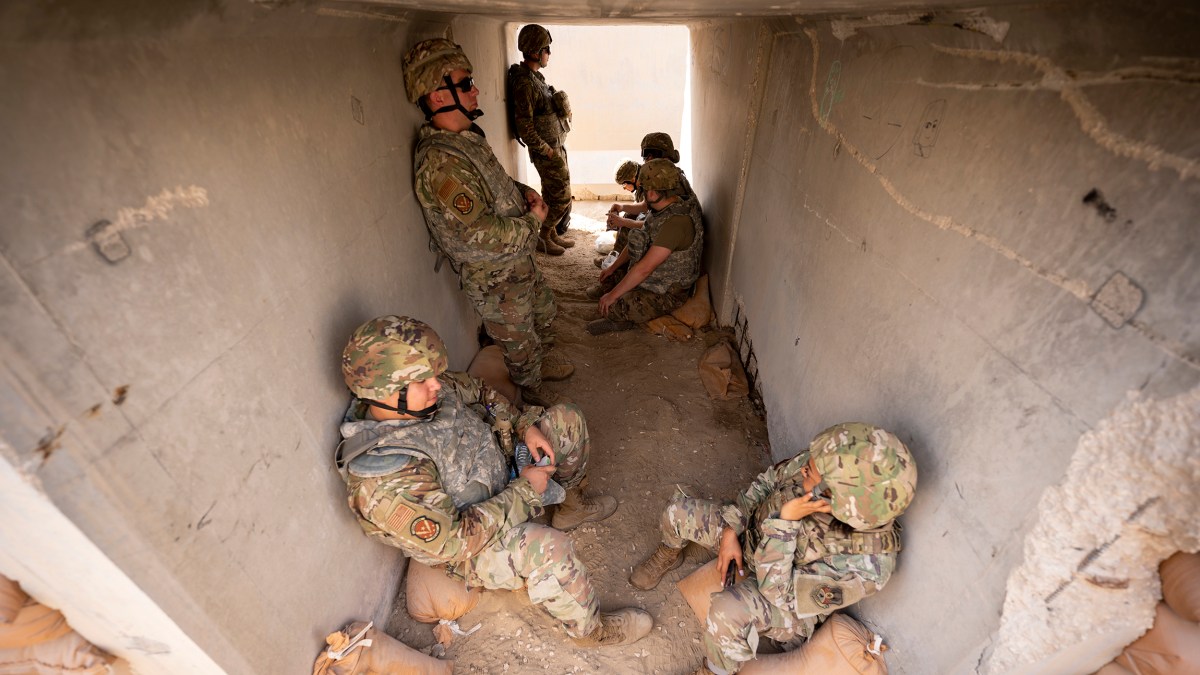
Pentagon looks for vendors to supply pre-made bunkers within 30 days
The Defense Department is trying to find vendors who can supply transportable bunkers that protect troops against blasts and shrapnel.
 taskandpurpose.com