
Is the regime in Iran soon to be toast?
- Thread starter Sybertiger
- Start date

You are using an out of date browser. It may not display this or other websites correctly.
You should upgrade or use an alternative browser.
You should upgrade or use an alternative browser.


Iran war was perfect to prove NATO is garbage post USSR.
Europe: Not our war, fuck off
USA: Didn't ask you to bomb Iran, just asked to flyover your territory. WW1 and WW2 Europe was not our war. We are footing near 2/3 NATO bill. We can get fucked for a lot less $.
Argentina: perfect time to grab Falkland Islands. Help yourself.
Time for USA to negotiate agreements with individual countries. Maybe Eastern Europe deserves inclusion in a new alliance

 nypost.com
Europe: Not our war, fuck off
USA: Didn't ask you to bomb Iran, just asked to flyover your territory. WW1 and WW2 Europe was not our war. We are footing near 2/3 NATO bill. We can get fucked for a lot less $.
Argentina: perfect time to grab Falkland Islands. Help yourself.
Time for USA to negotiate agreements with individual countries. Maybe Eastern Europe deserves inclusion in a new alliance
Trump ‘absolutely’ considering NATO exit — will rip Europe in primetime remarks
“Wouldn’t you do that if you were me?” Trump said to Reuters reporter Steve Holland in an interview, when asked if he was weighing leaving the transatlantic alliance.
nypost.com


mat200
IPCT Contributor
- Jan 17, 2017
- 19,697
- 32,849
Here’s Why Trump is in No Rush to Reopen the Strait of Hormuz | John Konrad
Hidden Forces
Apr 1, 2026 Full Episodes • Hidden Forces Podcast
In Episode 473 of Hidden Forces, IDemetri Kofinas speaks with Captain John Konrad — founder of gCaptain, the world’s most-visited maritime and offshore news website, and one of the most influential voices in commercial shipping — about what Konrad calls the Hormuz Hypothesis: a framework for understanding how the Trump administration has assembled the tools to exploit the disruption of commercial shipping through the Strait of Hormuz as part of a broader maritime strategy and political endgame that very few in the media are discussing.
The first hour lays the groundwork for that hypothesis, examining the decades-long decline of the US merchant marine and shipbuilding industrial base, why control of global maritime choke points is inseparable from national security and the dollar’s role as the world’s reserve currency, and how the collapse of the war risk reinsurance market following the outbreak of conflict created an acute insurance crisis for vessels transiting the Persian Gulf. They also discuss how the Trump administration responded by creating a government-backed reinsurance facility through the US International Development Finance Corporation, in coordination with the Treasury and US Central Command, and why this matters for understanding how the global economy is being reorganized — away from free trade and open capital markets, and toward one increasingly shaped by national interests, clandestine statecraft, and great power competition operating below the threshold of open military conflict.
The second hour turns to the strategic logic of the Hormuz Hypothesis itself — specifically, why Konrad believes the Trump administration is in no rush to reopen the Strait and how it intends to use control over that choke point as leverage to extract concessions from Europe, China, and other actors in the international system. They examine what some of those concessions may look like, the concrete outcomes the administration is pursuing through its maritime agenda — including basing agreements, shipbuilding reform, and pushback against Chinese and UN encroachment on the global maritime order — and the cumulative fragility of the global trading network, including what a worst-case breakdown of that system could look like and what winning might realistically mean for the United States in both the short and long term.
Hidden Forces
Apr 1, 2026 Full Episodes • Hidden Forces Podcast
In Episode 473 of Hidden Forces, IDemetri Kofinas speaks with Captain John Konrad — founder of gCaptain, the world’s most-visited maritime and offshore news website, and one of the most influential voices in commercial shipping — about what Konrad calls the Hormuz Hypothesis: a framework for understanding how the Trump administration has assembled the tools to exploit the disruption of commercial shipping through the Strait of Hormuz as part of a broader maritime strategy and political endgame that very few in the media are discussing.
The first hour lays the groundwork for that hypothesis, examining the decades-long decline of the US merchant marine and shipbuilding industrial base, why control of global maritime choke points is inseparable from national security and the dollar’s role as the world’s reserve currency, and how the collapse of the war risk reinsurance market following the outbreak of conflict created an acute insurance crisis for vessels transiting the Persian Gulf. They also discuss how the Trump administration responded by creating a government-backed reinsurance facility through the US International Development Finance Corporation, in coordination with the Treasury and US Central Command, and why this matters for understanding how the global economy is being reorganized — away from free trade and open capital markets, and toward one increasingly shaped by national interests, clandestine statecraft, and great power competition operating below the threshold of open military conflict.
The second hour turns to the strategic logic of the Hormuz Hypothesis itself — specifically, why Konrad believes the Trump administration is in no rush to reopen the Strait and how it intends to use control over that choke point as leverage to extract concessions from Europe, China, and other actors in the international system. They examine what some of those concessions may look like, the concrete outcomes the administration is pursuing through its maritime agenda — including basing agreements, shipbuilding reform, and pushback against Chinese and UN encroachment on the global maritime order — and the cumulative fragility of the global trading network, including what a worst-case breakdown of that system could look like and what winning might realistically mean for the United States in both the short and long term.

mat200
IPCT Contributor
- Jan 17, 2017
- 19,697
- 32,849
Iran war was perfect to prove NATO is garbage post USSR.
Europe: Not our war, fuck off
USA: Didn't ask you to bomb Iran, just asked to flyover your territory. WW1 and WW2 Europe was not our war. We are footing near 2/3 NATO bill. We can get fucked for a lot less $.
Argentina: perfect time to grab Falkland Islands. Help yourself.
Time for USA to negotiate agreements with individual countries. Maybe Eastern Europe deserves inclusion in a new alliance
Trump ‘absolutely’ considering NATO exit — will rip Europe in primetime remarks
“Wouldn’t you do that if you were me?” Trump said to Reuters reporter Steve Holland in an interview, when asked if he was weighing leaving the transatlantic alliance.
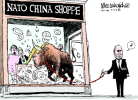
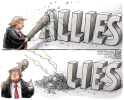
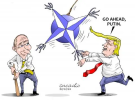
European Nations got hit hard by this war that Donald and Israel started .. they're not happy, and some are expressing it in ways that clearly make some Trump supporters upset.
Most know Trump's actions will result in more terrorism, USA is far better protected than the European Nations.

Arjun
IPCT Contributor

mat200
IPCT Contributor
- Jan 17, 2017
- 19,697
- 32,849
Here’s Why Trump is in No Rush to Reopen the Strait of Hormuz | John Konrad
Hidden Forces
Apr 1, 2026 Full Episodes • Hidden Forces Podcast
In Episode 473 of Hidden Forces, IDemetri Kofinas speaks with Captain John Konrad — founder of gCaptain, the world’s most-visited maritime and offshore news website, and one of the most influential voices in commercial shipping — about what Konrad calls the Hormuz Hypothesis: a framework for understanding how the Trump administration has assembled the tools to exploit the disruption of commercial shipping through the Strait of Hormuz as part of a broader maritime strategy and political endgame that very few in the media are discussing.
The first hour lays the groundwork for that hypothesis, examining the decades-long decline of the US merchant marine and shipbuilding industrial base, why control of global maritime choke points is inseparable from national security and the dollar’s role as the world’s reserve currency, and how the collapse of the war risk reinsurance market following the outbreak of conflict created an acute insurance crisis for vessels transiting the Persian Gulf. They also discuss how the Trump administration responded by creating a government-backed reinsurance facility through the US International Development Finance Corporation, in coordination with the Treasury and US Central Command, and why this matters for understanding how the global economy is being reorganized — away from free trade and open capital markets, and toward one increasingly shaped by national interests, clandestine statecraft, and great power competition operating below the threshold of open military conflict.
The second hour turns to the strategic logic of the Hormuz Hypothesis itself — specifically, why Konrad believes the Trump administration is in no rush to reopen the Strait and how it intends to use control over that choke point as leverage to extract concessions from Europe, China, and other actors in the international system. They examine what some of those concessions may look like, the concrete outcomes the administration is pursuing through its maritime agenda — including basing agreements, shipbuilding reform, and pushback against Chinese and UN encroachment on the global maritime order — and the cumulative fragility of the global trading network, including what a worst-case breakdown of that system could look like and what winning might realistically mean for the United States in both the short and long term.
USA will have to do something to defeat the Iranian Regime and the Houthis, they both can constrict or control 2 key choke points
Welp, their issue should be with Iran not the USA. We haven't bombed them. Guess they would rather have a nuclear missile lobed by Iran to their capitals in 5 years or so and not to mention the games with passage of ships in the Strait with fees. Simon says do what Ayatollah terrorist says or else.European Nations got hit hard by this war that Donald and Israel started .. they're not happy, and some are expressing it in ways that clearly make some Trump supporters upset.
Most know Trump's actions will result in more terrorism, USA is far better protected than the European Nations.
View attachment 241064
View attachment 241062
View attachment 241063
Winner: Russia
Loser: NATO
And we are not ready to stop bombing yet.
Kind of weird that some people think Iran should have waved the white flag after 30 days. Iran's military is ranked right after Ukraine. How's Russia's 30 day war with Ukraine going? Oh, and Russia hasn't had to move assets half way around the world.

 www.businessinsider.com
Kind of weird that some people think Iran should have waved the white flag after 30 days. Iran's military is ranked right after Ukraine. How's Russia's 30 day war with Ukraine going? Oh, and Russia hasn't had to move assets half way around the world.
The 35 Most Powerful Militaries In The World
Some of the rankings are surprising.
www.businessinsider.com


bigredfish
Known around here
He's cooked. Well done. Crispy
25th Amendment is needed Now!
Trump:
We can't take care of daycare. We're a big country.
We're fighting wars. It's not possible for us to take care of daycare, Medicaid, Medicare, all these things.
25th Amendment is needed Now!
Trump:
We can't take care of daycare. We're a big country.
We're fighting wars. It's not possible for us to take care of daycare, Medicaid, Medicare, all these things.

bigredfish
Known around here
bigredfish
Known around here

bigredfish
Known around here
bigredfish
Known around here
bigredfish
Known around here
Bibi nor Trump really want a peace deal.
Bibi wants another Gaza and Trump just likes looking at the pretty lights from the rockets...
Bibi wants another Gaza and Trump just likes looking at the pretty lights from the rockets...
bigredfish
Known around here
bigredfish
Known around here
Any group he doesnt like are "stupid people.
This isn't someone who should be leading the United States.
He is the opposite of what America stands for.
Fuck Donald Trump
This isn't someone who should be leading the United States.
He is the opposite of what America stands for.
Fuck Donald Trump
bigredfish
Known around here
So Iran was right all along. America and Israel have been placing their military personnel in the hotels all over the GCC cities.
Last edited:
bigredfish
Known around here
bigredfish
Known around here
bigredfish
Known around here
This seems to escape many.... not as cool as blood n guts.