
Hi guys. I don't know how it could happen: I broke an IP camera by connecting both to 12V and POE at the same time. I was distracted and didn't notice that both were connected. Now only 12V works.
A bit of context: it's an IESS camera, model 72138
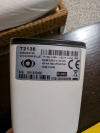
It's connected to an IESS POE NVR. If I connect the camera to the NVR POE port, the yellow led on the NVR port doesn't even light up. But if I also connect the 12V, then the yellow led starts blinking an the camera comes back to life.
I opened the camera to inspect the board. With some luck, I found a shorted SMD resistor 920 ohm and I replaced it with one 1000 ohm I had lying around
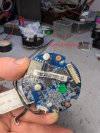
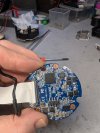
Unfortunately that didn't do the trick. What should I check next? Do you have any suggestions?
I'm sorry if I missed some details. It's actually my dad working on the pcb. I'm just reporting here the progress.
Thanks to anybody that will try to help!
A bit of context: it's an IESS camera, model 72138
It's connected to an IESS POE NVR. If I connect the camera to the NVR POE port, the yellow led on the NVR port doesn't even light up. But if I also connect the 12V, then the yellow led starts blinking an the camera comes back to life.
I opened the camera to inspect the board. With some luck, I found a shorted SMD resistor 920 ohm and I replaced it with one 1000 ohm I had lying around
Unfortunately that didn't do the trick. What should I check next? Do you have any suggestions?
I'm sorry if I missed some details. It's actually my dad working on the pcb. I'm just reporting here the progress.
Thanks to anybody that will try to help!


