
Emergency Power/Storms/Prepping etc
- Thread starter IReallyLikePizza2
- Start date

You are using an out of date browser. It may not display this or other websites correctly.
You should upgrade or use an alternative browser.
You should upgrade or use an alternative browser.
tigerwillow1
Known around here
You might be right on that specific point, but I don't think that's the right way to look at it. I went with a grid tie + battery system about 15 years ago with the main reason being emergency power when the grid is down. In the summer it will provide us with full power, sans air conditioner (not nearly as critical as in Houston). In the winter the solar production here up north is pitiful. We'd make it though a full sun day along with propane heat, but there are stretches of little or no production because of clouds or snow on the panels. That's where the portable generator becomes necessary. Compared to a built-in generator it's obviously a pain, but there's motivation that helps deal with it. Looking back, the absolute biggest advantage of the battery system has been its function as an almost-whole-house UPS. About 10 times a year we have an outage lasting from one second to a few hours. The computers, TVs and pretty much everything else don't glitch at all. We usually don't know the power was out until a neighbor asks us if our power is out.Currently, I don't see the benefit of home batteries from a cost perspective
15 years ago the price of solar panels and inverters was sky-high compared to now, the original lead-acid batteries are long gone, and I had to replace a charge controller. This system will never recover it's cost, especially on a time vs. value of money basis. Yet I have no regrets at all because of the convenience and security factors.
With the price of the solar equipment having come down and rates heading up, I can see how a newer no-battery system might recover its cost before it requires new maintenance expenses. Even so, I don't see any point in getting a system without a battery that shuts itself off when you need it the most. Plus at this point in time, I think every new grid-tie-only system messes up the grid even more, and after adding enough such systems, the whole grid will become unusable.
tigerwillow1
Known around here
IMO you're worse off than my vision of tropical (small island, lying on the beach under a shade tree next to bikini-clad hottie). I lived for a year in Houston. The worst was downtown on a summer day. It felt like the hot moist polluted air was dripping down on me.tropical climate using AC nearly 24/7 for 10 or more months of the year

I think it's 27 panels plus a powerwall.
I made myself into a solar "installer" - Home and designed one. Was a fun exercise. It gives wholesale prices to calculate the cost of the system.
Well, wholesale cost of the components is not quite the same as getting a turnkey install from a name brand, that was my point about the only way it makes sense is DIY
Looking back, the absolute biggest advantage of the battery system has been its function as an almost-whole-house UPS. About 10 times a year we have an outage lasting from one second to a few hours. The computers, TVs and pretty much everything else don't glitch at all. We usually don't know the power was out until a neighbor asks us if our power is out.
For me, this point has zero value for a few reason
- Most big battery systems do not take the place of a UPS, and the switchover only sometimes is fast enough, meaning I'd still need a UPS on critical systems
- Does not protect against tripped breakers, accidents etc, so I'd still need a UPS
- Does not protect against the battery itself tripping out during an outage, so I'd still need a UPS
If yours really does work for you as a UPS though, thats awesome. I'm interested in what components they are, as most do not work well for that
Even so, I don't see any point in getting a system without a battery that shuts itself off when you need it the most. Plus at this point in time, I think every new grid-tie-only system messes up the grid even more, and after adding enough such systems, the whole grid will become unusable.
For me, and my usage, I'd need a generator regardless of battery size because of the unknowns of solar production, and I would of course want that to be automatic, and because of that, it really made me question why I wouldn't just run everything on generator in that case. I now have zero need to even look how much power I'm using over the course of a day, the generator will run regardless
If I were to build out a net new home I would possibly think of it differently, however in my current situation, climate and power usage, you just have to have the generator anyway
Honestly, the whole thing is a scam. Because you can buy a car with the same amount of battery as some of these larger whole home systems, for cheaper than the home system. But, the car has a free car!

tigerwillow1
Known around here
The switchover has worked flawlessly for me. The transfer relay spec is 16 ms., or about 1 AC cycle, but my system is programmed for a 6 cycle power fault before switching, or about 100 ms. None of our computers or the NVR have ever glitched on the switchover. It's an Outback inverter, a low-frequency, big-iron inverter. that costs more than the commonly used newer hardware.Most big battery systems do not take the place of a UPS, and the switchover only sometimes is fast enough, meaning I'd still need a UPS on critical systems

Does your area have a "doomsday" encrypted communication network?
SoDak//\esh.org
SoDakMesh a loosely organized growing community for mesh communication in South Dakota
www.sodakmesh.org
fergenheimer
Getting comfortable
I always wondered just how much water the FreezeMisers used so last Tuesday I found out. My cattle trough was empty and I attached a FreezeMiser to the fill hose. The trough is about 100 gallons and filled up over night. We were in the 20s each night but 100 gallons is more than I would have expected.
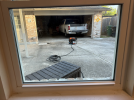
I'm not in the area this time but I left the freezemiser on the faucet instead of the cattle trough. The temperature this morning was about 21F. The clip shows the dribble and that could easily make 100 gallons overnight. The picture shows my setup this year. Also these two events were almost exactly 1 year apart.I always wondered just how much water the FreezeMisers used so last Tuesday I found out. My cattle trough was empty and I attached a FreezeMiser to the fill hose. The trough is about 100 gallons and filled up over night. We were in the 20s each night but 100 gallons is more than I would have expected.
Attachments
-
 192.168.50.210_Front [email protected]1.3 MB · Views: 18
 -
192.168.50.210_Front Porch_main_20260127080846.mp410.8 MB

Instead of the woman pouring a pitcher is there available the kid taking a leak? Just wonderin'.....I'm not in the area this time but I left the freezemiser on the faucet instead of the cattle trough. The temperature this morning was about 21F. The clip shows the dribble and that could easily make 100 gallons overnight. The picture shows my setup this year. Also these two events were almost exactly 1 year apart.


Broachoski
Getting comfortable
Fancy rain gauge holder!I'm not in the area this time but I left the freezemiser on the faucet instead of the cattle trough. The temperature this morning was about 21F. The clip shows the dribble and that could easily make 100 gallons overnight. The picture shows my setup this year. Also these two events were almost exactly 1 year apart.

fergenheimer
Getting comfortable
I had uploaded (I thought) the video of the dripping earlier but it did not take. It is a .dav file which is native to the cameras and when I tried again i noticed that it tilted. VLC does not convert .davs very well so I managed to get smartplay to export to a .avi. turns out that .avi is also not uploading. I could of sworn that I have uploaded .davs before without an issue. I used a trial of videosolo and it worked but the file was about 4 times the size of the original.
My Freezemisers use almost no water at 20 degrees, just a very slow drip. Nowhere near 100 gallons a night
Very odd!
Very odd!
Do I have a problem with over-preparing for power outages? Yes. But so do you so you can't judge me
Kind of a boring post, but figured I'd post in case it gave someone an idea
I have a standby Genset with an ATS, and I also have a 30a inlet with Interlock at the panel
BUT, what if I want to power something in my house separately from those?
Among other things
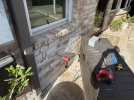
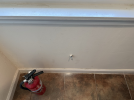
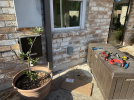
So I got a 30a inlet and just wired it up to a L14-30R on the other side of the wall. From there I can adapt to whatever I want using this adapter
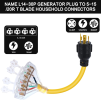
I also got a 120v 30a adapter to go from my 120v only portable genset to an L14-30R which has both hots connected. Which would still let me use the above adapter, all outlets would just be on the same phase, which is fine
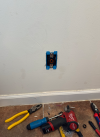
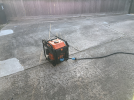
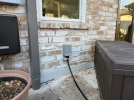
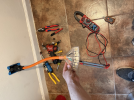
Kind of a boring post, but figured I'd post in case it gave someone an idea
I have a standby Genset with an ATS, and I also have a 30a inlet with Interlock at the panel
BUT, what if I want to power something in my house separately from those?
- Load testing a portable generator (Such as my bi-monthly test)
- Powering larger or more sensitive appliances from a smaller inverter generator when running on backup-backup power from my 6kw light tower
- Powering a few critical items while I change the oil in my main genset
- Powering critical network UPS while electrical work is occurring
Among other things
So I got a 30a inlet and just wired it up to a L14-30R on the other side of the wall. From there I can adapt to whatever I want using this adapter
I also got a 120v 30a adapter to go from my 120v only portable genset to an L14-30R which has both hots connected. Which would still let me use the above adapter, all outlets would just be on the same phase, which is fine
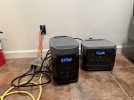
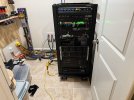
tigerwillow1
Known around here
I have kind of overdone it and have 5 generators, and between them can use gasoline, diesel, or propane for fuel. Add to that 8 kW of solar panels and 25 kWh of battery capacity.
Sounds like I'm in good company
I have 17kw of solar but no batteries, yet
I have 17kw of solar but no batteries, yet

Do you guys that have natural gas standby generators do periodic testing?
My Kohler does a 90 second startup test every Wednesday, which is programmed. There does not seem to be a way to have more than one program. There are four possible programs:
1. Unloaded Cycle with System Diagnostics (20 min). Reduced speed warm up for 10 min, one minute ramp-up to 3600rpm and runs there for three minutes, then does a cool down at reduced speed for five minutes.
2. EcoExercise Cycle. (90 seconds), 60 seconds at 3600rpm, then 30 seconds at reduced speed.
3. Unloaded Full-Speed. Runs for 20 minutes at full speed without transferring load.
4. Loaded Full-Speed: starts gen and ramps up to full speed and then transfers from utility to gen set. After 20 minutes it transfers back to utility and the gen runs for five minutes to cool down and shuts off.
Mine is set to option 2 EcoExercise once a week. But I am wondering if I should be running option 1 Unloaded Cycle weekly? Also thinking I should run option 4 Loaded Full-Speed once a month?
What do you guys think/do?
My Kohler does a 90 second startup test every Wednesday, which is programmed. There does not seem to be a way to have more than one program. There are four possible programs:
1. Unloaded Cycle with System Diagnostics (20 min). Reduced speed warm up for 10 min, one minute ramp-up to 3600rpm and runs there for three minutes, then does a cool down at reduced speed for five minutes.
2. EcoExercise Cycle. (90 seconds), 60 seconds at 3600rpm, then 30 seconds at reduced speed.
3. Unloaded Full-Speed. Runs for 20 minutes at full speed without transferring load.
4. Loaded Full-Speed: starts gen and ramps up to full speed and then transfers from utility to gen set. After 20 minutes it transfers back to utility and the gen runs for five minutes to cool down and shuts off.
Mine is set to option 2 EcoExercise once a week. But I am wondering if I should be running option 1 Unloaded Cycle weekly? Also thinking I should run option 4 Loaded Full-Speed once a month?
What do you guys think/do?
I would do option 3 personally
Once a month is quite often for a loaded test honestly, I’d just manually flip the main breaker and be out there and watch it do its thing every 3-6 months
My generator does a 12 min test every week, no load transfer. With short runs like you are doing people often report moisture in the oil as it’s never getting up to temp
Once a month is quite often for a loaded test honestly, I’d just manually flip the main breaker and be out there and watch it do its thing every 3-6 months
My generator does a 12 min test every week, no load transfer. With short runs like you are doing people often report moisture in the oil as it’s never getting up to temp

biggen
Known around here
- May 6, 2018
- 2,956
- 3,393
Once a week 5 minute test and a once a month 30 minute loaded test is what I do.
Once a week 5 minute test and a once a month 30 minute loaded test is what I do.
Don't do the 5 min test. 5 Mins is not enough time for the engine to get to operating temperature and will not burn off moisture in the oil. Moisture in oil is bad news for the engine
Even Generac have a page on this
Generac Help Center
The monthly test should be good enough to fix the issue, but just increase the time to avoid it entirely. At the end of that month there is still moisture in the oil before it burns off, which is bad news