

Do you all agree with this statement regarding different focal lengths?

Arjun

IPCT Contributor
Feb 26, 2017
11,891
14,973
Milky Way
1770480659743.png

I notice non-Dahua and non-Hikvision cameras come with a standard wide angle lenses lacking various focal lengths for purchased fixed lens cameras

What is you take on this?
 
Last edited:
This might be ok for city dwellers and indoor use. On my several acre property, a 2.8mm camera is useless. A few locations work with 3.6, but 6mm is the most useful.
 
  • Like
Reactions: Mark_M and Arjun
Hollywood magic if anyone thinks you can pull in a good picture from 100yds away using an 8mp sensor and digital zoom. Even if the pixel density supported it which it doesn't appear to from experience, there's the issue of focal point (if it's not focused on the object there's little you can do for poor focus beyond a small degree of edge sharpening), and amplification of noise as you digitally zoom.

Also there are recommended resolution values for the lens for any size sensor and these have to be bore in mind as well. It's not good sticking a 50mp (not that we have them on run of the mill CCTV yet), on a lens that can only resolve 2mp of detail. All you end up with if you do is probably a 50mp picture of a 2mp picture! The camera is only as ever as good as everything in the chain which is why with DSLR's you can buy the best body in the world and get sh*t pictures from it through using a consumer lens. On the other hand stick a pro lens on a sh*t body, and you'll get some great pictures, just not as good as those where both items in the chain are quality.

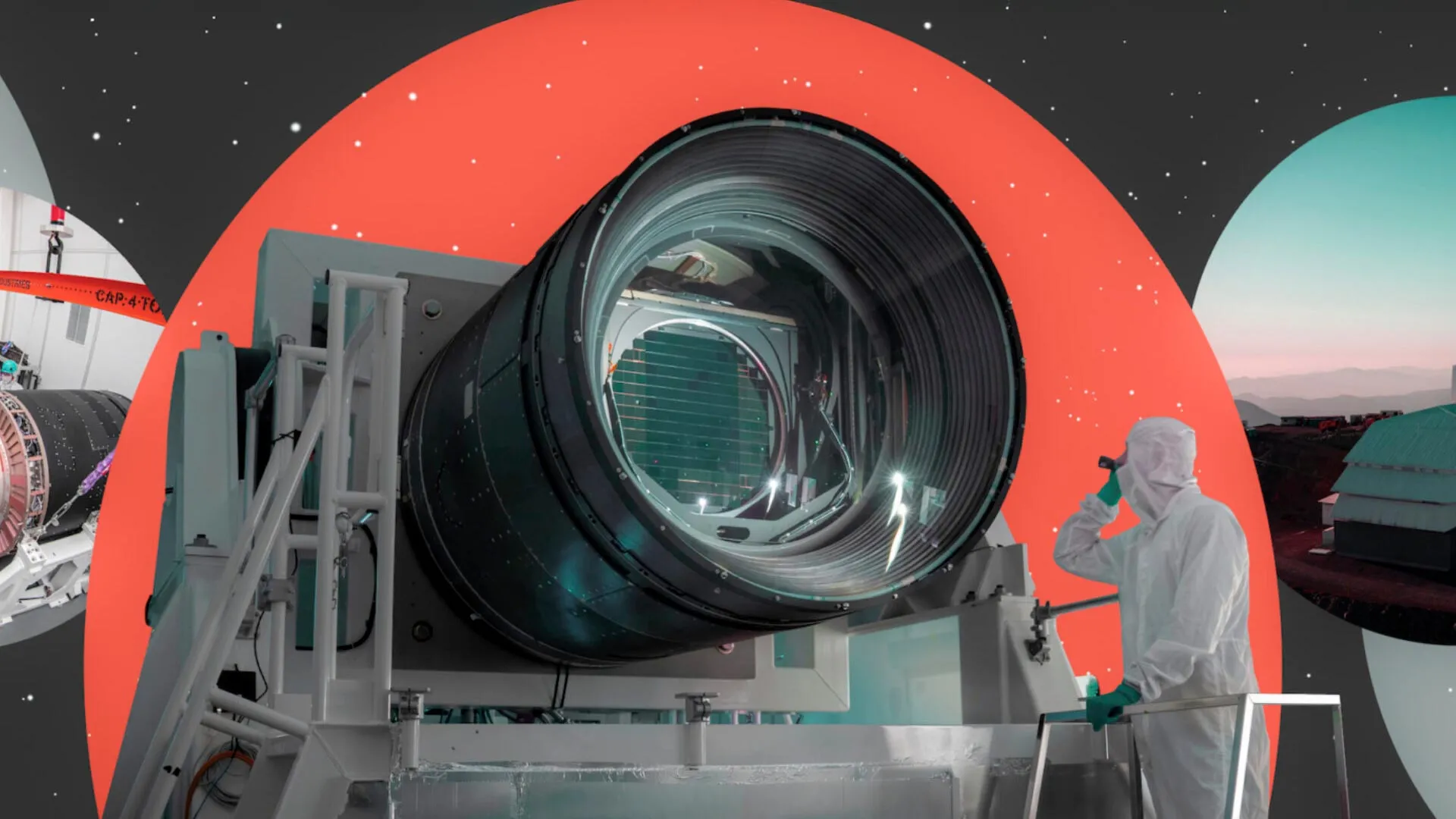
The short answer is unless you're using NASA's 3200 megapixel camera, I doubt it's going to happen. Also going to need a very big bracket!


lsst-camera.webp
 
  • Love
Reactions: Arjun
How do I determine what focal length my Ubiquiti G6 Turret is? Its not published on Ubiquiti's website


Field of View
H: 109.9°, V: 56.7°, D: 134.1°
 
According to ChatGPT,

The big shift in surveillance

Surveillance doesn’t care about “look.” It cares about:


  • Identification
  • Coverage
  • Continuity
  • Evidence quality

Once you remove aesthetics from the equation, resolution + coverage dominate, and focal length becomes a deployment tool, not a creative choice.


Why high resolution changes everything

Modern surveillance systems lean heavily on:


  • Very high-MP sensors (8–60+ MP)
  • Wide or moderately wide fixed lenses
  • Digital zoom / region-of-interest cropping
  • Post-event analysis

This allows:


  • One camera to replace multiple narrow-FOV cameras
  • Zooming after the event (huge deal legally and operationally)
  • Fewer mechanical points of failure than PTZ systems
  • Lower maintenance and better uptime

In this context, chasing the “perfect focal length” in advance is often inefficient.


Where your statement is absolutely true

For:


  • Area surveillance (platforms, parking lots, campuses, retail floors)
  • Behavior monitoring
  • Situational awareness
  • Retrospective identification

A wide, high-resolution camera that you crop later is usually superior to multiple tightly framed cameras.


Where focal length still matters in surveillance

This is the part people miss.


Cropping cannot overcome physics when it comes to:


1. Pixel density on target (PPF / PPM)

You still need enough pixels per face / per license plate at distance.
If the subject is too far away, no amount of resolution saves you.


2. Signal-to-noise ratio

Longer lenses:


  • Concentrate photons
  • Improve effective SNR on distant subjects
  • Matter at night, in rain, haze, or low contrast scenes


The modern surveillance tradeoff

Old model:


Many cameras × many focal lengths × fixed viewpoints

New model:


Fewer cameras × higher resolution × wider lenses + targeted long-lens coverage where needed

Bottom line (plain and blunt)

  • High resolution reduces—but does not eliminate—the need for multiple focal lengths
  • Wide + crop is excellent for coverage and review
  • Dedicated longer focal lengths are still mandatory for long-range ID, especially at night
 
Yes 2.8mm
In case of cctv cams this is only marketing virtual specification, which means wide zoom (105-110 degree horizontal). Used for comparison between models.

In reality focus length is different. And very depended of sensor size.
This seems to an important point that Ubiquiti users over at Reddit are failing to realize
 
Multiple focal lengths were super important with old analog cameras which had low resolution. As resolutions increase it's just not worth trying to get the perfect zoomed in focal length.

I notice non-Dahua and non-Hikvision cameras come with a standard wide angle lenses lacking various focal lengths for purchased fixed lens cameras

What is you take on this?

That quote is really more opinion than fact.

It is a fact that a "4K" camera has at least 20x more pixels than a typical old analog camera. It is an opinion that having all those pixels makes longer focal lengths worthless. It has been shown many, many times on this forum how longer focal lengths still hugely outperform wide views.
 
That quote is really more opinion than fact.

It is a fact that a "4K" camera has at least 20x more pixels than a typical old analog camera. It is an opinion that having all those pixels makes longer focal lengths worthless. It has been shown many, many times on this forum how longer focal lengths still hugely outperform wide views.
Cameras in general, Objects indeed go out of focus rapidly when approaching a camera lens at close distances because the depth of field (the range of acceptable focus) shrinks dramatically, especially with wider apertures or longer focal lengths. As the subject gets closer, the image moves further behind the lens/sensor, making it difficult to maintain sharp focus. It seems Ubiquiti wants to argue with the fact that their 2.8mm focal length is pretty standard and that objects will not go out of focus easily as it gets closer to the camera lens.
 
It seems ultimately preference will be based upon on what object the camera is pointed toward and relative distance between object/area and camera. Varifocal cameras are amazing for this purpose - as you are able to adjust focal length, see objects / areas closer and be able to pick up more details versus standard 2.8mm focal lengths which will gather unnecessary pixels and not necessarily get you get a better picture, because as you zoom in digitally, details get lost amidst less number of pixels in a confined area. All of that extra pixels horizontally becomes a waste at that point. People tend to forget that with 4K resolution comes at a loss due to less light, thus requiring larger sensors to compensate for this.
 
  • Like
Reactions: bp2008
AI contradicting itself. Security doesn't care about look, just ....evidence quality. Evidence quality is dependent on look!!

It's a misconception for this reason that quality doesn't matter and find me someone who wouldn't like a CCTV picture that looks like it's been shot on a RED camera.

The real reason quality is lower is because of an increasingly outdated notion of storage being unaffordable for high resolutlion, high bit rate footage. However, with modern compression and cheap storage (maybe an issue now for solid state once again with memory pricing), there's no need to worry as much about storage needs.
 
I've been saying for years they should make an IP cam with a very high resolution sensor and good lens like you would find in a $300-$1000 handheld camera. Or a DSLR like a professional photographer would use. Doesn't matter if they can't do the sensor justice will full motion video. Because they can use a lower res sensor and fixed wide lens for video and for triggering the big boy to take zoomed in very crisp photos. Imagine if every AI confirmed trigger came with 32 megapixel jpegs that look like you had someone standing on your porch with a zoom lens. They could even throw in a high powered flash (light) so it can take sharp pictures of moving things at night. I am sure it would be expensive as hell because of the unusual engineering involved and relatively small market who can afford it. But there are people willing to pay crazy amounts for high end cams. There would be a market for this. Maybe they are already making these and I just don't know about them because the price is too high.
 
I've been saying for years they should make an IP cam with a very high resolution sensor and good lens like you would find in a $300-$1000 handheld camera. Or a DSLR like a professional photographer would use. Doesn't matter if they can't do the sensor justice will full motion video. Because they can use a lower res sensor and fixed wide lens for video and for triggering the big boy to take zoomed in very crisp photos. Imagine if every AI confirmed trigger came with 32 megapixel jpegs that look like you had someone standing on your porch with a zoom lens. They could even throw in a high powered flash (light) so it can take sharp pictures of moving things at night. I am sure it would be expensive as hell because of the unusual engineering involved and relatively small market who can afford it. But there are people willing to pay crazy amounts for high end cams. There would be a market for this. Maybe they are already making these and I just don't know about them because the price is too high.

CCTV cameras are a very low-cost product. This is partly due to the OEM <> distributors <> installers <> end-user model. Dahua China, for example, sells the 5442-s3 (which is costly profesional model) for around $100, and Andy's store sells them for around $200, while in the standard Dahua full-service model, the MSR for them is $600.

This low cost means the cameras use cheap components – sensors, processors, lenses, etc. In a sense, they are manufactured using cheap old scrap from other industries (e.g., mobile phones).

The development of sensors for CCTV cameras has stagnated for several years. We don't see any progress here from 2022-2023.

Looking at where the money is being invested in development (smartphones, action cameras, drones) and the development of optical sensors for them, the only path forward for CCTV cameras is to adopt solutions designed for smartphones...

32 (16:9) / 48 (3:2) Mpx sensors using quad Bayer technology have monopolized the smartphone/action camera and drone market. Technological progress here is very high...

During the day, they can operate at high resolution (8K), and at night, they can group 4 pixels per 1 (for higher sensitivity) and operate at 4K resolution with better night performance.

this should solve also problems with low DORI for fixed lens cameras (8K vs 4K or 4MPX)...

Figure illustrating Quad Bayer Coding addition and remosaic processing
 
CCTV cameras are a very low-cost product. This is partly due to the OEM <> distributors <> installers <> end-user model. Dahua China, for example, sells the 5442-s3 (which is costly profesional model) for around $100, and Andy's store sells them for around $200, while in the standard Dahua full-service model, the MSR for them is $600.

This low cost means the cameras use cheap components – sensors, processors, lenses, etc. In a sense, they are manufactured using cheap old scrap from other industries (e.g., mobile phones).

The development of sensors for CCTV cameras has stagnated for several years. We don't see any progress here from 2022-2023.

Looking at where the money is being invested in development (smartphones, action cameras, drones) and the development of optical sensors for them, the only path forward for CCTV cameras is to adopt solutions designed for smartphones...

32 (16:9) / 48 (3:2) Mpx sensors using quad Bayer technology have monopolized the smartphone/action camera and drone market. Technological progress here is very high...

During the day, they can operate at high resolution (8K), and at night, they can group 4 pixels per 1 (for higher sensitivity) and operate at 4K resolution with better night performance.

this should solve also problems with low DORI for fixed lens cameras (8K vs 4K or 4MPX)...

Figure illustrating Quad Bayer Coding addition and remosaic processing
I've been following the remarks from Ubiquiti users on Reddit lately:
  • One user flagged that DORI values are insignificant to the CCTV world now due to 4K sensors being featured in high-end Ubiquiti models like the G6 Pro Turret
  • One user states that Dahua cameras are by no means "professional"
  • Another user also stated that focal lengths are no longer need to be considered due to the 4K sensors with 1/1.2" sensors that perform well 24/7 and has plenty of pixels to zoom into on any part of the frame

The way companies like Apple and Samsung put multiple cameras on the rear of their phones could be the way forward with newer IP cameras in the future as @steve1225 stated with Bayer technology

 
  • Haha
Reactions: CCTVCam and bp2008
AI contradicting itself. Security doesn't care about look, just ....evidence quality. Evidence quality is dependent on look!!

It's a misconception for this reason that quality doesn't matter and find me someone who wouldn't like a CCTV picture that looks like it's been shot on a RED camera.

The real reason quality is lower is because of an increasingly outdated notion of storage being unaffordable for high resolutlion, high bit rate footage. However, with modern compression and cheap storage (maybe an issue now for solid state once again with memory pricing), there's no need to worry as much about storage needs.
But lets not categorize expensive offerings from Axis to be equivalent to a RED camera; same with Ubiquiti's G6 Pro Turret which is astronomically priced
 
  • Like
Reactions: bp2008
I've been following the remarks from Ubiquiti users on Reddit lately:
  • One user flagged that DORI values are insignificant to the CCTV world now due to 4K sensors being featured in high-end Ubiquiti models like the G6 Pro Turret
  • One user states that Dahua cameras are by no means "professional"
  • Another user also stated that focal lengths are no longer need to be considered due to the 4K sensors with 1/1.2" sensors that perform well 24/7 and has plenty of pixels to zoom into on any part of the frame

The way companies like Apple and Samsung put multiple cameras on the rear of their phones could be the way forward with newer IP cameras in the future as @steve1225 stated with Bayer technology

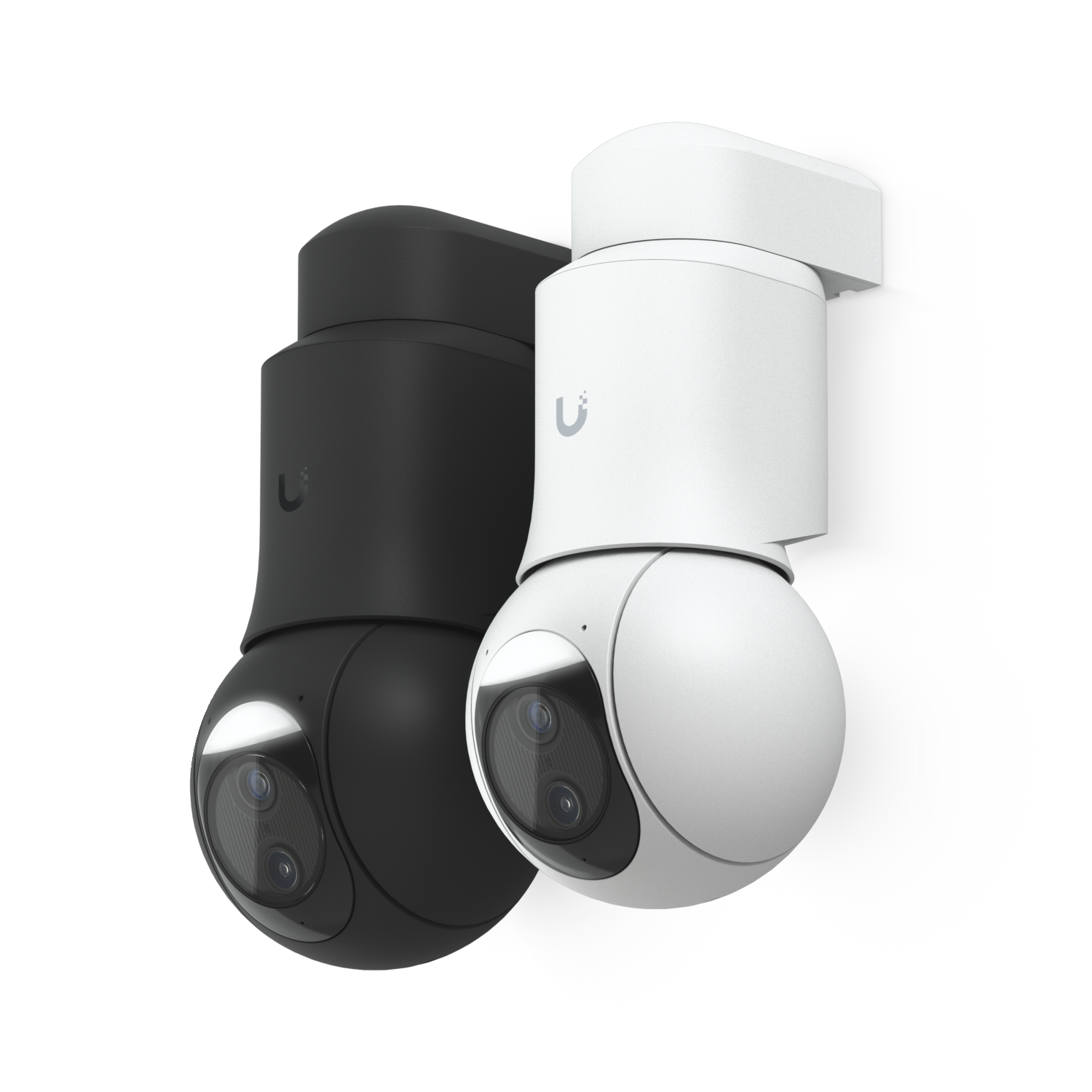
multisensor cctv cameras are way to do cheap zoom - those products exists where multiple fixed lenses are used for 'hybrid zoom' capabilities...


you have one static 2.4mm wide lens and two (hybrid zoom) sensors / lenses with 3.6mm and 8.4mm on PTZ module.. cheap, not so very effective but works as static panoramic + 6x PTZ hybrid zoom camera in cheap execution..


similar story on latest plz from ubiquity..


But those don't solver problems we talk about - lack of progress in cctv cams and cctv sensors..
 
  • Like
Reactions: Arjun
View attachment 237790

I notice non-Dahua and non-Hikvision cameras come with a standard wide angle lenses lacking various focal lengths for purchased fixed lens cameras

What is you take on this?
Higher resolution certainly make it easier to get high ppm for identification purposes, but we all know that it also comes at the cost of worse low/no light performance. So while I don't think you always need a variable focus lens over a fixed focus lens just to be able to dial in the last Nth degree of coverage, it is obviously still important to choose the proper fixed focal length camera for the job. In other words, don't pick a 2.8mm camera when you really need a 6mm camera, but choosing a 6mm fixed focal length camera when you could really dial it to 6.5854mm with a variable focal length camera is fine. Also, keep in mind that all things being equal, fixed focal length cameras are going to have a better image quality because the extra lenses needed to create a variable focal length camera will reduce the quality of the image somewhat.

Long story short, it is just as important as ever to research and design the overall project correctly. During this design phase, you may find that there are lots of locations where fixed focal length cameras will work fine. You may also find locations where there simply isn't a fixed focal length camera that meets the design needs and therefore a variable focal length camera is the correct choice. All things being equal however, I would rather have a fixed focal length camera than a variable focal length camera set at or near one of the common fixed focal length options due to the better image quality of the fixed focal length cameras.

  • Another user also stated that focal lengths are no longer need to be considered due to the 4K sensors with 1/1.2" sensors that perform well 24/7 and has plenty of pixels to zoom into on any part of the frame

I also don't buy that argument. It's great that we are seeing 4k sensors with 1/1.2" sensors. That combination will certainly provide better low/no light performance than other 4k cameras with smaller sensors. But it's not like we have achieved the "end all be all" when it comes to low/no light performance. All things being equal, I'd still rather have a 2k (or lower resolution) sensor that's 1/1.2" in size. Getting a extra stop or two of exposure could absolutely be the difference between a footage that is sharp enough for identification and footage that has just enough motion blurring to render it useless for identification purposes.

Long story short, people making those kinds of statements really have no idea how the physics of all of this works.....

PS - the people that make statements like that are also the same people that pay top dollar for fast internet service (over 1000/1000) because their family of 4 likes to stream different Netflix shows at the same time.... :winktongue:
 
Last edited:
  • Love
Reactions: Arjun
Higher resolution certainly make it easier to get high ppm for identification purposes, but we all know that it also comes at the cost of worse low/no light performance. So while I don't think you always need a variable focus lens over a fixed focus lens just to be able to dial in the last Nth degree of coverage, it is obviously still important to choose the proper fixed focal length camera for the job. In other words, don't pick a 2.8mm camera when you really need a 6mm camera, but choosing a 6mm fixed focal length camera when you could really dial it to 6.5854mm with a variable focal length camera is fine. Also, keep in mind that all things being equal, fixed focal length cameras are going to have a better image quality because the extra lenses needed to create a variable focal length camera will reduce the quality of the image somewhat.

Long story short, it is just as important as ever to research and design the overall project correctly. During this design phase, you may find that there are lots of locations where fixed focal length cameras will work fine. You may also find locations where there simply isn't a fixed focal length camera that meets the design needs and therefore a variable focal length camera is the correct choice. All things being equal however, I would rather have a fixed focal length camera than a variable focal length camera set at or near one of the common fixed focal length options due to the better image quality of the fixed focal length cameras.


I also don't buy that argument. It's great that we are seeing 4k sensors with 1/1.2" sensors. That combination will certainly provide better low/no light performance than other 4k cameras with smaller sensors. But it's not like we have achieved the "end all be all" when it comes to low/no light performance. All things being equal, I'd still rather have a 2k (or lower resolution) sensor that's 1/1.2" in size. Getting a extra stop or two of exposure could absolutely be the difference between a footage that is sharp enough for identification and footage that has just enough motion blurring to render it useless for identification purposes.

Long story short, people making those kinds of statements really have no idea how the physics of all of this works.....

PS - the people that make statements like that are also the same people that pay top dollar for fast internet service (over 1000/1000) because their family of 4 likes to stream different Netflix shows at the same time.... :winktongue:
Spot-On :D