
Analog upgrade to IP cameras with cable length/camera distance issues

vhp

n3wb
Dec 20, 2025
5
3
Pacific Northwest
We have an existing 8 camera system with a DVR installed to cover multiple properties on acreage.
Cameras are located many hundreds of feet apart from the DVR, and use passive baluns on each end to send each video signal over a single pair in underground CAT5 cables that carry multiple camera feeds.

For the furthest distance cameras, there are extra, unused coax cables I can use. For some others, there are empty conduits I can use, and for some, I may have to pull new coax to replace the CAT5.
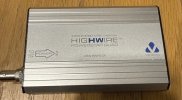
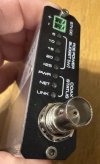
I want to upgrade to 10 or 11 IP cameras, and probably use multiple Highwire pairs to push the camera feeds over the longer distances.
Power is available for locally sourced PoE near the furthest distance cameras. All camera feeds run to the shop building, and then on to the main house where the NVR will reside.
The shop has a LAN connection to the main house and spare CAT5 and coax cables to the main house as well.
Here's one possible layout. Will it work? Are there better options?
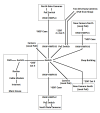
SecurityCameraSchematic.png
 
You possibly could employ Ubiquiti Wireless transmitters( other brands available as well) for the really long runs @ 500-600& 800 feet.
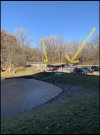
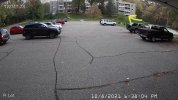
I ran 2 IP cameras and a pair of Ubiquiti Loco Nano wireless bridges with a POE switch to a remote building to monitor a parking lot. which worked fantastically.
 
This distance and the terrain ( A pond, an underground Natural gas line, and Underground 220VAC run, and asphalt) made wireless a good option. Working to this day. Installed about 4.5 years ago.
 

Attachments

  • Screenshot-2024-12-21-042433.jpg
    Screenshot-2024-12-21-042433.jpg
    142.6 KB · Views: 6
  • Screenshot-2021-10-08-215026.jpg
    Screenshot-2021-10-08-215026.jpg
    278.2 KB · Views: 6
As an Amazon Associate IPCamTalk earns from qualifying purchases.
this guy @ TRLcam has some really big distances covered with versions of wireless transmitters.
1767031219610.png
 
I presume the above wireless recommendations are for some sort of dedicated directional point to point signal transmission.
I'm not a fan of wireless, and at least one family is very much against adding any more EMF to our crowded spectrum, even going so far as to revert to manually read electric and gas meters and not using WiFi in the house.
We have hundreds of trees all over the site, too.
WiFi itself has inadequate bandwidth. We had that at one installation with just four (1080?) IP cameras, and had to reduce the resolution to get it to work at all.
And we already have miles of conduit going in every direction we need, that we can leverage.
My questions have more to do with whether the HighWire arrangement will work, especially when combined with camera feeds from multiple directions, going through an intermediate building, etc.
We already use HighWire at another site to run two IP cameras at the gate about 800 feet to an NVR in the house, and that seems to work well.
 
You could use ip to coax converters for pushing ip over existing coax. I think a lot of those can push a reasonable amount of power over the coax also, as long as it is copper coax.

You can also push 90w from a POE injector over CAT5/6 and send it to a POE powered (called a "passthrough") switch that can supply 66watts for 4 ports. I have had good success with this model with 4 POE outputs, though I used it with only two cameras and fed it 60w, which outputs 40 or do watts. It foesn't matter since most ip cams max out around 10w with illuminator on.

TP-Link TL-SG1005P-PD is what I have used.​

If you have conduit, you could pull fiber. It is pretty inexpensive to use premade OM3 fiber with SFP port switches and SFP converters. I've used Cable Matters brand converters with good success. Note that many of the smaller 4&8 port switches with SFP ports only support 1 Gigabit, so you cannot use SFP+ modules and must use SFP modules, even if you have a 2.5G or 10G capable fiber. Fiber is my favorite method for longer distances if I have power on both ends. You can even get dielectric versions so there is no continuity between buildings.

I always recommend fiber, but if copper has been working without going bad on its own (getting interference from water inside) or getting hit by lightning or power surges, I don't push people to change it out. Now if you are on a mountain 2/3 of the way to the top and keep getting lightning issues, then it becomes interesting and fiber can really help, especially if you can get most of the hit to ground at the gate or outbuilding and not come up low voltage stuff to the house.
 
With the cost of the highwires, you could probably do the "new camera north" with fiber for a very similar price.

If I were doing it and did not have any highwires purchased, I'd also replace the 600' and 800' with fiber. You can get premade fiber on amazon. I've bought several different brands and all have worked fine for me. No issues.
 
With the cost of the highwires, you could probably do the "new camera north" with fiber for a very similar price.

If I were doing it and did not have any highwires purchased, I'd also replace the 600' and 800' with fiber. You can get premade fiber on amazon. I've bought several different brands and all have worked fine for me. No issues.
Just curious. These amazon fibers. What would they run for... 800' with singlemode? Would it just be 2 strands? 6? 12?
 
Just curious. These amazon fibers. What would they run for... 800' with singlemode? Would it just be 2 strands? 6? 12?
I looked myself :) I think the previous owner of my company tried this exact brand out. Anyone in the future, be very wary. Looks great on paper. However, the stainless-steel tube came undone making sharp fiber cutting spaghetti in the conduit, and we had to start all over with something else.
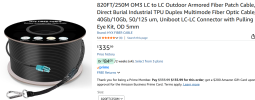
1767052862573.png
 
Interesting. I have had no issues so far. I even hung one aerial about 40' with no messenger.

Now, if it got caught on a sharp edge of a box or conduit, I could see it damaging the spiral shield.
 
Interesting. I have had no issues so far. I even hung one aerial about 40' with no messenger.

Now, if it got caught on a sharp edge of a box or conduit, I could see it damaging the spiral shield.
Ewww....the evil memory. We just gave up buying these type of fiber for business purposes. Besides, most clients was 6 or 12 strand, not 2. Usually end up simply getting indoor/outdoor fiber or Armored (similar to flex electrical conduit). Granted, the price is 2x or even 4x higher than what this Amazon is displayed for ;)
 
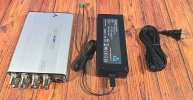
I can get a slightly used HighWire 8 channel base unit for less than $100, and the four HighWire camera end units for $60 to $90 each.
(A 4 channel base unit is all I need, but that's over $300.)
ICRealtime 4MP IP Indoor/Outdoor Small Size Bullet. Fixed 2.8mmLens (102°) were about $200 each a while back (now maybe $300 to $500 each?).
The 16 channel NVR is under $2000.
So less than $500 for all of the HighWire gear isn't all that significant.

I do have unterminated fiber roughed in between the shop and the main house (installed in 2008), but I'd have to figure out how to terminate the ends and integrate it into the rest of the system.
The existing CAT5 should be able to handle the traffic (maybe 200+ feet long).
 
$2,000.00 for a 16 channel NVR?
$300-$500 for IP cameras?

I don't know what this HighWire gear is... maybe I don't want to know :)
But Dahua:
1767053912926.png
 
I would replace the 600' & 800' coax runs with fiber, if you can. If you can't, use coax/ip converters.
For the 800' run, there are at least 8 separate low voltage cables in a 2" conduit. I'd have to disconnect them on one end and pull them all out and re-pull the bundle in order to add anything into the conduit.
For the 600' run, I'll have to investigate. It may have much smaller conduit for part of the run.
 
If the highwire is less than $500 for it all and you have good wires, I'd go with that.

I wouldn't get Highwire at new pricing - I'd just do fiber.

Sometimes you can get good pricing on fiber termination, but the all the connectors and the box at each end add up. The preterminated fiber is more robust, so I just go straight to the switch with them most of the time.