

Arjun
IPCT Contributor

Early Detection and Surveillance of the SARS-CoV-2 ...
This report describes early detection and surveillance ...
 www.cdc.gov
www.cdc.gov
www.cdc.gov

Nearly Half of Cancer Patients Taking Ivermectin + Mebendazole
Reported Cancer Disappearance Or Tumor Reduction After 6 Months
Epidemiologist Nicholas Hulscher reported that in the largest study of Ivermectin and Mebendazole anti-parasitic treatments, nearly half of the patients in the study reported a disappearance of the cancer or tumor regression. He wrote that 32.8% of the study participants showed no more evidence of disease after 6 months, 15.6% reported tumor regression and 36.1% reported that the disease had stabilized and was no longer spreading. The clinical program evaluation included 197 cancer patients, with 122 completing a follow-up survey at about six months (61.9% response rate). The cancer patients were prescribed compounded ivermectin--mebendazole, with each capsule containing 25 mg ivermectin and 250 mg mebendazole---most commonly taken at 1–2 capsules per day.
NOTE: The Need To Know News does not endorse any medical treatments, but instead reports the news. Please consult your own medical health experts before engaging in any medical treatments.
more…
After 18 months taking Ivermectin and Mbenendazole, I'm in the statistical half with no tumor regression or no current evidence of disease. I'm concluding that the data presented was after 6 months on the 2 drugs, but it's a bit difficult for me to pull that number out of the presentation.Real-World Clinical Outcomes of Ivermectin and Mebendazole in Cancer Patients
The Results: item includes these statistics:After 18 months taking Ivermectin and Mbenendazole, I'm in the statistical half with no tumor regression or no current evidence of disease. I'm concluding that the data presented was after 6 months on the 2 drugs, but it's a bit difficult for me to pull that number out of the presentation.
I bolded the section that indicated more than half the participants were on it for six months.At enrollment, participants had a median duration since initial diagnosis of 1.2 years, with 37.1% experiencing active disease progression. At 6-month follow-up, medication adherence was high with 86.9% of participants completing the full initial 90-capsule ivermectin-mebendazole prescription and 66.4% remaining on the protocol at 6 months. The Clinical Benefit Ratio (CBR) was 84.4% (95% CI: 77.0--89.8%). Notably, 48.4% (95% CI: 39.7–57.1%) of the cohort reported the strongest positive outcomes, consisting of regression (15.6%; 95% CI: 10.2–23.0%) or no current evidence of disease (NED, 32.8%; 95% CI: 25.1–41.5%).
Real-World Clinical Outcomes of Ivermectin and Mebendazole in Cancer Patients
Published April 7, 2026 | Version v1
Abstract
Background: Drug repurposing offers a pathway to identify accessible, low-toxicity cancer therapies. Ivermectin and mebendazole have demonstrated multi-target anti-cancer activity in preclinical models, including the inhibition of cancer cell proliferation and the targeting of cancer stem cells. This paper evaluates real-world patient-reported outcomes, safety, and adherence in a cohort of cancer patients utilizing this combination protocol.
Methods: We analyzed a prospective observational cohort of 197 cancer patients who were prescribed ivermectin and mebendazole off-label through a telemedicine platform by licensed U.S. healthcare providers. Participants received compounded oral capsules containing 25 mg ivermectin and 250 mg mebendazole. As part of a clinical program evaluation, data were collected via voluntary, standardized digital surveys at baseline and at approximately 6-month follow-up. Of the initial cohort (N = 197), baseline characteristics, including cancer type and disease status, were assessed. A total of 122 participants completed the follow-up survey (61.9% response rate) to evaluate self-reported cancer outcomes, medication adherence, and adverse events. 95% confidence intervals (CI) were calculated for primary outcome measures using the Wilson score method. Dose-stratified analyses for outcomes and safety were conducted using Chi-square statistics.
Results: The cohort represented a diverse clinical profile of cancer patients, with mean age of 67 years and nearly balanced sex distribution (52.3% male, 47.7% female). Cancer types included prostate (27.9%), breast (18.3%), lung (8.6%), colon (5.1%), urologic (4.6%), pancreatic (3.0%), liver (2.5%), gynecologic (2.5%), and hematologic (2.5%) malignancies. At enrollment, participants had a median duration since initial diagnosis of 1.2 years, with 37.1% experiencing active disease progression. At 6-month follow-up, medication adherence was high with 86.9% of participants completing the full initial 90-capsule ivermectin-mebendazole prescription and 66.4% remaining on the protocol at 6 months. The Clinical Benefit Ratio (CBR) was 84.4% (95% CI: 77.0--89.8%). Notably, 48.4% (95% CI: 39.7–57.1%) of the cohort reported the strongest positive outcomes, consisting of regression (15.6%; 95% CI: 10.2–23.0%) or no current evidence of disease (NED, 32.8%; 95% CI: 25.1–41.5%). Disease stability was reported to be maintained in 36.1% (95% CI: 28.1–44.9%) of participants, while 15.6% (95% CI: 10.2–23.0%) reported disease progression. While 25.4% reported mild side effects (primarily gastrointestinal), 93.6% of those affected continued treatment through minor dose adjustments. Some participants reported concurrent conventional therapies, including chemotherapy (27.9%), radiation therapy (21.3%), and surgery (19.7%), as well as adjunctive interventions such as supplement use (49.2%), dietary modification (37.7%), and other integrative approaches.
Conclusions: In this prospective real-world cohort, the combination of ivermectin and mebendazole was associated with high rates of self-reported clinical benefit, with nearly half of participants reporting tumor regression or no current evidence of disease across a heterogeneous population of cancer patients. These findings provide a compelling clinical signal that these well-tolerated, repurposed agents may offer therapeutic benefit. However, given the observational design, reliance on self-reported outcomes, and potential for selection bias and uncontrolled confounding, these findings should be interpreted as hypothesis-generating. Urgent prospective, randomized, placebo-controlled clinical trials are warranted to validate these observations and further define optimal dosing strategies.
18 page PDF of paper also attached
Real-World Clinical Outcomes of Ivermectin and Mebendazole in Cancer Patients: Results from a Prospective Observational Cohort
Abstract Background: Drug repurposing offers a pathway to identify accessible, low-toxicity cancer therapies. Ivermectin and mebendazole have demonstrated multi-target anti-cancer activity in preclinical models, including the inhibition of cancer cell proliferation and the targeting of cancer...zenodo.org
 www.zerohedge.com

A Reckoning Is Underway At The FDA
Tuesday, Apr 21, 2026 - 03:40 PM
Authored by Maryanne Demasi via The Brownstone Institute,
For months, a quiet battle has been unfolding inside the US Food and Drug Administration (FDA).
It began with an analysis of child deaths after Covid vaccination, followed by strategic leaks to major media outlets, and has now erupted into the open with a memo from the regulator’s own vaccine chief.
In September, it was reported that FDA officials had privately investigated 25 paediatric deaths following Covid vaccination --- the first systematic review of such cases since the rollout began.
The findings were meant to be presented to the CDC’s Advisory Committee on Immunization Practices (ACIP). But the presentation never came. The meeting passed without a word. Something had happened behind closed doors.
Now we know what.
On 13 November 2025, STAT published an extraordinary insider account describing a tense internal meeting in which FDA scientist Dr Tracy Beth Høeg presented evidence of young people who had died after Covid vaccination.
According to STAT, her findings triggered pushback from career FDA regulators who feared the implications of acknowledging fatal cases.
Now, comes the explosive memo from FDA vaccine chief Dr Vinay Prasad, confirming --- for the first time — that US regulators have formally attributed at least 10 of these children’s deaths to Covid vaccination.
Prasad called it “a profound revelation” with far-reaching implications for American vaccine policy, adding that the true number is “certainly an underestimate.”
Here, I’ll take you through the memo, the leaks, the internal rebellion at FDA, and what this means --- not just for Covid vaccines, but for all vaccine approvals going forward.
This story marks a turning point in US vaccine regulation.
The Story That Divided the Regulator
In early September, insiders at the FDA and CDC quietly told the New York Times and the Washington Post that the agency had begun investigating child deaths reported to VAERS.
My reporting confirmed that Dr Tracy Beth Høeg, a senior adviser within the FDA’s vaccine division, had led the review --- contacting families, gathering medical records, and obtaining autopsy findings.
more:
A Reckoning Is Underway At The FDA<!-- --> | ZeroHedge
ZeroHedge - On a long enough timeline, the survival rate for everyone drops to zero

I never owned a horse who came down with cancer.It's getting to the point where I believe and trust the gentlemen and ladies at the feed and seed store a damned sight further than those in the medical community.


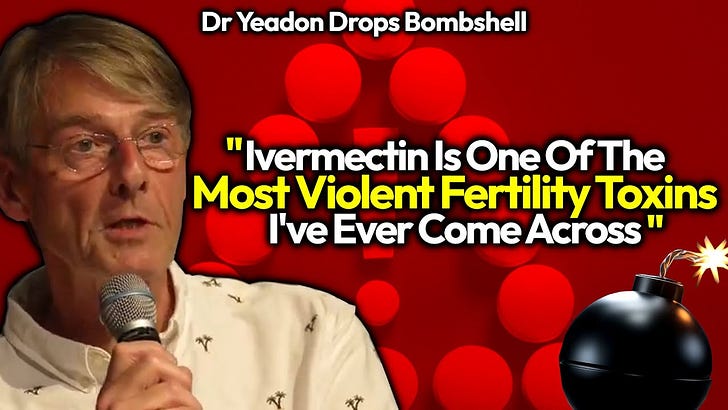
 normanjamesemf.substack.com

This is a GREAT read about Ivermectin. Specifically--- all the different things that can keep it in your system a lot longer, and the things that can alter the way it behaves when you take it...
Ivermectin: Two Doses, Two Weeks Apart, Job Done — Why Would You Do More? Dr Mike Yeadon was right again!
A man in rural Thailand, stray dogs, and the common sense that seems to escape the internet. I’ve just taken my first dose of ivermectin. Horse paste, sq.......
"He went further. He speculated that the entire ivermectin promotion during COVID was a psyop — that pushing a cheap generic antiparasitic served two purposes: reinforcing the belief that a pandemic existed (why else would millions be buying it?), and suppressing fertility in exactly the demographic most likely to refuse the vaccines."
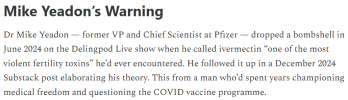

His opinions seem to be debated^^^ Wow, WhatTha??? Thank you, this was an interesting read....
So noticed this was from 2024, how did we miss this?
View attachment 242501
View attachment 242500
So what I am gathering from this, too much (wrong dose) is not good, then add the prohibitors and you may have problems. It is well known on ranches Ivermectin works and does not cause infertility, believe me, a Ranch only survives on the reproduction of it's animals. We also know India nor Africa is reducing their population so for me my take is checking what supplements counter Ivermectin or messes with dozes. One other thing is mentioned is:
View attachment 242505


