
Newbie here, have been a telecom (AT&T service tech), a Siemens Information Systems small business telecom installer/programmer, diesel and refrigeration mechanic. Have been recently made aware of lowlifes in the area cruising rural homes @ 4am in ghillie suits and stealing everything not locked down (have the doorbell cam footage). I guess I am here to learn whatever I can to help me to purchase and install a surveillance system to cover our home and a couple of barns. Can these IPoE systems be used over an extended WiFi link to those aforementioned barns?
Greetings from ASteveA
- Thread starter ASteveA
- Start date
You are using an out of date browser. It may not display this or other websites correctly.
You should upgrade or use an alternative browser.
You should upgrade or use an alternative browser.

Welcome!
You would want to use a dedicated wireless system like an ubiquity nanostation. Do not use traditional wifi.
Without knowing what your goals of the camera is, this thread is used as the go to for the new person here outlining the commonly recommended cameras (along with Amazon links) based on distance to IDENTIFY that represent the overall best value/best bang for the buck in terms of price and performance day and night. It might be a 2MP camera in some instances. Many here feel 4MP is the current sweet spot for these cameras.
The Importance of Focal Length over MP in camera selection
And coupled with that thread is this great thread which will show why all of the same 2.8 or 3.6mm cameras is the wrong choice (these are the common focal lengths consumer brands sell):
i-want-2-8mm-cameras-everywhere-to-see-everything-this-is-why-you-need-specific-fovs-with-purposeful-focal-lengths.70053/
We would encourage you to look at those threads in detail.
It will probably raise more questions than answers LOL.
You willl want to consider setting up a camera to read plates as well. You would have to set the camera up specifically to read plates. You need the proper camera with OPTICAL zoom for the distance you are covering and the angle to get plates.
Regarding plates, keep in mind that this is a camera dedicated to plates and not an overview camera also. It is as much an art as it is a science. You will need two cameras. For LPR we need to OPTICALLY zoom in tight to make the plate as large as possible. For most of us, all you see is the not much more than a vehicle in the entire frame. Now maybe in the right location during the day it might be able to see some other things, but not at night.
At night, we have to run a very fast shutter speed (1/2,000) and in B/W with IR and the image will be black. All you will see are head/tail lights and the plate. Some people can get away with color if they have enough street lights, but most of us cannot. Here is a representative sample of plates I get at night of vehicles traveling about 45MPH at 175 feet from my 2MP 5241-Z12E camera (that is all that is needed for plates):

See the LPR subforum for more details.
You would want to use a dedicated wireless system like an ubiquity nanostation. Do not use traditional wifi.
Without knowing what your goals of the camera is, this thread is used as the go to for the new person here outlining the commonly recommended cameras (along with Amazon links) based on distance to IDENTIFY that represent the overall best value/best bang for the buck in terms of price and performance day and night. It might be a 2MP camera in some instances. Many here feel 4MP is the current sweet spot for these cameras.
The Importance of Focal Length over MP in camera selection
And coupled with that thread is this great thread which will show why all of the same 2.8 or 3.6mm cameras is the wrong choice (these are the common focal lengths consumer brands sell):
i-want-2-8mm-cameras-everywhere-to-see-everything-this-is-why-you-need-specific-fovs-with-purposeful-focal-lengths.70053/
We would encourage you to look at those threads in detail.
It will probably raise more questions than answers LOL.
You willl want to consider setting up a camera to read plates as well. You would have to set the camera up specifically to read plates. You need the proper camera with OPTICAL zoom for the distance you are covering and the angle to get plates.
Regarding plates, keep in mind that this is a camera dedicated to plates and not an overview camera also. It is as much an art as it is a science. You will need two cameras. For LPR we need to OPTICALLY zoom in tight to make the plate as large as possible. For most of us, all you see is the not much more than a vehicle in the entire frame. Now maybe in the right location during the day it might be able to see some other things, but not at night.
At night, we have to run a very fast shutter speed (1/2,000) and in B/W with IR and the image will be black. All you will see are head/tail lights and the plate. Some people can get away with color if they have enough street lights, but most of us cannot. Here is a representative sample of plates I get at night of vehicles traveling about 45MPH at 175 feet from my 2MP 5241-Z12E camera (that is all that is needed for plates):
See the LPR subforum for more details.

Can these IPoE systems be used over an extended WiFi link to those aforementioned barns?
Welcome to IPCT!

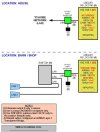
Yes, one can create a point-to-point or point-to-multipoint layer 2 transparent wireless bridge to bring in remote live video streams from barns, sheds, etc. to the local LAN which has the NVR or PC/VMS to store recordings, allow remote access, etc. They can function like a Ethernet cable data-wise when the power for POE/power is also available at the remote structure.
These are not typical Wi-Fi extenders, Wi-Fi links, etc. but are purpose-built radios that use proprietary wireless protocol to provide dependable links when properly installed and configured. One very popular brand is Ubiquiti of which I have deployed 10 or more of their links between remote buildings. I also installed a couple of TP-LINK wireless bridges a few years ago when there was a prolonged "out of stock" issue with the Ubiquiti radios. The TP-LINK bridges are still working well in their role.
Here are two links depicting the Ubiquiti bridge types and at the bottom is an example of the bridges I have installed.
airMAX - Guide to Configure a Point-to-Point Link (Layer 2, Transparent Bridge)
airMAX - Guide to Configure a Point-to-Multipoint (PtMP) ISP-Style Access Point
EDIT 3/26/26 @ 0800 CDT: The schema below is using "M" devices; the configuration of "AC" devices is somewhat different and is pointed out in the above linked "transparent bridge" instructions.
NOTE: These radios I mention use passive POE, generally 24VDC, and some models within a brand may use 802.3af/at-compliant active POE so read the specs.
Last edited:
As an Amazon Associate IPCamTalk earns from qualifying purchases.

Thanks for the info TonyR, I appreciate it. This is going to be a learning journey and I have a lot to learn. Am I correct in saying that the difference between the "M" and "AC" equipment is that the "M" is more high end "industrial strength" but they basically do the same function in creating the network link? I am not really going to be trafficking any more than maybe 6-7 cameras over this link over time. Would that need an "industrial strength" wireless network connection?
No, they'e both in the same category, the "M" being an earlier generation and then the later generation "AC" having generally higher throughput.Thanks for the info TonyR, I appreciate it. This is going to be a learning journey and I have a lot to learn. Am I correct in saying that the difference between the "M" and "AC" equipment is that the "M" is more high end "industrial strength" but they basically do the same function in creating the network link? I am not really going to be trafficking any more than maybe 6-7 cameras over this link over time. Would that need an "industrial strength" wireless network connection?
Once you determine the max number of cameras and the total bandwidth needed (based of number of cams and their resolution and frame rates) and the distance for the link you can better select the radio pair for the link.
Ideally, you want to perform a field survey if there's the possibility of a crowded spectrum such as found in a more urban/metro environment. Mounting height, quality of LOS (Line Of Sight) are equally important. Trees, vegetation and buildings are to be avoided.
Can you put together a sketch with buildings, camera locations, approximate distances, radio mounting heights and obstructions between proposed mounting radio points?
Last edited:
Thanks for the welcome. I have read through some of the links you provided while I was lurking before I registered. Yes, there is a huge amount of information to be digested! Thanks for the info on focal length and also the LPR capabilities, all of which is going to be enormously helpful in this endeavor!Welcome!
You would want to use a dedicated wireless system like an ubiquity nanostation. Do not use traditional wifi.
Without knowing what your goals of the camera is, this thread is used as the go to for the new person here outlining the commonly recommended cameras (along with Amazon links) based on distance to IDENTIFY that represent the overall best value/best bang for the buck in terms of price and performance day and night. It might be a 2MP camera in some instances. Many here feel 4MP is the current sweet spot for these cameras.
The Importance of Focal Length over MP in camera selection
And coupled with that thread is this great thread which will show why all of the same 2.8 or 3.6mm cameras is the wrong choice (these are the common focal lengths consumer brands sell):
i-want-2-8mm-cameras-everywhere-to-see-everything-this-is-why-you-need-specific-fovs-with-purposeful-focal-lengths.70053/
We would encourage you to look at those threads in detail.
It will probably raise more questions than answers LOL.
You willl want to consider setting up a camera to read plates as well. You would have to set the camera up specifically to read plates. You need the proper camera with OPTICAL zoom for the distance you are covering and the angle to get plates.
Regarding plates, keep in mind that this is a camera dedicated to plates and not an overview camera also. It is as much an art as it is a science. You will need two cameras. For LPR we need to OPTICALLY zoom in tight to make the plate as large as possible. For most of us, all you see is the not much more than a vehicle in the entire frame. Now maybe in the right location during the day it might be able to see some other things, but not at night.
At night, we have to run a very fast shutter speed (1/2,000) and in B/W with IR and the image will be black. All you will see are head/tail lights and the plate. Some people can get away with color if they have enough street lights, but most of us cannot. Here is a representative sample of plates I get at night of vehicles traveling about 45MPH at 175 feet from my 2MP 5241-Z12E camera (that is all that is needed for plates):
See the LPR subforum for more details.