

Money & Economics
- Thread starter bigredfish
- Start date
You are using an out of date browser. It may not display this or other websites correctly.
You should upgrade or use an alternative browser.
You should upgrade or use an alternative browser.


Retail Sales numbers are out and they're awesome- Market going to boom today! 
Sales at retailers rose in April for the third month in a row, but the increase stemmed in large part from drivers spending more on gasoline because of higher prices. Spending was on the softer side after adjusting for inflation.
Retail receipts up 0.5% last month, the government said Thursday, after factoring in seasonal patterns in sales. The increase matched the Wall Street estimate
Gas stations saw a 2.8% jump in sales after the Iran war fueled a big increase in prices at the pump.
If gas stations are omitted, retail sales rose a more modest 0.3%.
The problem is, consumer prices rose 0.6% in April. That suggests shoppers didn’t get more bang for their buck, but probably less.
If high gas prices and stubborn inflation persist, retail sales could take a turn for the worse heading into the summer.
Retail sales represent a large slice of consumer spending, the main pillar of growth for the U.S. economy.
Sales at retailers rose in April for the third month in a row, but the increase stemmed in large part from drivers spending more on gasoline because of higher prices. Spending was on the softer side after adjusting for inflation.
Retail receipts up 0.5% last month, the government said Thursday, after factoring in seasonal patterns in sales. The increase matched the Wall Street estimate
Gas stations saw a 2.8% jump in sales after the Iran war fueled a big increase in prices at the pump.
If gas stations are omitted, retail sales rose a more modest 0.3%.
The problem is, consumer prices rose 0.6% in April. That suggests shoppers didn’t get more bang for their buck, but probably less.
If high gas prices and stubborn inflation persist, retail sales could take a turn for the worse heading into the summer.
Retail sales represent a large slice of consumer spending, the main pillar of growth for the U.S. economy.
Last edited:

Servicing the debt now is our county’s 2nd biggest expense behind SS/Medicare
Close to 1/3 of every tax dollar goes to paying interest on the money we’ve printed.
Close to 1/3 of every tax dollar goes to paying interest on the money we’ve printed.

Quite literally Everything is going up fast.
Any bogus inflation number you hear from the corrupt Trump Administration is a lie.
Any bogus inflation number you hear from the corrupt Trump Administration is a lie.

I keep seeing layoffs, not hiring.
The Labor numbers are obviously cooked and have been since October last year.
The Labor numbers are obviously cooked and have been since October last year.
Price Increases Since Trump Took Office
(updated to latest April 2026 CPI data):
Fuel Oil: +54.3%
Gasoline (all types): +28.4%
Airline Fares: +20.7%
Coffee: +18.7%
Ground Beef: +14.8%
Tobacco & Smoking Products: +7.6%
Orange Juice: +6.5%
Electricity: +6.1%
Fruits & Vegetables: +6.1%
Hospital Services: +5.5%
Auto Maintenance & Repair: +5.1%
Nonalcoholic Beverages: +5.1%
Apparel: +4.2%
Household Furnishings & Operations: +3.9%
Full Service Meals: +3.7%
Restaurants (Food Away From Home): +3.6%
Rent/Housing (Shelter): +3.3%
Medical Care: +3.2%
Natural Gas (piped): +3.0%
(updated to latest April 2026 CPI data):
Fuel Oil: +54.3%
Gasoline (all types): +28.4%
Airline Fares: +20.7%
Coffee: +18.7%
Ground Beef: +14.8%
Tobacco & Smoking Products: +7.6%
Orange Juice: +6.5%
Electricity: +6.1%
Fruits & Vegetables: +6.1%
Hospital Services: +5.5%
Auto Maintenance & Repair: +5.1%
Nonalcoholic Beverages: +5.1%
Apparel: +4.2%
Household Furnishings & Operations: +3.9%
Full Service Meals: +3.7%
Restaurants (Food Away From Home): +3.6%
Rent/Housing (Shelter): +3.3%
Medical Care: +3.2%
Natural Gas (piped): +3.0%


Arjun
IPCT Contributor
Fake like so much of everything else
Good article
Just like all the fake AI women people come across on Tinder - its just not the same anymore, sadly

mat200
IPCT Contributor
- Jan 17, 2017
- 18,903
- 31,612
Not good
I explained it to Hemingway and he was like “we’re fucked boss”…



I explained it to Hemingway and he was like “we’re fucked boss”…
Last edited:
Examining bonds, it appears we're approaching the doom-loop event horizon.
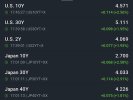
The US, Japan, and UK are all experiencing 30-year bond yields not seen in 10, 20, and even 30 years.
This is serious...especially with massive inflation on the way (and massive US rollover refundings this year).
US interest expense on public debt just crossed $1.27 trillion over the last 12 months.
It took 73 years to 109x that number from 1947 to 2019. It has more than doubled in the six years since.
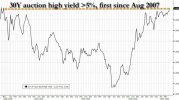
The 30-year treasury just cleared 5% for the first time since 2007. Japan's 20-year bond hit its highest yield since 1997. This isn't an isolated move. This is a global repricing of sovereign debt risk happening in real time.
The doom loop is simple: higher rates mean higher interest expense, which means more borrowing, which means more supply, which pushes rates higher. At this pace, interest on the debt will surpass Social Security as the largest line item in the federal budget. The US government will spend more servicing past borrowing than on the retirement safety net for 70 million Americans.
Global money supply just crossed $121.9 trillion, up $17.1 trillion in two years, growing at 7-8% annually. Central banks are trapped between inflation that won't die and debt loads that require low rates to service. Cut rates and you pour gasoline on the inflation fire. Hold or hike and the interest expense spiral accelerates. There is no clean exit.
The inflation side is getting worse. Electricity prices up 50% in five years. PPI leading CPI higher. Data center construction at $50 billion annualized, up 437% since 2021, now exceeding office construction. The Informationist's CPI overlay tracks the 1970s pattern with a 0.93 correlation. April 2026 CPI sits at 3.78%, right at the inflection point where inflation re-accelerated before peaking near 14%. The Fed declared victory prematurely then, too.
Meanwhile the S&P 500 just set a record for the most components hitting new 52-week lows on a day the index poked above its prior all-time closing high. The six-week rally is the biggest since QE1, concentrated in a handful of AI and infrastructure names.
The index is a mask. Underneath it, the average company is deteriorating.
The US, Japan, and UK are all experiencing 30-year bond yields not seen in 10, 20, and even 30 years.
This is serious...especially with massive inflation on the way (and massive US rollover refundings this year).
US interest expense on public debt just crossed $1.27 trillion over the last 12 months.
It took 73 years to 109x that number from 1947 to 2019. It has more than doubled in the six years since.
The 30-year treasury just cleared 5% for the first time since 2007. Japan's 20-year bond hit its highest yield since 1997. This isn't an isolated move. This is a global repricing of sovereign debt risk happening in real time.
The doom loop is simple: higher rates mean higher interest expense, which means more borrowing, which means more supply, which pushes rates higher. At this pace, interest on the debt will surpass Social Security as the largest line item in the federal budget. The US government will spend more servicing past borrowing than on the retirement safety net for 70 million Americans.
Global money supply just crossed $121.9 trillion, up $17.1 trillion in two years, growing at 7-8% annually. Central banks are trapped between inflation that won't die and debt loads that require low rates to service. Cut rates and you pour gasoline on the inflation fire. Hold or hike and the interest expense spiral accelerates. There is no clean exit.
The inflation side is getting worse. Electricity prices up 50% in five years. PPI leading CPI higher. Data center construction at $50 billion annualized, up 437% since 2021, now exceeding office construction. The Informationist's CPI overlay tracks the 1970s pattern with a 0.93 correlation. April 2026 CPI sits at 3.78%, right at the inflection point where inflation re-accelerated before peaking near 14%. The Fed declared victory prematurely then, too.
Meanwhile the S&P 500 just set a record for the most components hitting new 52-week lows on a day the index poked above its prior all-time closing high. The six-week rally is the biggest since QE1, concentrated in a handful of AI and infrastructure names.
The index is a mask. Underneath it, the average company is deteriorating.
Last edited: